THE ADVENTURE COLLECTIVE® · Independent discovery and booking for outdoor travel

Drive the High Atlas to the UNESCO-listed Aït-ben-Haddou and the film studios of Ouarzazate on a full-day excursion from Marrakech. Expect dramatic passes, earthen kasbahs, and short walks with big views.
Drive the High Atlas to the UNESCO-listed Aït-ben-Haddou and the film studios of Ouarzazate on a full-day excursion from Marrakech. Expect dramatic passes, earthen kasbahs, and short walks with big views.
A pre-dawn pickup in Marrakech slides you onto a highway toward the High Atlas. The road climbs, the air thins, and soon the Tizi n’Tichka pass—more than 2,260 meters—presses the car into a brace of wind and rock. Below, red-brown valleys open; above, ridgelines dare you forward.
Verified experiences and guided adventures in the surrounding area.
Operated by LynxTrip · Aït Ben Haddou, Drâa-Tafilalet
A pre-dawn pickup in Marrakech slides you onto a highway toward the High Atlas. The road climbs, the air thins, and soon the Tizi n’Tichka pass—more than 2,260 meters—presses the car into a brace of wind and rock. Below, red-brown valleys open; above, ridgelines dare you forward.
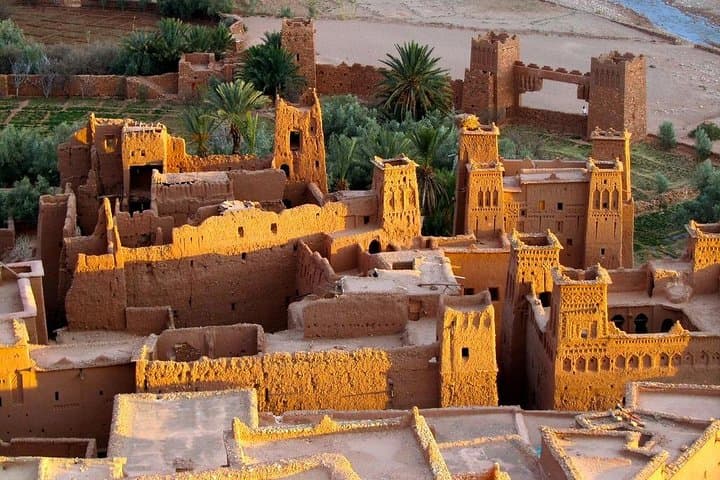
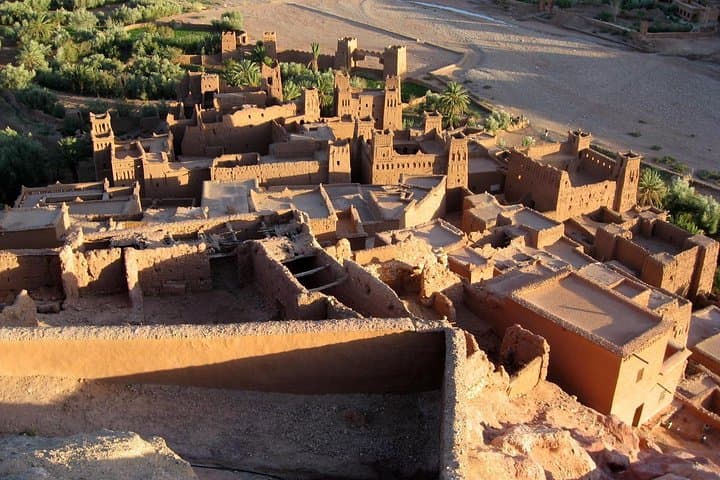
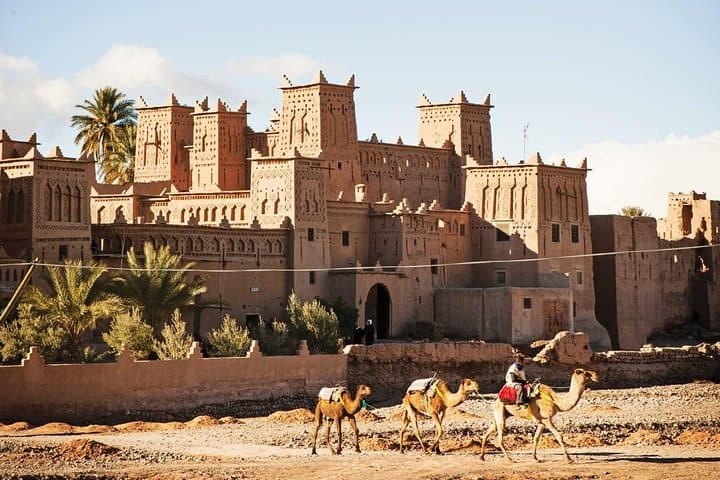
The day is a study in human and geological patience: the High Atlas, raised by continental collision, wears wind-carved ridges and terraces where mountain villages keep centuries-old building techniques. Aït-ben-Haddou appears as a compact ksar of earthen towers and ramparts—mud-brick architecture built for trade-route defense and now frozen in film history. Ouarzazate follows, a low, sun-bleached town whose studios staged the deserts of Lawrence of Arabia and Gladiator.
Culturally the route crosses Berber villages where tea and conversation remain as currency; in Aït-ben-Haddou, narrow alleys and rooftop views reveal how communities adapted to scarce water and seasonal floods. Geologically, the colors change from limestone and schist in the Atlas to the alluvial plains that feed southern oases.
Practical guidance: expect a 12-hour day with long stretches in an air-conditioned vehicle and short, sometimes uneven walks at sites. Carry water, sun protection, and cash for small purchases; comfortable, grippy shoes handle cobbles and slight ascents. If you’re prone to motion sickness, plan accordingly—the pass includes tight hairpins. Pickup from Marrakech is early; return is typically by 19:30. This tour is sightseeing-forward—bring curiosity, a charged camera, and a readiness to trade the city’s bustle for highland light and ancient walls.
easy.
12 hours.
Minimal fitness required; mostly vehicle travel with brief, easy-to-moderate walks at sites.
The trip is roughly 3 hours each way across the Tizi n’Tichka pass, making this a full 12-hour day including site stops.
Admission policies vary; check the tour details—local entrance fees or donations are sometimes separate and paid on site.
The mountain pass has tight switchbacks; bring motion-sickness remedies if you are susceptible.
Yes, the tour is family-friendly but includes long vehicle time and uneven walking surfaces at heritage sites, so plan accordingly.
Aït-ben-Haddou grew as a fortified caravan stop on trans-Saharan routes; its earthen architecture preserves centuries of Sahel-to-Mediterranean exchange.
Heavy footfall strains fragile mud-brick structures; visit respectfully, follow marked paths, and avoid climbing walls to help protect the site.
LynxTrip operates guided outdoor trips and adventures with an emphasis on safety, stewardship, and memorable experiences.
A pre-dawn pickup in Marrakech slides you onto a highway toward the High Atlas. The road climbs, the air thins, and soon the Tizi n’Tichka pass—more than 2,260 meters—presses the car into a brace of wind and rock. Below, red-brown valleys open; above, ridgelines dare you forward.
A pre-dawn pickup in Marrakech slides you onto a highway toward the High Atlas. The road climbs, the air thins, and soon the Tizi n’Tichka pass—more than 2,260 meters—presses the car into a brace of wind and rock. Below, red-brown valleys open; above, ridgelines dare you forward.
The day is a study in human and geological patience: the High Atlas, raised by continental collision, wears wind-carved ridges and terraces where mountain villages keep centuries-old building techniques. Aït-ben-Haddou appears as a compact ksar of earthen towers and ramparts—mud-brick architecture built for trade-route defense and now frozen in film history. Ouarzazate follows, a low, sun-bleached town whose studios staged the deserts of Lawrence of Arabia and Gladiator.
Culturally the route crosses Berber villages where tea and conversation remain as currency; in Aït-ben-Haddou, narrow alleys and rooftop views reveal how communities adapted to scarce water and seasonal floods. Geologically, the colors change from limestone and schist in the Atlas to the alluvial plains that feed southern oases.
Practical guidance: expect a 12-hour day with long stretches in an air-conditioned vehicle and short, sometimes uneven walks at sites. Carry water, sun protection, and cash for small purchases; comfortable, grippy shoes handle cobbles and slight ascents. If you’re prone to motion sickness, plan accordingly—the pass includes tight hairpins. Pickup from Marrakech is early; return is typically by 19:30. This tour is sightseeing-forward—bring curiosity, a charged camera, and a readiness to trade the city’s bustle for highland light and ancient walls.