THE ADVENTURE COLLECTIVE® · Independent discovery and booking for outdoor travel

Take a full-day trip from Bangkok along the River Kwai to walk the historic bridge, ride the local train along the Death Railway, and visit Hellfire Pass. This one-day tour blends wartime history, river scenery, and hands-on local transport for a vivid, sobering experience.
Take a full-day trip from Bangkok along the River Kwai to walk the historic bridge, ride the local train along the Death Railway, and visit Hellfire Pass. This one-day tour blends wartime history, river scenery, and hands-on local transport for a vivid, sobering experience.
Morning light breaks over the Mae Klong and the River Kwai drifts cool and indifferent as visitors disembark from the day bus. The tour moves at a steady, respectful pace: a walk across the battered iron spans of the River Kwai Bridge, a local lunch at Krasae Cave Station, and a rail journey along the old Death Railway where sleepers and rails seem to remember the hands that built them.
Verified experiences and guided adventures in the surrounding area.
Operated by Bangkok Top Sights · Kanchanaburi, Kanchanaburi Province
Morning light breaks over the Mae Klong and the River Kwai drifts cool and indifferent as visitors disembark from the day bus. The tour moves at a steady, respectful pace: a walk across the battered iron spans of the River Kwai Bridge, a local lunch at Krasae Cave Station, and a rail journey along the old Death Railway where sleepers and rails seem to remember the hands that built them.
This landscape carries layer upon layer of history. The bridge and the railway were constructed during World War II using forced labour — Allied POWs and Asian labourers — and the scars are preserved in museums and memorials like JEATH and Hellfire Pass. Geologically, the route slices through limestone cuttings and low, river-carved plains that supported rail alignment choices during wartime engineering.
Culturally, Kanchanaburi balances remembrance with everyday Thai life: market stalls by the river, monks collecting alms in the morning, and fishermen negotiating currents that still push and pull boats along the riverbank.
Practical guidance: expect a long, full day (roughly 12 hours) with extended road travel from Bangkok. Comfortable walking shoes and sun protection are essential; steps and uneven paths at memorial sites reward steady footing. Visitors should show quiet respect at memorials and museums, carry small change for local vendors, and be prepared for hot, humid conditions — water and electrolytes help. Note that the train is a local service: seats are basic and windows open to river views and roadside life. The tour’s educational focus means guide briefings are frequent; bring curiosity and patience for pauses that allow history to speak.
moderate.
12 hours.
Moderate fitness recommended — able to walk short uneven trails and tolerate long periods on a coach and local train.
The itinerary is approximately 12 hours from the meeting point in central Bangkok, including road transfers, museum visits, lunch, and train travel.
Yes, a local lunch at or near Krasae Cave Station is included in the tour price.
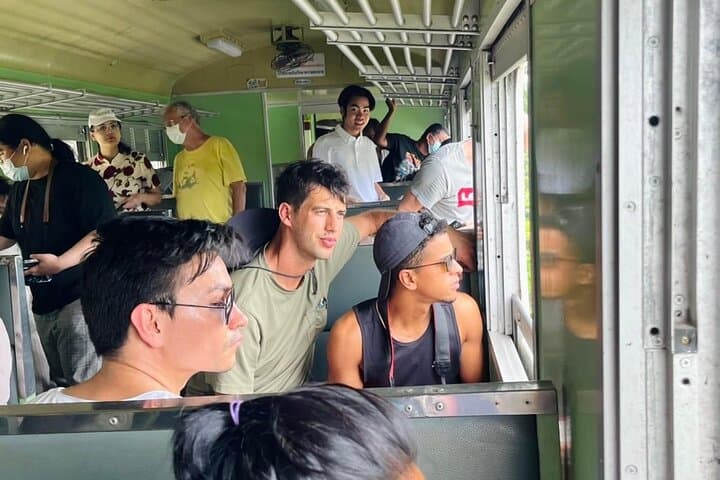
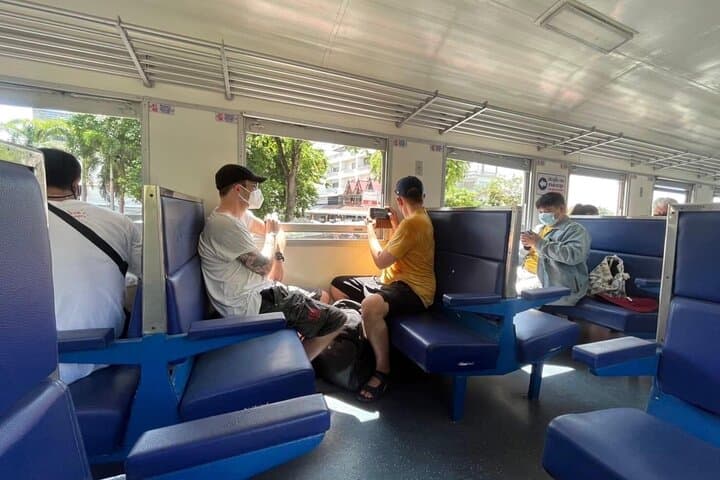
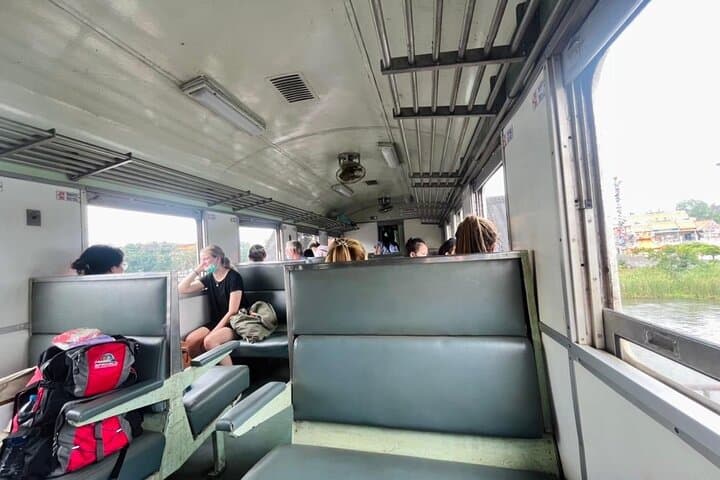
The train is a local passenger service; it’s generally safe but basic—expect open windows, simple seating, and stops at small stations.
Restrooms are available at major stops, museums, and stations, but facilities can be basic—carry hand sanitizer and small change for public toilets.
The River Kwai Bridge and the Death Railway were built during WWII using forced labour; memorials and museums in Kanchanaburi document the international scope of the tragedy.
Visitors are asked to tread lightly at memorials and natural areas—stay on trails, avoid feeding wildlife, and support local museums and guides that maintain historical sites.
Bangkok Top Sights operates guided outdoor trips and adventures with an emphasis on safety, stewardship, and memorable experiences.
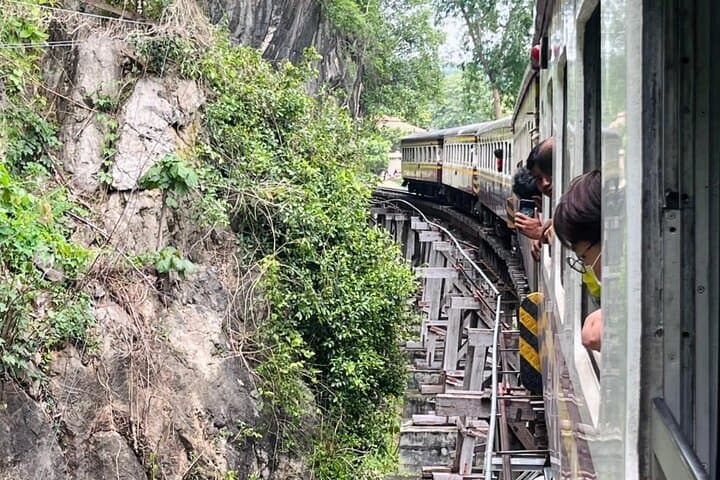
Morning light breaks over the Mae Klong and the River Kwai drifts cool and indifferent as visitors disembark from the day bus. The tour moves at a steady, respectful pace: a walk across the battered iron spans of the River Kwai Bridge, a local lunch at Krasae Cave Station, and a rail journey along the old Death Railway where sleepers and rails seem to remember the hands that built them.
Morning light breaks over the Mae Klong and the River Kwai drifts cool and indifferent as visitors disembark from the day bus. The tour moves at a steady, respectful pace: a walk across the battered iron spans of the River Kwai Bridge, a local lunch at Krasae Cave Station, and a rail journey along the old Death Railway where sleepers and rails seem to remember the hands that built them.
This landscape carries layer upon layer of history. The bridge and the railway were constructed during World War II using forced labour — Allied POWs and Asian labourers — and the scars are preserved in museums and memorials like JEATH and Hellfire Pass. Geologically, the route slices through limestone cuttings and low, river-carved plains that supported rail alignment choices during wartime engineering.
Culturally, Kanchanaburi balances remembrance with everyday Thai life: market stalls by the river, monks collecting alms in the morning, and fishermen negotiating currents that still push and pull boats along the riverbank.
Practical guidance: expect a long, full day (roughly 12 hours) with extended road travel from Bangkok. Comfortable walking shoes and sun protection are essential; steps and uneven paths at memorial sites reward steady footing. Visitors should show quiet respect at memorials and museums, carry small change for local vendors, and be prepared for hot, humid conditions — water and electrolytes help. Note that the train is a local service: seats are basic and windows open to river views and roadside life. The tour’s educational focus means guide briefings are frequent; bring curiosity and patience for pauses that allow history to speak.