THE ADVENTURE COLLECTIVE® · Independent discovery and booking for outdoor travel

Float away from Bangkok for two days of river travel, WWII history and an off‑grid night on a bamboo raft. Expect boat transfers, a short jungle hike, a one‑hour Death Railway train ride and simple, fan‑cooled accommodation.
Float away from Bangkok for two days of river travel, WWII history and an off‑grid night on a bamboo raft. Expect boat transfers, a short jungle hike, a one‑hour Death Railway train ride and simple, fan‑cooled accommodation.
The river pushes you away from the city: a long-tail boat parts Bangkok’s light and carries you into the slow current of the Khwae Yai. Bamboo rafts rock gently underfoot; daylight filters through dipterocarp canopy and the only electricity comes from a small solar lamp.
Verified experiences and guided adventures in the surrounding area.
Operated by Asian Trails LTD · Kanchanaburi, Kanchanaburi
The river pushes you away from the city: a long-tail boat parts Bangkok’s light and carries you into the slow current of the Khwae Yai. Bamboo rafts rock gently underfoot; daylight filters through dipterocarp canopy and the only electricity comes from a small solar lamp.
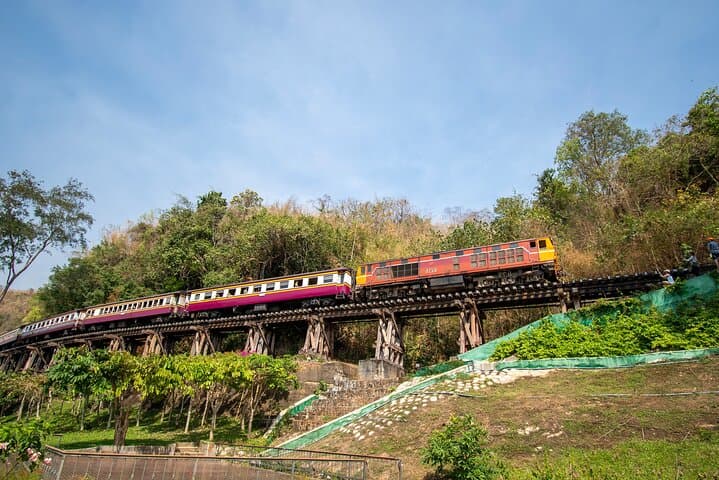
This two-day route threads modern Thailand through a raw WWII landscape. Start at the Thailand–Burma Railway Centre and the War Cemetery to understand why the tracks and tunnels here are charged ground. Geology shows in the cliffs cut for the Death Railway and the jagged limestone and sandstone faces that the viaduct skirts; the train ride that follows crosses wooden trestles perched against river-cut bluffs.
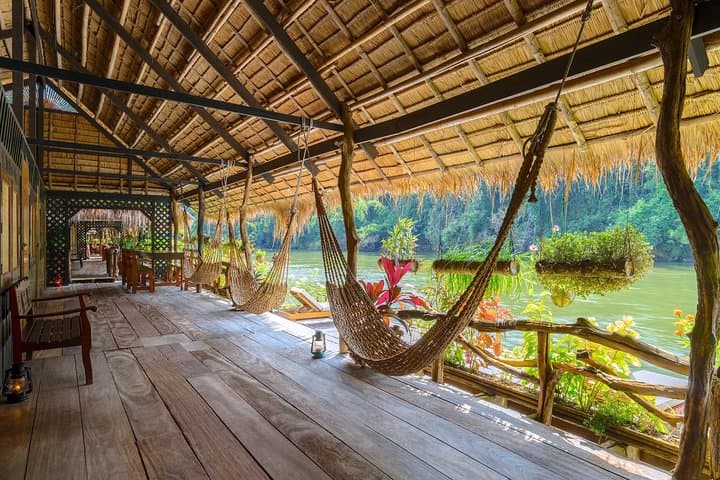
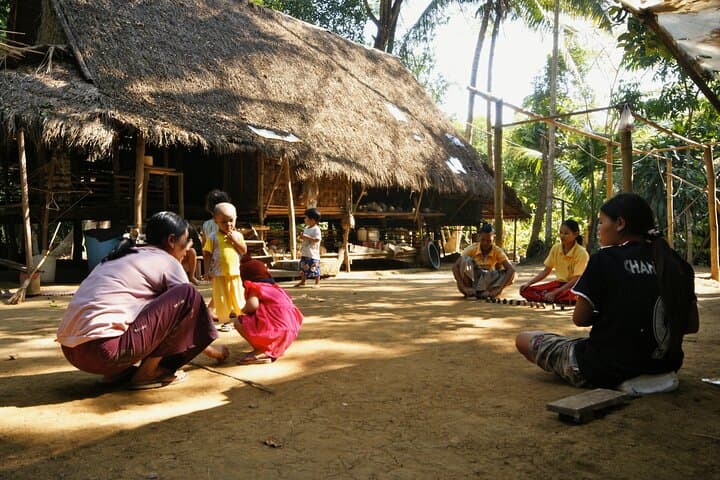
Culture is present in quiet ways: an evening Mon dance, riverside homesteads, and a small farming village where people still fish and farm along seasonal riverbanks. Expect a soft-adventure rhythm — boat transfers, simple floating accommodation with fan-only rooms and shared bathrooms, plus a short jungle hike the next morning.
Practical guide: plan on roughly 2–3 hours’ drive from Bangkok to Kanchanaburi, a one-hour train segment over the Death Railway, and a 1–3 km jungle walk with under 200 m elevation gain. Bring waterproof protection for cameras, insect repellent, and a headlamp; the rafts have limited power and no Wi‑Fi. Meals are included and often river-fresh; carry cash for snacks and small purchases in villages.
This trip suits travelers who want history mixed with simple, riverside solitude — expect damp mornings, loud insect choruses, and a steady, slow-moving river that dares you to listen.
moderate.
2 days.
Light to moderate fitness; able to climb short steps, board boats and walk 1–3 km on uneven jungle trails.
Pickup is arranged from central Bangkok hotels (select areas only); confirm your hotel is eligible or expect to meet at a designated downtown pickup point.
Rooms are basic, usually fan‑cooled with simple bedding and limited hot water; the experience is intentionally off‑grid rather than luxury.
Yes — the tour is family‑friendly but involves boat transfers and open‑water accommodation, so keep children supervised and check with operators about age limits.
Connectivity is minimal; charging is limited or unavailable on the rafts, so bring a charged power bank and waterproof protection for devices.
The area is defined by the Thailand–Burma Railway (the Death Railway) built during WWII; many sites, including Hellfire Pass and the War Cemetery, mark that difficult history.
Riverbank habitats are sensitive to pollution and seasonal flooding; follow local guidance, pack out waste and avoid single‑use plastics where possible.
Asian Trails LTD operates guided outdoor trips and adventures with an emphasis on safety, stewardship, and memorable experiences.
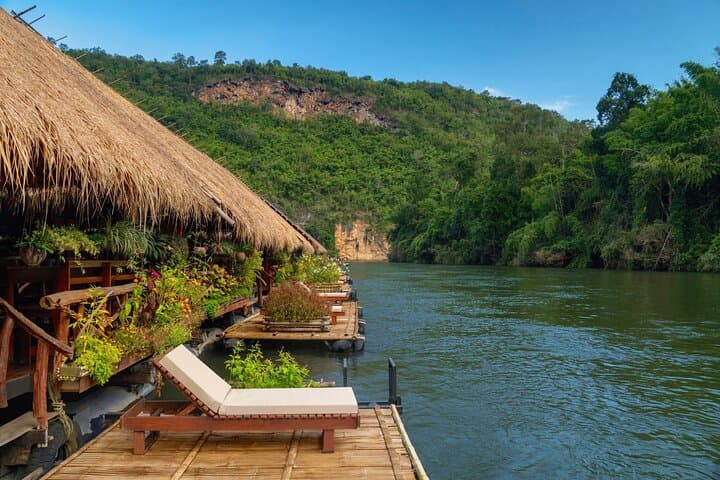
The river pushes you away from the city: a long-tail boat parts Bangkok’s light and carries you into the slow current of the Khwae Yai. Bamboo rafts rock gently underfoot; daylight filters through dipterocarp canopy and the only electricity comes from a small solar lamp.
The river pushes you away from the city: a long-tail boat parts Bangkok’s light and carries you into the slow current of the Khwae Yai. Bamboo rafts rock gently underfoot; daylight filters through dipterocarp canopy and the only electricity comes from a small solar lamp.
This two-day route threads modern Thailand through a raw WWII landscape. Start at the Thailand–Burma Railway Centre and the War Cemetery to understand why the tracks and tunnels here are charged ground. Geology shows in the cliffs cut for the Death Railway and the jagged limestone and sandstone faces that the viaduct skirts; the train ride that follows crosses wooden trestles perched against river-cut bluffs.
Culture is present in quiet ways: an evening Mon dance, riverside homesteads, and a small farming village where people still fish and farm along seasonal riverbanks. Expect a soft-adventure rhythm — boat transfers, simple floating accommodation with fan-only rooms and shared bathrooms, plus a short jungle hike the next morning.
Practical guide: plan on roughly 2–3 hours’ drive from Bangkok to Kanchanaburi, a one-hour train segment over the Death Railway, and a 1–3 km jungle walk with under 200 m elevation gain. Bring waterproof protection for cameras, insect repellent, and a headlamp; the rafts have limited power and no Wi‑Fi. Meals are included and often river-fresh; carry cash for snacks and small purchases in villages.
This trip suits travelers who want history mixed with simple, riverside solitude — expect damp mornings, loud insect choruses, and a steady, slow-moving river that dares you to listen.