THE ADVENTURE COLLECTIVE® · Independent discovery and booking for outdoor travel

Take a full-day journey from Bangkok to Kanchanaburi to walk parts of the infamous Death Railway, cross the still-operational Bridge over the River Kwai, and visit museum exhibits and war cemeteries that bring WWII history into stark relief.
Take a full-day journey from Bangkok to Kanchanaburi to walk parts of the infamous Death Railway, cross the still-operational Bridge over the River Kwai, and visit museum exhibits and war cemeteries that bring WWII history into stark relief.
You arrive before dawn in the soft heat of central Thailand and the road unfurls through rice paddies and rubber groves — a two-and-a-half-hour passage that eases you away from Bangkok's city pulse into the slower rhythms of Kanchanaburi.
Verified experiences and guided adventures in the surrounding area.
Operated by Asian Trails LTD · Kanchanaburi, Kanchanaburi Province
You arrive before dawn in the soft heat of central Thailand and the road unfurls through rice paddies and rubber groves — a two-and-a-half-hour passage that eases you away from Bangkok's city pulse into the slower rhythms of Kanchanaburi.
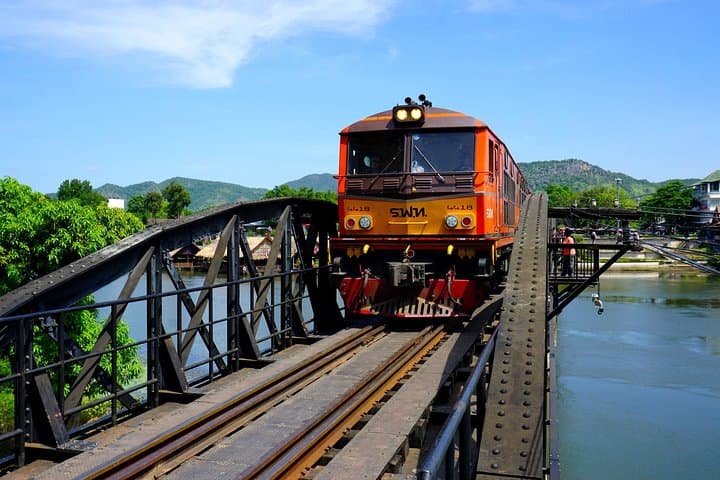
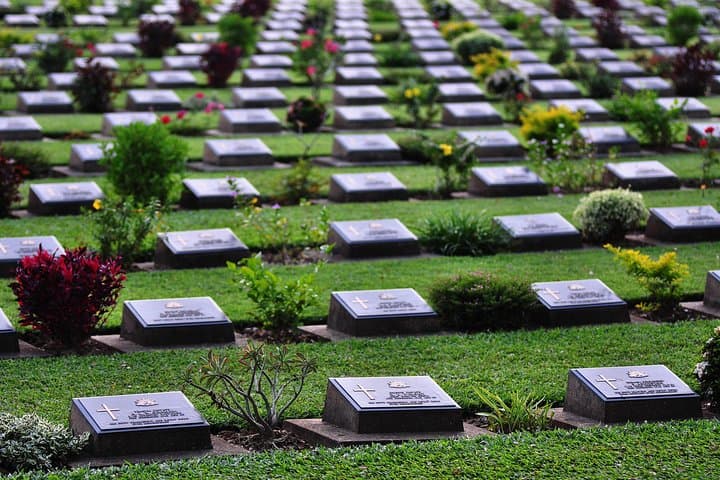
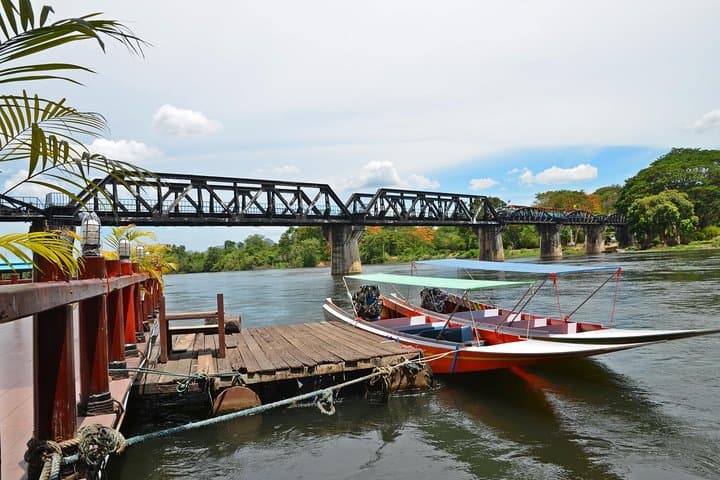
At the waterfront the famous arched spans of the Bridge over the River Kwai come into view, traffic and train whistles punctuating a landscape that still carries the weight of 1940s history. The day weaves together short walks on original sections of the Death Railway, an air‑conditioned visit to the Thailand–Burma Railway Centre, and the quiet rows of the Allied War Cemetery where orderly gravestones give shape to the human cost.
Geologically the region is low floodplain and river terrace; expect flat, firm walking under sun and occasional shade from teak and casuarina trees. Culturally, Kanchanaburi lives with its wartime legacy — local guides balance national perspectives with personal stories and platefuls of regional food at midday.
Practical guidance: this is a long day (10–14 hours) with periods of standing and short platform walks; bring sun protection, water, and comfortable shoes with good grip for wooden trestles and station platforms. Allow extra time for traffic on the return to Bangkok, and dress respectfully at cemeteries and memorial sites. Cameras are welcomed, but observe signage — some museum exhibits and graves require quiet and reverence. For history-minded travelers the combination of museum context, rail ride and riverside bridge offers a compact, sobering, and tangible understanding of the Death Railway experience.
easy.
10–14 hours.
Suitable for travelers in average fitness—short platform walks, standing in museums, and easy terrain.
The drive is roughly 2.5 hours each way depending on traffic; total tour time is approximately 10–14 hours from pickup to return.
Yes — museum/bridge entrance fees and one local-restaurant lunch are included in the tour price as described.
The tour is classed easy and suitable for most ages, but there are short walks, steps and platform access—notify the operator of mobility needs when booking.
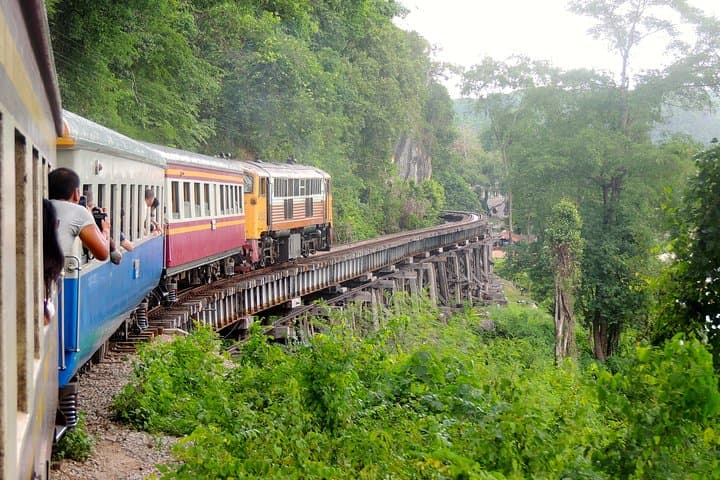
Yes — the bridge allows pedestrian access and the itinerary includes a segment on the local train that follows original track sections, subject to safety restrictions.
Kanchanaburi was a central point in the construction of the Thailand–Burma Railway during WWII; thousands of Allied and Asian laborers died building the line under harsh conditions.
Local sites balance preservation with tourism — stick to marked paths, avoid disturbing vegetation, and follow guidance at sensitive memorial areas to reduce wear.
Asian Trails LTD operates guided outdoor trips and adventures with an emphasis on safety, stewardship, and memorable experiences.
You arrive before dawn in the soft heat of central Thailand and the road unfurls through rice paddies and rubber groves — a two-and-a-half-hour passage that eases you away from Bangkok's city pulse into the slower rhythms of Kanchanaburi.
You arrive before dawn in the soft heat of central Thailand and the road unfurls through rice paddies and rubber groves — a two-and-a-half-hour passage that eases you away from Bangkok's city pulse into the slower rhythms of Kanchanaburi.
At the waterfront the famous arched spans of the Bridge over the River Kwai come into view, traffic and train whistles punctuating a landscape that still carries the weight of 1940s history. The day weaves together short walks on original sections of the Death Railway, an air‑conditioned visit to the Thailand–Burma Railway Centre, and the quiet rows of the Allied War Cemetery where orderly gravestones give shape to the human cost.
Geologically the region is low floodplain and river terrace; expect flat, firm walking under sun and occasional shade from teak and casuarina trees. Culturally, Kanchanaburi lives with its wartime legacy — local guides balance national perspectives with personal stories and platefuls of regional food at midday.
Practical guidance: this is a long day (10–14 hours) with periods of standing and short platform walks; bring sun protection, water, and comfortable shoes with good grip for wooden trestles and station platforms. Allow extra time for traffic on the return to Bangkok, and dress respectfully at cemeteries and memorial sites. Cameras are welcomed, but observe signage — some museum exhibits and graves require quiet and reverence. For history-minded travelers the combination of museum context, rail ride and riverside bridge offers a compact, sobering, and tangible understanding of the Death Railway experience.