THE ADVENTURE COLLECTIVE® · Independent discovery and booking for outdoor travel

Cycle from city streets into the world's largest urban rainforest on a 3–4 hour guided ride through Tijuca National Park. Expect steep climbs, panoramic mirantes, roadside waterfalls and a mix of paved and dirt terrain.
Cycle from city streets into the world's largest urban rainforest on a 3–4 hour guided ride through Tijuca National Park. Expect steep climbs, panoramic mirantes, roadside waterfalls and a mix of paved and dirt terrain.
You push off from an urban street as the city peels away behind you—traffic thins, pavement narrows, and the road drops into green. Within minutes the hum of Rio is replaced by bird calls and the scrape of tires on packed earth. Steep switchbacks open onto Mirante Dona Marta and later the broad sweep below Christ the Redeemer, each viewpoint a pause for breath and a camera.
Verified experiences and guided adventures in the surrounding area.
Operated by Trio · Rio de Janeiro, Rio de Janeiro
You push off from an urban street as the city peels away behind you—traffic thins, pavement narrows, and the road drops into green. Within minutes the hum of Rio is replaced by bird calls and the scrape of tires on packed earth. Steep switchbacks open onto Mirante Dona Marta and later the broad sweep below Christ the Redeemer, each viewpoint a pause for breath and a camera.
Tijuca National Park is a 19th‑century reforestation project that reclaimed hills once cleared for coffee and grazing; geology here is old gneiss and granite sculpted into domes and ridges. The route threads historic neighborhoods, the Carioca River valley, Paineiras visitor center and the Redentor Road—sections closed to private cars and often dotted with roadside cascades and small waterfalls.
Expect a mixed terrain of paved descents, gravel tracks and steep forest climbs. Typical guided runs cover roughly 15–20 km with 600–800 m of cumulative ascent over about 3–4 hours, with planned rest stops at viewpoints and a longer pause at Paineiras. Wildlife sightings can include small primates and tropical birds; guides brief riders on staying low‑impact and keeping to the route.
Practical edge: bring a hydration pack, a confident handle on technical climbs and descents, and layered clothing for quick weather shifts. Start early to avoid afternoon heat and afternoon cloud build‑up that can make trails slick. The ride balances city panoramas and rainforest immersion—it's physically demanding, photogenic, and unmistakably Rio.
challenging.
3–4 hours.
High level of cardiovascular fitness and leg strength; comfortable with sustained climbs and technical singletrack descents.
Guided trips run about 3–4 hours covering roughly 15–20 km with approximately 600–800 m of cumulative elevation gain, including several steep sustained climbs.
Most operators supply mountain bikes and helmets; confirm bike type and sizing when you book and bring personal gear if you prefer.
Not recommended for beginners—riders should be comfortable on off‑road climbs and descents and have previous mountain biking experience.
Tours may be cancelled in heavy rain for safety; light showers are common but guides will advise on trail conditions and may alter the route.
Tijuca National Park was largely reforested in the 19th century to restore water supplies; Corcovado and the Christ the Redeemer statue were completed in the early 20th century and remain cultural landmarks.
As an urban national park, Tijuca relies on responsible tourism—stay on designated trails, avoid feeding wildlife, and pack out all trash to minimize visitor impact.
Trio operates guided outdoor trips and adventures with an emphasis on safety, stewardship, and memorable experiences.
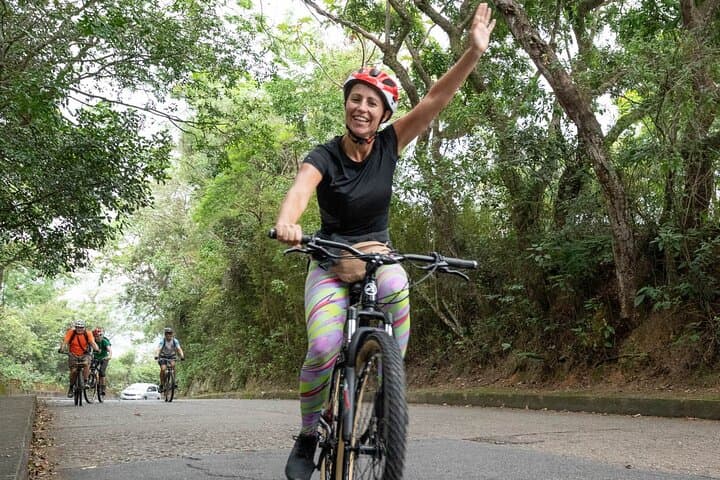
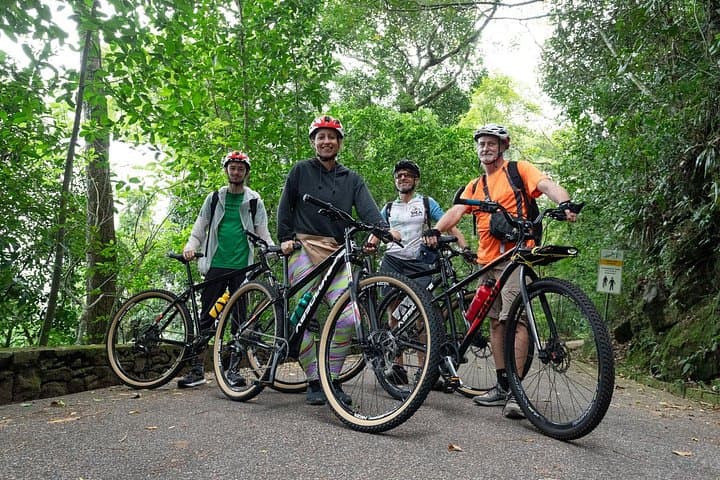
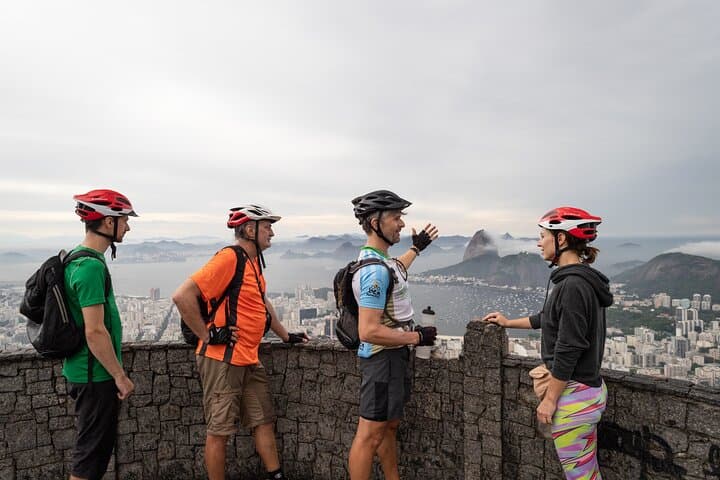
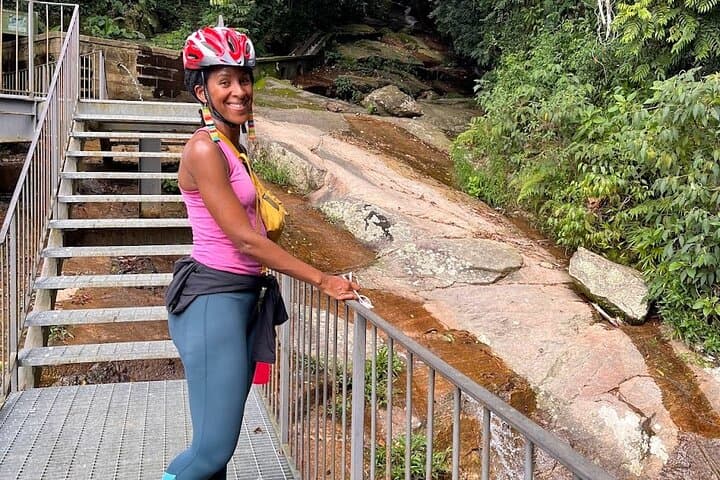
You push off from an urban street as the city peels away behind you—traffic thins, pavement narrows, and the road drops into green. Within minutes the hum of Rio is replaced by bird calls and the scrape of tires on packed earth. Steep switchbacks open onto Mirante Dona Marta and later the broad sweep below Christ the Redeemer, each viewpoint a pause for breath and a camera.
You push off from an urban street as the city peels away behind you—traffic thins, pavement narrows, and the road drops into green. Within minutes the hum of Rio is replaced by bird calls and the scrape of tires on packed earth. Steep switchbacks open onto Mirante Dona Marta and later the broad sweep below Christ the Redeemer, each viewpoint a pause for breath and a camera.
Tijuca National Park is a 19th‑century reforestation project that reclaimed hills once cleared for coffee and grazing; geology here is old gneiss and granite sculpted into domes and ridges. The route threads historic neighborhoods, the Carioca River valley, Paineiras visitor center and the Redentor Road—sections closed to private cars and often dotted with roadside cascades and small waterfalls.
Expect a mixed terrain of paved descents, gravel tracks and steep forest climbs. Typical guided runs cover roughly 15–20 km with 600–800 m of cumulative ascent over about 3–4 hours, with planned rest stops at viewpoints and a longer pause at Paineiras. Wildlife sightings can include small primates and tropical birds; guides brief riders on staying low‑impact and keeping to the route.
Practical edge: bring a hydration pack, a confident handle on technical climbs and descents, and layered clothing for quick weather shifts. Start early to avoid afternoon heat and afternoon cloud build‑up that can make trails slick. The ride balances city panoramas and rainforest immersion—it's physically demanding, photogenic, and unmistakably Rio.