THE ADVENTURE COLLECTIVE® · Independent discovery and booking for outdoor travel

Dine on a waterfront terrace in Rio Lagartos, then glide by boat to a private island for guided stargazing through a telescope. Low light pollution and expert interpretation make this a family-friendly intro to the Yucatán sky.
Dine on a waterfront terrace in Rio Lagartos, then glide by boat to a private island for guided stargazing through a telescope. Low light pollution and expert interpretation make this a family-friendly intro to the Yucatán sky.
You step onto the hotel terrace as dusk softens the Ría Lagartos flats; the town’s low lights wink and the estuary breathes salt and mangrove air. Dinner arrives—simple, warm—the live band threads through the last glow while guides point out where tonight’s constellations will climb. After plates are cleared, a short boat ride across glassy water carries the group to a small, quiet island. The boat’s motor dies and the sky takes the lead.
Verified experiences and guided adventures in the surrounding area.
Operated by Tours by Hotel Rio Lagartos · Rio Lagartos, Yucatán
You step onto the hotel terrace as dusk softens the Ría Lagartos flats; the town’s low lights wink and the estuary breathes salt and mangrove air. Dinner arrives—simple, warm—the live band threads through the last glow while guides point out where tonight’s constellations will climb. After plates are cleared, a short boat ride across glassy water carries the group to a small, quiet island. The boat’s motor dies and the sky takes the lead.
This stretch of the Yucatán coast is part of the Ría Lagartos Biosphere Reserve, a shallow estuarine system carved by coastal currents and marine terraces. Local fishing towns have long read tides and stars; tonight’s guide ties celestial stories to navigation, explaining how fishermen used lunar cycles and constellations. The landscape is mudflat, mangrove, and salt pans—geology that keeps light pollution low and horizons wide.
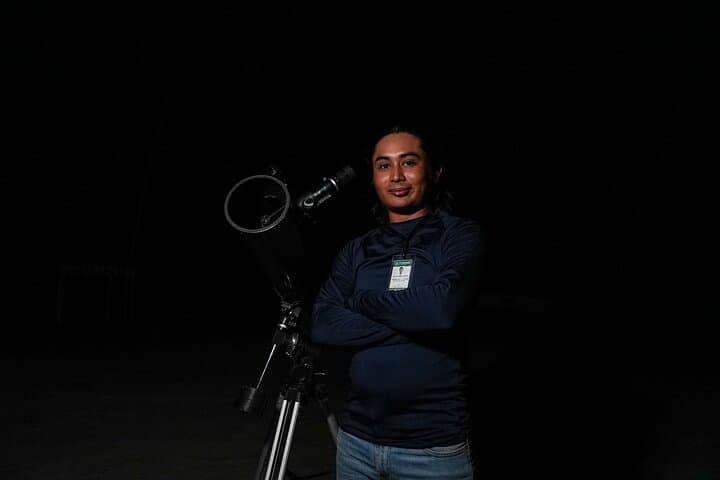
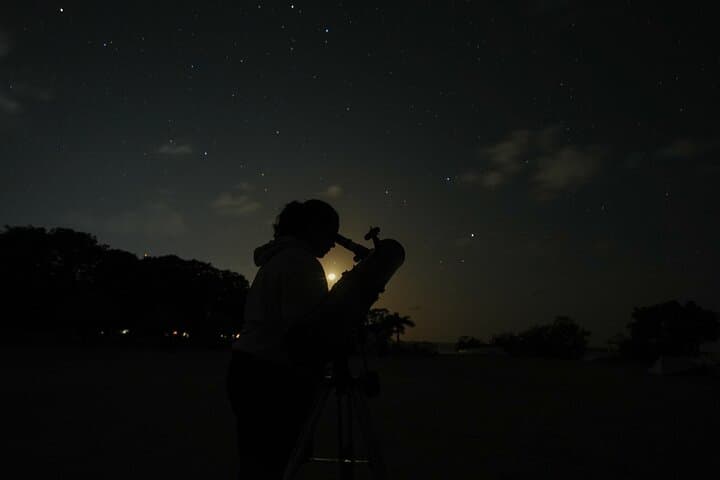
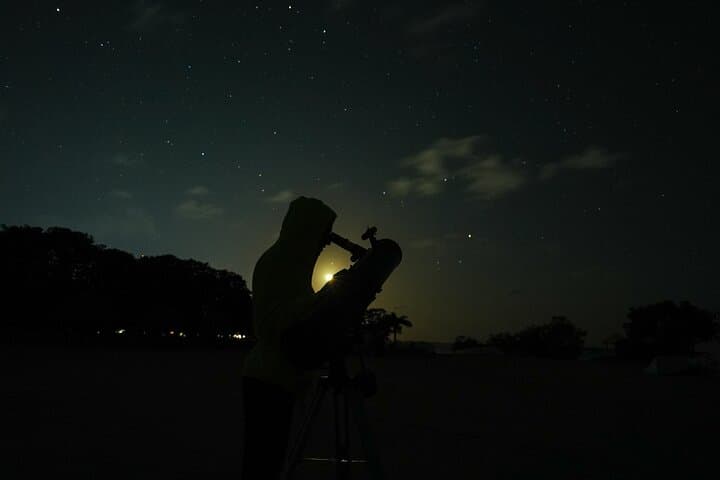
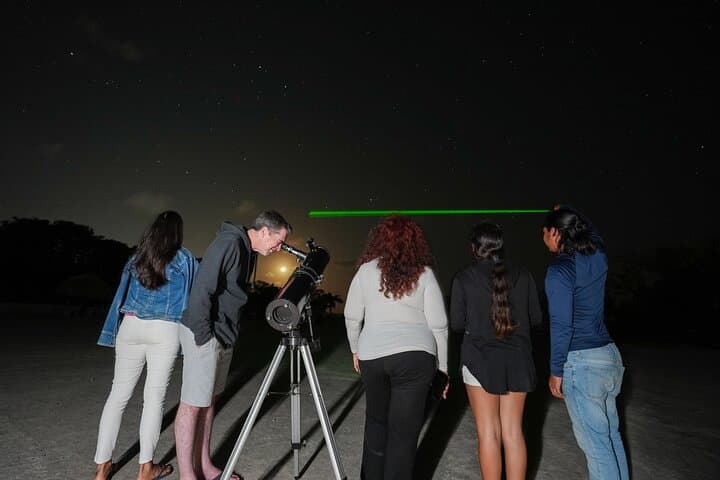
On the island, the telescope brings the moon’s craters and a scattering of galaxies into crisp focus; the guide points out seasonal constellations and the role of the Milky Way in Mayan sky lore. Kids and adults alike can touch a map of the sky and feel the slow rotation overhead—the ocean seems to lean in and listen.
Practical notes: the walk to the dock is short and mostly flat but can be uneven; bring layers for the cool night breeze, insect repellent for mangrove mosquitoes, and a headlamp with a red setting for boarding. Expect a relaxed three-hour tour that mixes a waterfront dinner, short boat transfer, and guided telescope time—ideal for families and first-time stargazers.
easy.
3 hours.
Suitable for most fitness levels; involves short flat walks and a brief boat transfer
Yes; the tour supplies a telescope and an expert guide to operate it and explain the celestial sights.
Yes; the tour is family-friendly but infants must sit on an adult’s lap and supervision is required near the water.
The tour’s cancellation policy varies; low clouds can obscure stars—check with the operator about rescheduling or refunds if conditions prevent viewing.
You arrive at the hotel terrace by road; the dock is short walk from the hotel where the guide will meet guests for the boat transfer.
Ría Lagartos has long been a seasonal fishing and salt-harvesting area; its dark skies and coastal channels were used by local communities for navigation and seasonal activities.
The area is part of a Biosphere Reserve, where tourism is managed to limit disturbance to birds and mangroves—follow guides’ instructions to minimize impact.
Tours by Hotel Rio Lagartos operates guided outdoor trips and adventures with an emphasis on safety, stewardship, and memorable experiences.
You step onto the hotel terrace as dusk softens the Ría Lagartos flats; the town’s low lights wink and the estuary breathes salt and mangrove air. Dinner arrives—simple, warm—the live band threads through the last glow while guides point out where tonight’s constellations will climb. After plates are cleared, a short boat ride across glassy water carries the group to a small, quiet island. The boat’s motor dies and the sky takes the lead.
You step onto the hotel terrace as dusk softens the Ría Lagartos flats; the town’s low lights wink and the estuary breathes salt and mangrove air. Dinner arrives—simple, warm—the live band threads through the last glow while guides point out where tonight’s constellations will climb. After plates are cleared, a short boat ride across glassy water carries the group to a small, quiet island. The boat’s motor dies and the sky takes the lead.
This stretch of the Yucatán coast is part of the Ría Lagartos Biosphere Reserve, a shallow estuarine system carved by coastal currents and marine terraces. Local fishing towns have long read tides and stars; tonight’s guide ties celestial stories to navigation, explaining how fishermen used lunar cycles and constellations. The landscape is mudflat, mangrove, and salt pans—geology that keeps light pollution low and horizons wide.
On the island, the telescope brings the moon’s craters and a scattering of galaxies into crisp focus; the guide points out seasonal constellations and the role of the Milky Way in Mayan sky lore. Kids and adults alike can touch a map of the sky and feel the slow rotation overhead—the ocean seems to lean in and listen.
Practical notes: the walk to the dock is short and mostly flat but can be uneven; bring layers for the cool night breeze, insect repellent for mangrove mosquitoes, and a headlamp with a red setting for boarding. Expect a relaxed three-hour tour that mixes a waterfront dinner, short boat transfer, and guided telescope time—ideal for families and first-time stargazers.