THE ADVENTURE COLLECTIVE® · Independent discovery and booking for outdoor travel

Spend half a day walking from the Jardim Botânico’s greenhouses to Parque Lage’s mansion at the foot of Corcovado. This guided tour blends botany, local history and easy forest trails with hotel pickup for a hassle-free morning outdoors.
Spend half a day walking from the Jardim Botânico’s greenhouses to Parque Lage’s mansion at the foot of Corcovado. This guided tour blends botany, local history and easy forest trails with hotel pickup for a hassle-free morning outdoors.
The morning opens in a corridor of broad-leaved trees and orchids, sunlight slicing through fern fronds as the guide leads the group into the Botanical Garden. Air here feels cooler than the city; palms and palms’ shadows set a slow rhythm to the walk. Ninety minutes among greenhouses, lakes and an orchidarium introduces visitors to plants that shaped Brazil’s landscapes and livelihoods.
Verified experiences and guided adventures in the surrounding area.
Operated by RIO PASSEIOS EXPERIENCE · Rio de Janeiro, Rio de Janeiro
The morning opens in a corridor of broad-leaved trees and orchids, sunlight slicing through fern fronds as the guide leads the group into the Botanical Garden. Air here feels cooler than the city; palms and palms’ shadows set a slow rhythm to the walk. Ninety minutes among greenhouses, lakes and an orchidarium introduces visitors to plants that shaped Brazil’s landscapes and livelihoods.
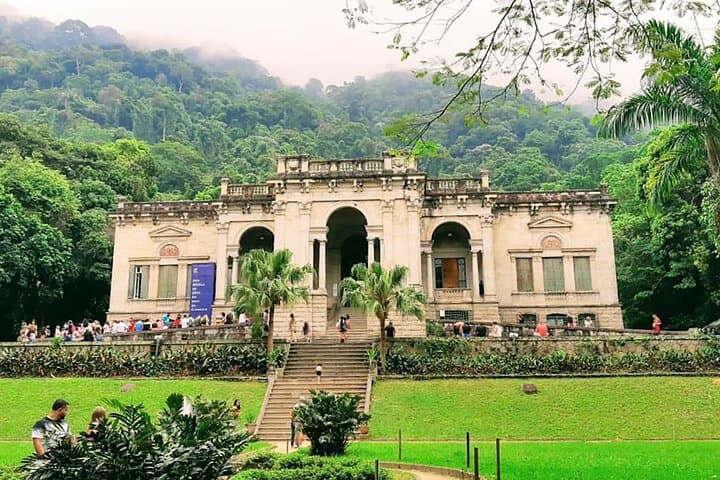
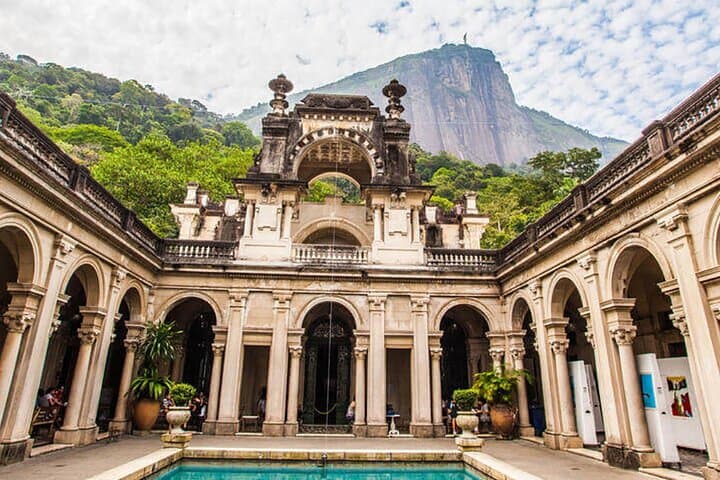
Founded in 1808 to acclimatize exotic species and study native flora, the Jardim Botânico today protects thousands of tropical species and centuries-old jacarandas. A short transfer brings the group to Parque Lage at Corcovado’s foot — a 19th-century estate with English-style gardens, an art-school mansion and trails that thread through an imperial palm grove and small caves carved into the rock.
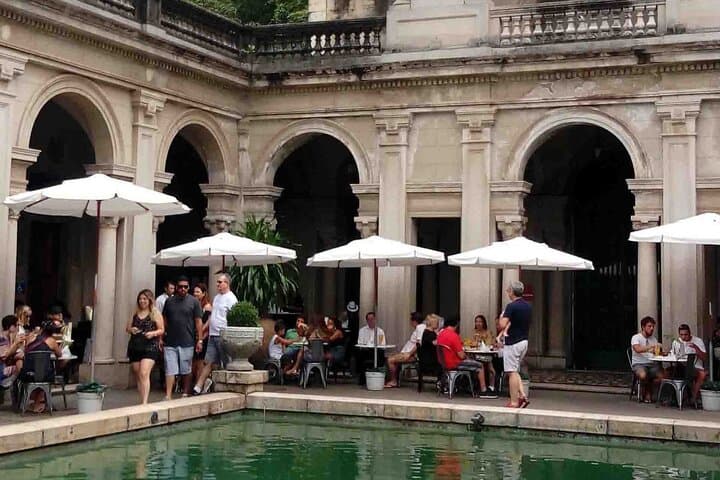
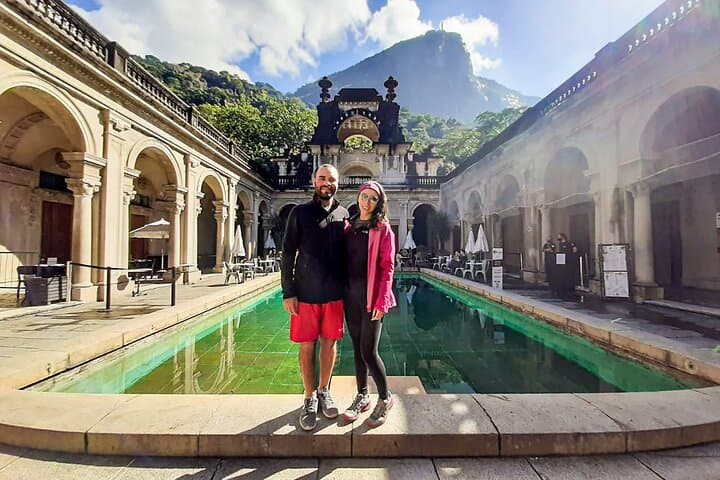
Geology here is visible: granite outcrops and steep ridges of the Serra do Mar push up behind the parks, funneling moist Atlantic air and feeding the dense vegetation. Culturally, Parque Lage’s mansion has long been a hub for artists and students, offering open courtyards and murals that punctuate the walk.
Practically, expect easy walking on mixed surfaces with some irregular sections at Parque Lage; the guide covers history and botany while pointing out native species. Bring water, sun protection and insect repellent; wear closed, comfortable shoes for short slopes and gravel paths. The tour runs about three hours with hotel pickup and drop-off, and it’s suitable for families and most fitness levels. If Park Lage is unavailable due to renovation, the itinerary commonly shifts to nearby Tijuca Forest, keeping the focus on Rio’s urban Atlantic Forest and green heritage.
easy.
3 hours.
Suitable for most fitness levels; involves gentle walking and brief stairs or slopes.
Yes — entrance to both the Botanical Garden and Parque Lage is included in the tour price.
Yes — round-trip transfer from central Rio hotels is included; exact pickup details are confirmed the day before.
Parts of the Botanical Garden are stroller-friendly, but Parque Lage has irregular terrain and steps; a sturdy stroller or carrier is recommended.
If Parque Lage is unavailable, the tour usually redirects to Tijuca Forest for an equivalent nature-focused experience.
The Rio Botanical Garden was established in 1808 under Portuguese royal patronage to study and acclimatize plants; Parque Lage began as a 19th-century estate and later became a center for visual arts and public gardens.
Both sites protect fragments of the Atlantic Forest and focus on education; visitors are asked to stay on trails, avoid touching specimens and dispose of waste properly to support conservation.
RIO PASSEIOS EXPERIENCE operates guided outdoor trips and adventures with an emphasis on safety, stewardship, and memorable experiences.
The morning opens in a corridor of broad-leaved trees and orchids, sunlight slicing through fern fronds as the guide leads the group into the Botanical Garden. Air here feels cooler than the city; palms and palms’ shadows set a slow rhythm to the walk. Ninety minutes among greenhouses, lakes and an orchidarium introduces visitors to plants that shaped Brazil’s landscapes and livelihoods.
The morning opens in a corridor of broad-leaved trees and orchids, sunlight slicing through fern fronds as the guide leads the group into the Botanical Garden. Air here feels cooler than the city; palms and palms’ shadows set a slow rhythm to the walk. Ninety minutes among greenhouses, lakes and an orchidarium introduces visitors to plants that shaped Brazil’s landscapes and livelihoods.
Founded in 1808 to acclimatize exotic species and study native flora, the Jardim Botânico today protects thousands of tropical species and centuries-old jacarandas. A short transfer brings the group to Parque Lage at Corcovado’s foot — a 19th-century estate with English-style gardens, an art-school mansion and trails that thread through an imperial palm grove and small caves carved into the rock.
Geology here is visible: granite outcrops and steep ridges of the Serra do Mar push up behind the parks, funneling moist Atlantic air and feeding the dense vegetation. Culturally, Parque Lage’s mansion has long been a hub for artists and students, offering open courtyards and murals that punctuate the walk.
Practically, expect easy walking on mixed surfaces with some irregular sections at Parque Lage; the guide covers history and botany while pointing out native species. Bring water, sun protection and insect repellent; wear closed, comfortable shoes for short slopes and gravel paths. The tour runs about three hours with hotel pickup and drop-off, and it’s suitable for families and most fitness levels. If Park Lage is unavailable due to renovation, the itinerary commonly shifts to nearby Tijuca Forest, keeping the focus on Rio’s urban Atlantic Forest and green heritage.