THE ADVENTURE COLLECTIVE® · Independent discovery and booking for outdoor travel

Walk four hours through Rio’s Centro to see Praça XV, Travessa do Comércio, the Candelária Church and Cinelândia. This guided tour packs 500 years of architecture, politics and street life into a practical downtown route.
Walk four hours through Rio’s Centro to see Praça XV, Travessa do Comércio, the Candelária Church and Cinelândia. This guided tour packs 500 years of architecture, politics and street life into a practical downtown route.
You step off the tram into Centro and the city announces itself: the Atlantic air threads through wide avenues, street vendors call out over the clop of footsteps, and façades—French neoclassical, colonial baroque, art deco—line the route like chapters in a public book.
Verified experiences and guided adventures in the surrounding area.
Operated by Guydeez · Rio de Janeiro, Rio de Janeiro
You step off the tram into Centro and the city announces itself: the Atlantic air threads through wide avenues, street vendors call out over the clop of footsteps, and façades—French neoclassical, colonial baroque, art deco—line the route like chapters in a public book.
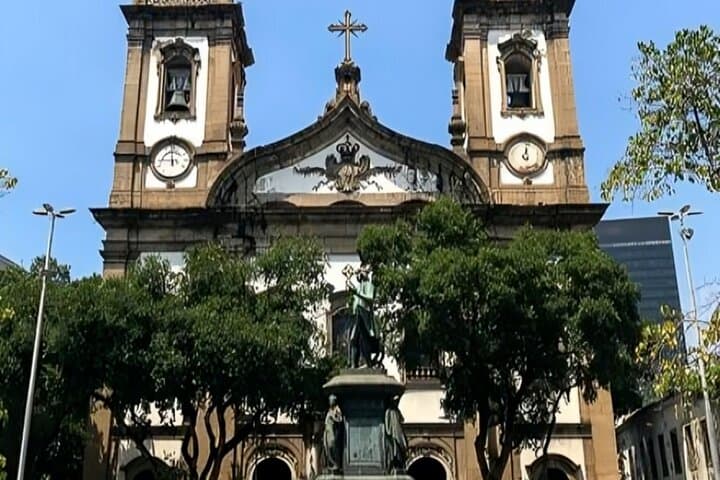
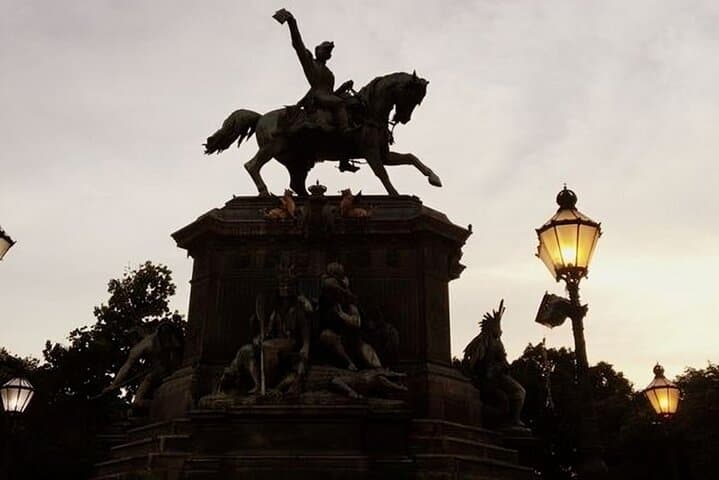
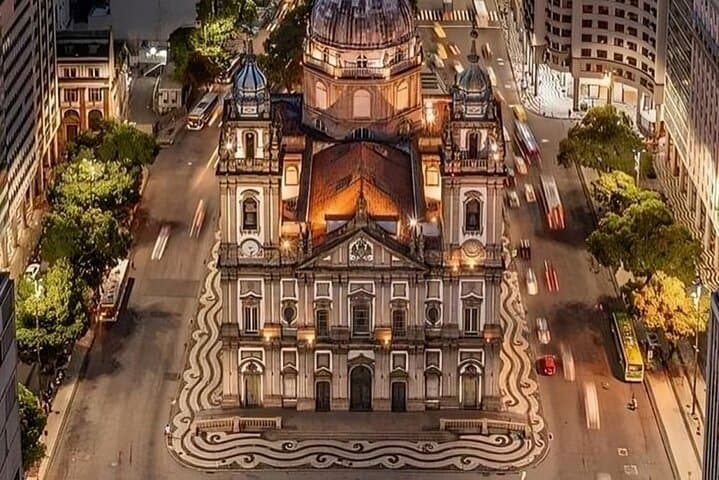
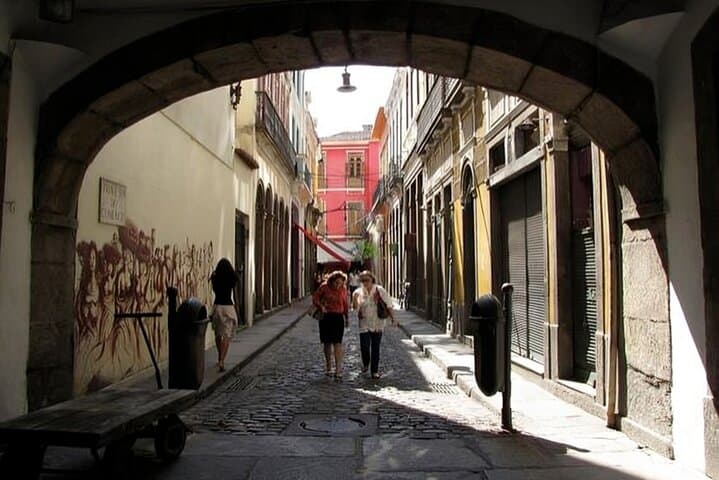
This four-hour walking tour threads through 500 years of Brazilian history. Start at Praça XV, once the city’s maritime gateway, where the old port’s leftover stones hint at Rio’s role in global trade. Move down Travessa do Comércio, a narrow alley that still holds shuttered storefronts and photogenic corners. The Centro Cultural Banco do Brasil shows the city’s 20th-century investment in the arts, while the Church of Our Lady of the Candelária reveals colonial wealth and religious ceremony written in marble and gilt. Finish in Cinelândia, a square that has hosted both rallies and midnight premieres—modern politics rubbing shoulders with cinema palaces.
Geology here is subtle: the city sits on Precambrian bedrock pushed up into steep granite ridges a few kilometers away, while the bay’s shallow gradients shaped early port development. Culturally, Centro is a working downtown—lawyers, bureaucrats and market sellers converge—so your guide will read gestures and graffiti as easily as monuments.
Practical guidance: wear breathable footwear and expect paved streets and occasional cobblestones; bring water and a light rain layer—afternoon showers are common. Public transit hubs are steps from most stops; restrooms are available in cultural centers. Opt for a morning start to avoid peak heat and experience the day’s rhythms as businesses open. With modest effort you’ll leave with context, photos, and a mental map of Rio’s living history.
easy.
4 hours.
Suitable for most fitness levels; requires standing and walking on mostly flat but sometimes cobbled streets for several hours.
The tour runs about four hours and covers roughly 3–4 km at a relaxed pace with frequent stops for discussion and photos.
Many central areas and cultural centers are wheelchair accessible, though some historic alleys may be uneven—contact the operator to confirm specific accessibility needs.
This is a city walking tour; entry fees to museums or paid attractions are generally not included unless specified in your booking.
Guides are typically available in English, Spanish, French and Italian; confirm language preference when booking.
Centro grew from a colonial port into Brazil’s political and commercial heart—Praça XV marks transitions from empire to republic and the Candelária has hosted civic ceremonies for centuries.
Historic façades are fragile; stick to sidewalks, avoid touching decorative stonework, and support local conservation by patronizing culturally sensitive businesses.
Guydeez operates guided outdoor trips and adventures with an emphasis on safety, stewardship, and memorable experiences.
You step off the tram into Centro and the city announces itself: the Atlantic air threads through wide avenues, street vendors call out over the clop of footsteps, and façades—French neoclassical, colonial baroque, art deco—line the route like chapters in a public book.
You step off the tram into Centro and the city announces itself: the Atlantic air threads through wide avenues, street vendors call out over the clop of footsteps, and façades—French neoclassical, colonial baroque, art deco—line the route like chapters in a public book.
This four-hour walking tour threads through 500 years of Brazilian history. Start at Praça XV, once the city’s maritime gateway, where the old port’s leftover stones hint at Rio’s role in global trade. Move down Travessa do Comércio, a narrow alley that still holds shuttered storefronts and photogenic corners. The Centro Cultural Banco do Brasil shows the city’s 20th-century investment in the arts, while the Church of Our Lady of the Candelária reveals colonial wealth and religious ceremony written in marble and gilt. Finish in Cinelândia, a square that has hosted both rallies and midnight premieres—modern politics rubbing shoulders with cinema palaces.
Geology here is subtle: the city sits on Precambrian bedrock pushed up into steep granite ridges a few kilometers away, while the bay’s shallow gradients shaped early port development. Culturally, Centro is a working downtown—lawyers, bureaucrats and market sellers converge—so your guide will read gestures and graffiti as easily as monuments.
Practical guidance: wear breathable footwear and expect paved streets and occasional cobblestones; bring water and a light rain layer—afternoon showers are common. Public transit hubs are steps from most stops; restrooms are available in cultural centers. Opt for a morning start to avoid peak heat and experience the day’s rhythms as businesses open. With modest effort you’ll leave with context, photos, and a mental map of Rio’s living history.