THE ADVENTURE COLLECTIVE® · Independent discovery and booking for outdoor travel

Walk through cloud forest to a startling blue cascade born of volcanic chemistry, and watch for sloths and frogs along the way. This guided day trip blends geology, wildlife viewing, and accessible rainforest hiking.
Walk through cloud forest to a startling blue cascade born of volcanic chemistry, and watch for sloths and frogs along the way. This guided day trip blends geology, wildlife viewing, and accessible rainforest hiking.
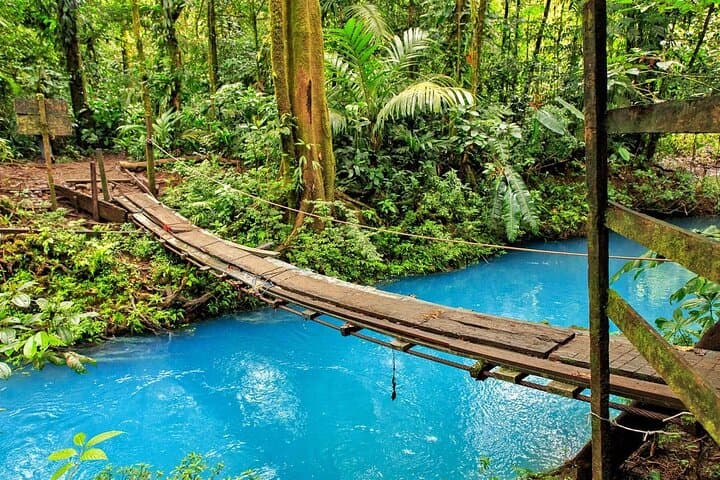
The path opens under a green ceiling, each footstep soft with leaf litter and the distant roar of a waterfall guiding you deeper into Tenorio National Park.
Verified experiences and guided adventures in the surrounding area.
Operated by Seven Sense Costa Rica · Bijagua, Alajuela
The path opens under a green ceiling, each footstep soft with leaf litter and the distant roar of a waterfall guiding you deeper into Tenorio National Park.
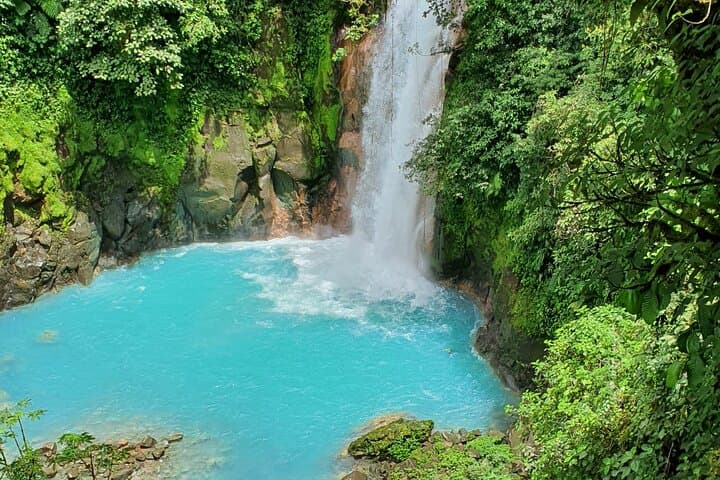
Follow a crisp jungle trail and the forest narrows to reveal the improbable—water the color of a painter’s pigment spilling over a cliff. Rio Celeste’s blue is the result of volcanic minerals interacting with river chemistry downstream of the Tenorio Volcano; the same geology that built the ridge also feeds hot springs and mineral-rich streams that color the water and sustain unique amphibian life.
This area sits on the northern edge of Costa Rica’s Central Volcanic Range and has long been home to farming communities whose lives tie to the mountain’s soils. Along the trail you’ll pass secondary cloud forest, bromeliads clinging to trunks, and mature trees that host sleepy three-toed sloths and darting poison-dart frogs.
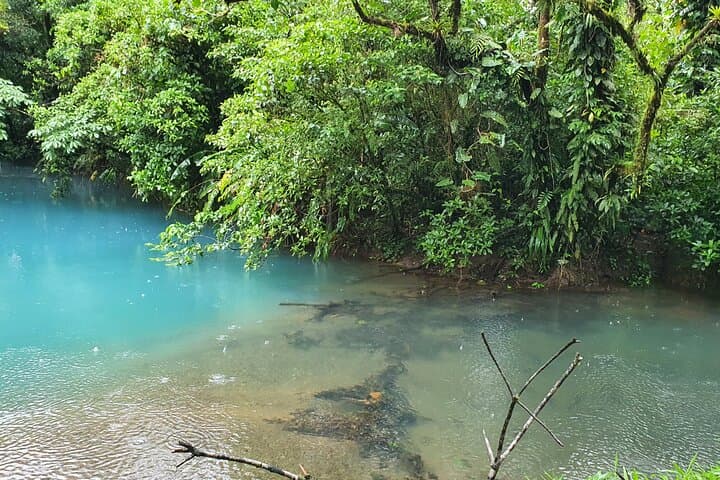
Expect a guided, full-day excursion: about 6–9 hours including transport, a 3–4 hour rainforest walk on uneven, sometimes muddy trails, and a picnic lunch. Wear grippy shoes, bring rain protection, and plan for strong humidity and sun on exposed viewpoints. Guides will point out the river’s color-change spot, local flora, and wildlife etiquette—keep distance from sloths and avoid touching vegetation.
Best times are morning light for photography and dryer trails after a recent dry spell. Hydrate frequently, carry biodegradable sunscreen and insect repellent, and leave no trace—this river’s color and the life it supports are sensitive to outside impacts.
moderate.
9 hours.
Good for moderately fit travelers comfortable with 3–4 hours of walking on uneven terrain, some stairs, and humid conditions.
The walking portion on this guided tour is typically 3–4 hours round trip over uneven terrain with steps and short inclines.
Yes—sloths and various frog species are commonly seen, but sightings are not guaranteed; patience and a good guide increase chances.
The tour is family-friendly but requires moderate mobility; those with limited mobility or severe cardiovascular conditions should avoid it or consult the operator.
The color is caused by mineral particles and volcanic chemistry from the Tenorio area that scatter light, producing the striking blue hue at certain points of the river.
The Tenorio area is part of traditional rural communities that farmed on volcanic soils; the national park was established to protect its unique volcanic-river systems and biodiversity.
The river’s color and nearby habitats are sensitive to pollution and trampling—use marked trails, avoid soaps in waterways, and support local guides who practice low-impact tourism.
Seven Sense Costa Rica operates guided outdoor trips and adventures with an emphasis on safety, stewardship, and memorable experiences.

The path opens under a green ceiling, each footstep soft with leaf litter and the distant roar of a waterfall guiding you deeper into Tenorio National Park.
The path opens under a green ceiling, each footstep soft with leaf litter and the distant roar of a waterfall guiding you deeper into Tenorio National Park.
Follow a crisp jungle trail and the forest narrows to reveal the improbable—water the color of a painter’s pigment spilling over a cliff. Rio Celeste’s blue is the result of volcanic minerals interacting with river chemistry downstream of the Tenorio Volcano; the same geology that built the ridge also feeds hot springs and mineral-rich streams that color the water and sustain unique amphibian life.
This area sits on the northern edge of Costa Rica’s Central Volcanic Range and has long been home to farming communities whose lives tie to the mountain’s soils. Along the trail you’ll pass secondary cloud forest, bromeliads clinging to trunks, and mature trees that host sleepy three-toed sloths and darting poison-dart frogs.
Expect a guided, full-day excursion: about 6–9 hours including transport, a 3–4 hour rainforest walk on uneven, sometimes muddy trails, and a picnic lunch. Wear grippy shoes, bring rain protection, and plan for strong humidity and sun on exposed viewpoints. Guides will point out the river’s color-change spot, local flora, and wildlife etiquette—keep distance from sloths and avoid touching vegetation.
Best times are morning light for photography and dryer trails after a recent dry spell. Hydrate frequently, carry biodegradable sunscreen and insect repellent, and leave no trace—this river’s color and the life it supports are sensitive to outside impacts.