THE ADVENTURE COLLECTIVE® · Independent discovery and booking for outdoor travel

Walk a private trail beside Tenorio Volcano after dark and meet the rainforest’s nocturnal residents. This guided Rio Celeste night tour blends geology, wildlife spotting, and practical conservation notes for a 2–3 hour adventure.
Walk a private trail beside Tenorio Volcano after dark and meet the rainforest’s nocturnal residents. This guided Rio Celeste night tour blends geology, wildlife spotting, and practical conservation notes for a 2–3 hour adventure.
Dusk falls across the volcanic ridges and the trail breathes a different life: frogs begin a low chorus, tree frogs glitter like constellations on leaves, and the rainforest exhales cool, mineral-scented air. On a guided Rio Celeste night walk, a naturalist’s beam cuts through mist while the river—already famous for its daytime blue—becomes a dark, running presence that seems to watch the path.
Verified experiences and guided adventures in the surrounding area.
Operated by Rio Celeste Nature · Bijagua, Alajuela
Dusk falls across the volcanic ridges and the trail breathes a different life: frogs begin a low chorus, tree frogs glitter like constellations on leaves, and the rainforest exhales cool, mineral-scented air. On a guided Rio Celeste night walk, a naturalist’s beam cuts through mist while the river—already famous for its daytime blue—becomes a dark, running presence that seems to watch the path.
The route runs on private trails that border Tenorio Volcano National Park, an area shaped by recent volcanic flows and mineral-rich springs that give Rio Celeste its unusual color. The park protects cloud forest, secondary growth, and riparian corridors used for generations by communities who moved cattle and now steward ecotourism. Geology here is active: sulfur and carbonate chemistry in underground channels light the river by day and influence the humid night air.
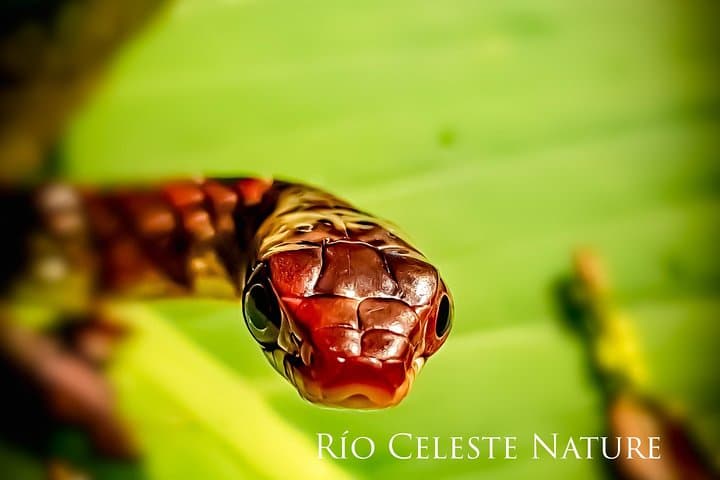
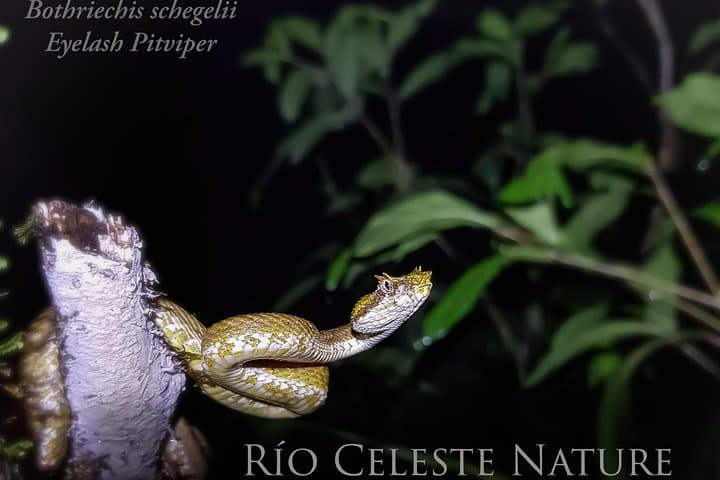
Expect close encounters with nocturnal mammals like kinkajous, a chorus of amphibians, and night birds guided by expert eyes and quiet steps. The experience balances interpretation—learn about local conservation and hydrology—with low-impact practices suited for fragile forest floors.
Practical notes: tours run 2–3 hours and are rated easy for general fitness; paths can be uneven and muddy. Bring a reliable headlamp (some groups provide flashlights), closed-toe shoes with grip, a lightweight rain jacket, and insect repellent. Move slowly, follow the guide’s instructions, and keep voices low—wildlife responds. For photographers, new moon nights offer the deepest darkness; for families, the gentle pace and interpretive focus make this accessible to older children.
easy.
2–3 hours.
Suitable for most fitness levels; requires steady walking on uneven ground for up to 3 hours.
Yes—many families join; children should be old enough to walk 2–3 hours and follow a guide’s safety instructions.
The river’s daytime color comes from minerals and light; at night the water appears dark, but guides point out the watershed and explain the chemistry behind the blue hue.
Some operators provide basic flashlights, but bringing your own headlamp is recommended for comfort and hands-free use.
Sections can be uneven and muddy, especially after rain; non-slip footwear and cautious stepping are advised.
The Tenorio volcanic complex and surrounding forests have long been used by local rural communities; protection efforts and tourism in recent decades have focused on conserving the watershed that feeds Rio Celeste.
Guides emphasize staying on trails, limiting group sizes, and minimizing light/noise to protect nocturnal species and fragile riparian zones.
Rio Celeste Nature operates guided outdoor trips and adventures with an emphasis on safety, stewardship, and memorable experiences.
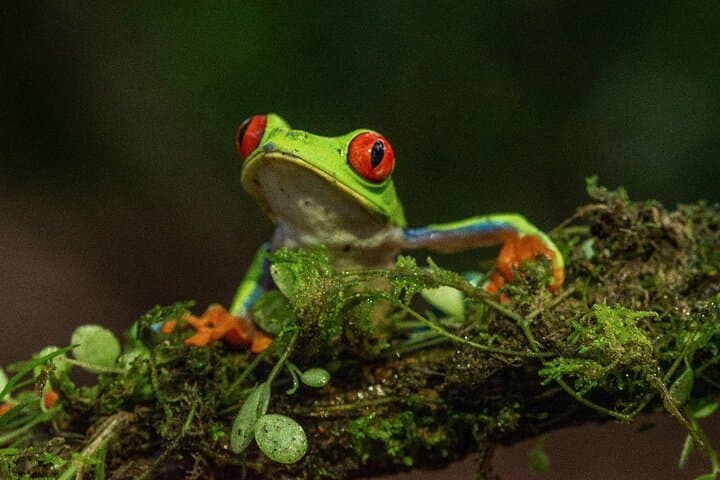
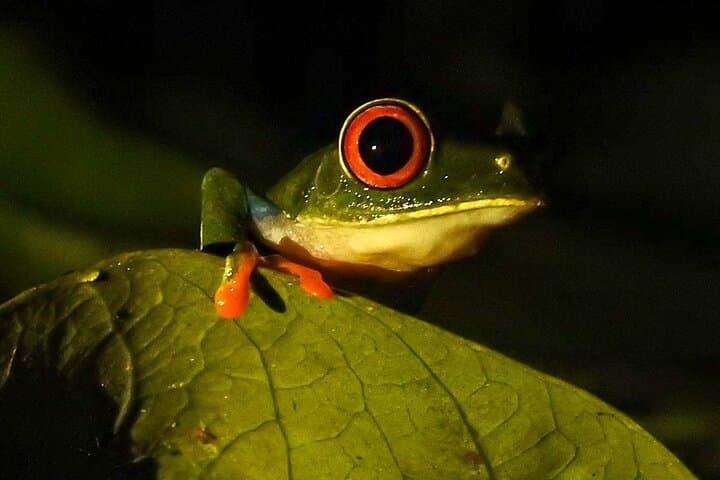
Dusk falls across the volcanic ridges and the trail breathes a different life: frogs begin a low chorus, tree frogs glitter like constellations on leaves, and the rainforest exhales cool, mineral-scented air. On a guided Rio Celeste night walk, a naturalist’s beam cuts through mist while the river—already famous for its daytime blue—becomes a dark, running presence that seems to watch the path.
Dusk falls across the volcanic ridges and the trail breathes a different life: frogs begin a low chorus, tree frogs glitter like constellations on leaves, and the rainforest exhales cool, mineral-scented air. On a guided Rio Celeste night walk, a naturalist’s beam cuts through mist while the river—already famous for its daytime blue—becomes a dark, running presence that seems to watch the path.
The route runs on private trails that border Tenorio Volcano National Park, an area shaped by recent volcanic flows and mineral-rich springs that give Rio Celeste its unusual color. The park protects cloud forest, secondary growth, and riparian corridors used for generations by communities who moved cattle and now steward ecotourism. Geology here is active: sulfur and carbonate chemistry in underground channels light the river by day and influence the humid night air.
Expect close encounters with nocturnal mammals like kinkajous, a chorus of amphibians, and night birds guided by expert eyes and quiet steps. The experience balances interpretation—learn about local conservation and hydrology—with low-impact practices suited for fragile forest floors.
Practical notes: tours run 2–3 hours and are rated easy for general fitness; paths can be uneven and muddy. Bring a reliable headlamp (some groups provide flashlights), closed-toe shoes with grip, a lightweight rain jacket, and insect repellent. Move slowly, follow the guide’s instructions, and keep voices low—wildlife responds. For photographers, new moon nights offer the deepest darkness; for families, the gentle pace and interpretive focus make this accessible to older children.