THE ADVENTURE COLLECTIVE® · Independent discovery and booking for outdoor travel

Witness the Celeste River’s surreal blue, walk a 3-km guided loop to a 20-meter waterfall and visit the Teñideros on a full-day trip from San José. This practical guide explains what to expect on the Tenorio Volcano hike, logistics and essential gear.
Witness the Celeste River’s surreal blue, walk a 3-km guided loop to a 20-meter waterfall and visit the Teñideros on a full-day trip from San José. This practical guide explains what to expect on the Tenorio Volcano hike, logistics and essential gear.
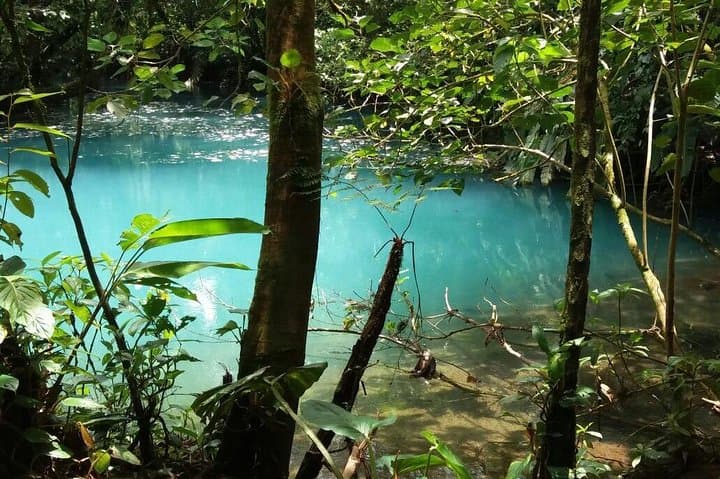
The trail begins before sunrise: a small bus threading out of San José while the central valley still holds its night air. By midmorning the forest opens — a cool tunnel of moss, ferns and cedars — and the river announces itself in a color so blue it feels deliberate. The Celeste River seems to push forward, daring you to walk closer and find the place where two currents meet and chemistry turns water electric.
Verified experiences and guided adventures in the surrounding area.
Operated by Destination Services Costa Rica · Bijagua, Alajuela
The trail begins before sunrise: a small bus threading out of San José while the central valley still holds its night air. By midmorning the forest opens — a cool tunnel of moss, ferns and cedars — and the river announces itself in a color so blue it feels deliberate. The Celeste River seems to push forward, daring you to walk closer and find the place where two currents meet and chemistry turns water electric.
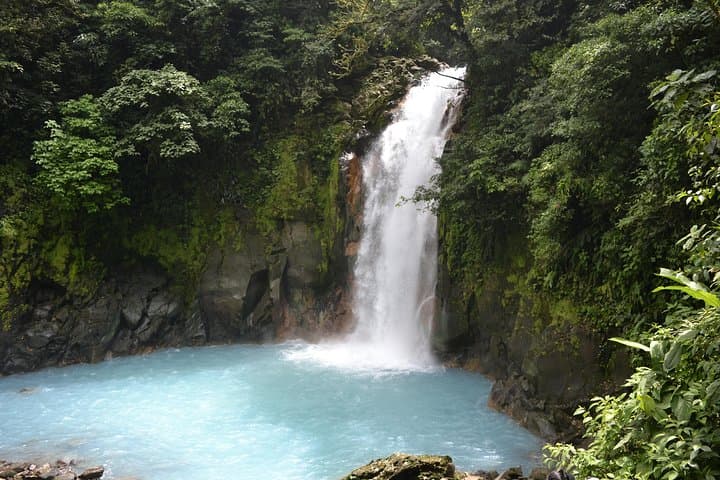
Tenorio Volcano National Park sits on volcanic deposits and hot springs; fumaroles and sulfur-rich streams give the river its famous hue at the Teñideros where limestone, volcanism and microbial action mix. The park’s shorter scientific trails trace old lava and cloud-forest edges; a 3-km guided loop visits a 20-meter waterfall, a high viewpoint that can reveal several crater rims on clear days, and the Blue Lagoon with two wooden bridges spanning the river.
Local guides weave natural history and conservation into the walk, pointing out endangered species and explaining why boots and trail etiquette matter. The full-day logistics are straightforward: pickups from San José around 5:00 a.m., breakfast en route, park arrival near 9:30 a.m., the guided hike midmorning, lunch after the trail and return to the city by early evening.
Practical edge: expect slick trail sections, variable weather, and short steep pitches to viewpoints. Carry layered rain protection, 1–2 liters of water, sturdy shoes, and a towel or change of clothes if you plan to get near the river. Timing your visit for clearer mornings improves crater visibility and bird activity.
moderate.
13–14 hours (door-to-door).
Good cardiovascular fitness and comfort on uneven, sometimes steep muddy trails; capable of 3 km of walking with short climbs.
The guided loop is about 3 km and typically takes 2–3 hours on marked trails with short steep sections to viewpoints.
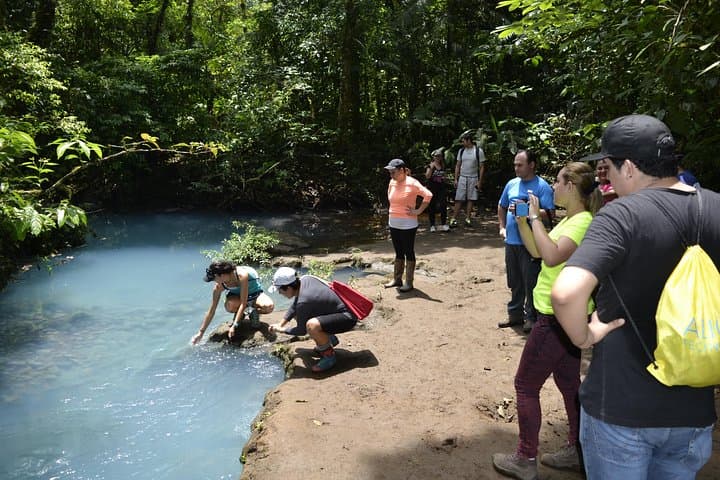
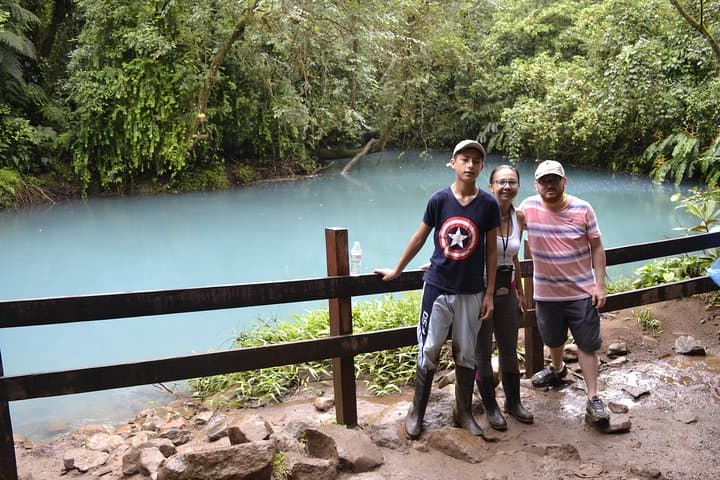
The park rents rubber boots if you prefer; many visitors bring closed hiking shoes for better traction and fit.
Breakfast is served en route about 1.5 hours after departure and lunch is provided after the hike; notify dietary restrictions at booking.
The operator advises a high level of fitness and the tour is not recommended for pregnant travelers or those with serious back or heart conditions.
Tenorio’s landscape reflects volcanic activity and hydrothermal processes; scientists have long studied the Teñideros where two streams chemically react to create the river’s blue tone.
Tenorio is a protected national park—stay on trails, avoid introducing soaps into waterways and pack out waste to protect sensitive aquatic chemistry and endangered species.
Destination Services Costa Rica operates guided outdoor trips and adventures with an emphasis on safety, stewardship, and memorable experiences.
The trail begins before sunrise: a small bus threading out of San José while the central valley still holds its night air. By midmorning the forest opens — a cool tunnel of moss, ferns and cedars — and the river announces itself in a color so blue it feels deliberate. The Celeste River seems to push forward, daring you to walk closer and find the place where two currents meet and chemistry turns water electric.
The trail begins before sunrise: a small bus threading out of San José while the central valley still holds its night air. By midmorning the forest opens — a cool tunnel of moss, ferns and cedars — and the river announces itself in a color so blue it feels deliberate. The Celeste River seems to push forward, daring you to walk closer and find the place where two currents meet and chemistry turns water electric.
Tenorio Volcano National Park sits on volcanic deposits and hot springs; fumaroles and sulfur-rich streams give the river its famous hue at the Teñideros where limestone, volcanism and microbial action mix. The park’s shorter scientific trails trace old lava and cloud-forest edges; a 3-km guided loop visits a 20-meter waterfall, a high viewpoint that can reveal several crater rims on clear days, and the Blue Lagoon with two wooden bridges spanning the river.
Local guides weave natural history and conservation into the walk, pointing out endangered species and explaining why boots and trail etiquette matter. The full-day logistics are straightforward: pickups from San José around 5:00 a.m., breakfast en route, park arrival near 9:30 a.m., the guided hike midmorning, lunch after the trail and return to the city by early evening.
Practical edge: expect slick trail sections, variable weather, and short steep pitches to viewpoints. Carry layered rain protection, 1–2 liters of water, sturdy shoes, and a towel or change of clothes if you plan to get near the river. Timing your visit for clearer mornings improves crater visibility and bird activity.