THE ADVENTURE COLLECTIVE® · Independent discovery and booking for outdoor travel

Walk the trails of Tenorio with an expert guide and watch Rio Celeste’s turquoise waters act as a stage for toucans, tanagers and hummingbirds. This two‑hour guided birding tour combines geology, conservation context and focused wildlife viewing for accessible, memorable sightings.
Walk the trails of Tenorio with an expert guide and watch Rio Celeste’s turquoise waters act as a stage for toucans, tanagers and hummingbirds. This two‑hour guided birding tour combines geology, conservation context and focused wildlife viewing for accessible, memorable sightings.
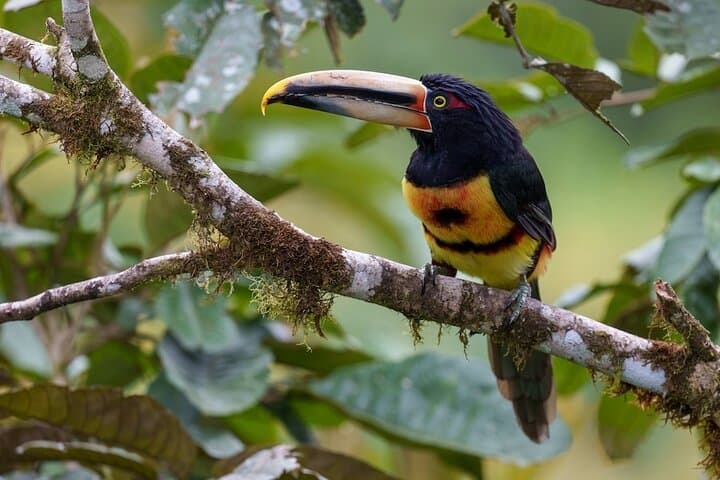
The trail opens under a humid canopy and the sound of the river seems to call you forward, daring you to follow its sudden turquoise ribbon through the forest. As your guide points and whispers, wings flash — a toucan silhouette, a surprise of hummingbird iridescence — and the jungle rearranges itself into a theater of motion and color.
Verified experiences and guided adventures in the surrounding area.
Operated by Río Celeste To know · Bijagua, Guanacaste
The trail opens under a humid canopy and the sound of the river seems to call you forward, daring you to follow its sudden turquoise ribbon through the forest. As your guide points and whispers, wings flash — a toucan silhouette, a surprise of hummingbird iridescence — and the jungle rearranges itself into a theater of motion and color.
Tenorio Volcano National Park, carved by volcanic activity and constant rainfall, creates the conditions for Rio Celeste’s famous blue. The color appears where two streams meet and a chemical reaction forms fine particles that scatter blue light, an uncommon geological quirk that complements the area’s high biodiversity. Local communities around Bijagua have long depended on the forest for water and small-scale agriculture; the park’s protection, formalized in the 1990s, aims to preserve both watershed and wildlife.
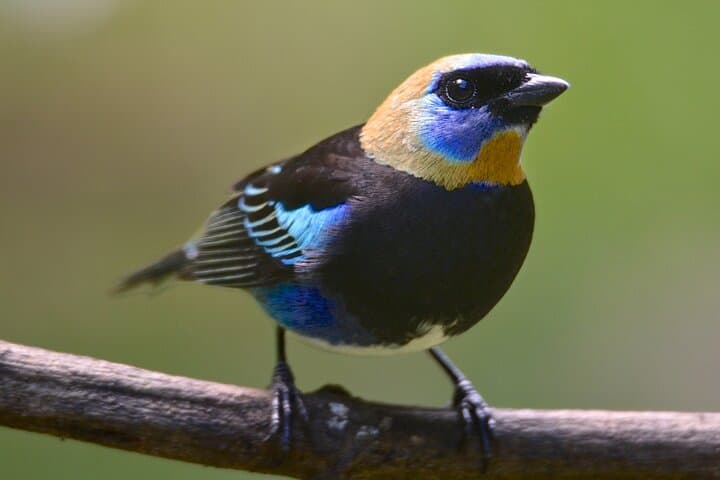
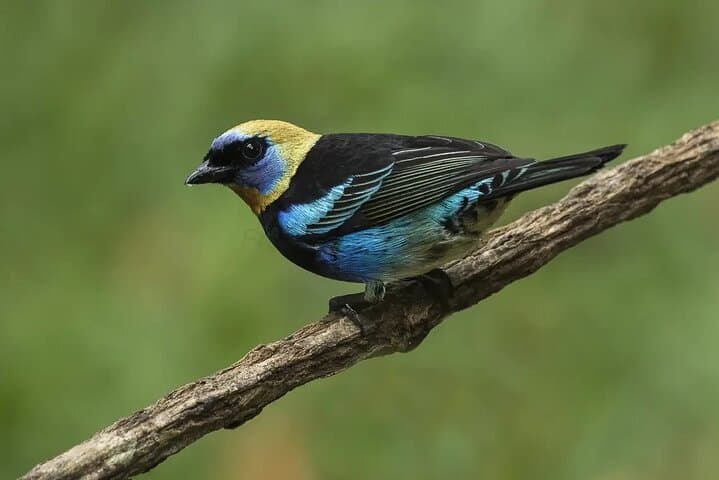
On this guided walk you’ll move on narrow earthen trails, cross short boardwalks and finish at viewpoints that overlook the river and waterfall. Expect tanagers, parrots, woodpeckers, hawks and frequent hummingbirds; guides often know individual spots where species gather. Practicalities matter: trails can be muddy and steep in places, light levels change quickly under the canopy, and rain is always a possibility. Bring a compact pair of binoculars, a rain layer, sturdy shoes with traction, insect repellent and a camera with a zoom lens. Move quietly and follow guide instructions to maximize sightings and minimize disturbance.
Two hours in, you’ll leave with a clearer idea of how geology, climate and local stewardship combine to produce one of Costa Rica’s most photogenic birding rooms.
easy.
2 hours.
Suitable for most fitness levels; you should be comfortable walking 1–2 miles on uneven forest trail.
Yes — the activity is rated easy and lasts about two hours; children able to walk short forest trails can participate, but supervision is required.
Yes — the route includes viewpoints of the river and its famously turquoise sections, though water color can vary slightly with light and rainfall.
Basic facilities are usually available at the park entrance/visitor area, but expect limited amenities along the trail itself.
Expect about 1–2 miles of walking on uneven terrain and several stops for birds and viewpoints; the group pauses frequently for spotting and photos.
Tenorio’s protection was formalized in the 1990s to preserve the volcanic watersheds and surrounding rainforest that sustain local communities.
The park is managed to reduce habitat loss and protect water quality; staying on trails and following guides helps minimize visitor impact.
Río Celeste To know operates guided outdoor trips and adventures with an emphasis on safety, stewardship, and memorable experiences.

The trail opens under a humid canopy and the sound of the river seems to call you forward, daring you to follow its sudden turquoise ribbon through the forest. As your guide points and whispers, wings flash — a toucan silhouette, a surprise of hummingbird iridescence — and the jungle rearranges itself into a theater of motion and color.
The trail opens under a humid canopy and the sound of the river seems to call you forward, daring you to follow its sudden turquoise ribbon through the forest. As your guide points and whispers, wings flash — a toucan silhouette, a surprise of hummingbird iridescence — and the jungle rearranges itself into a theater of motion and color.
Tenorio Volcano National Park, carved by volcanic activity and constant rainfall, creates the conditions for Rio Celeste’s famous blue. The color appears where two streams meet and a chemical reaction forms fine particles that scatter blue light, an uncommon geological quirk that complements the area’s high biodiversity. Local communities around Bijagua have long depended on the forest for water and small-scale agriculture; the park’s protection, formalized in the 1990s, aims to preserve both watershed and wildlife.
On this guided walk you’ll move on narrow earthen trails, cross short boardwalks and finish at viewpoints that overlook the river and waterfall. Expect tanagers, parrots, woodpeckers, hawks and frequent hummingbirds; guides often know individual spots where species gather. Practicalities matter: trails can be muddy and steep in places, light levels change quickly under the canopy, and rain is always a possibility. Bring a compact pair of binoculars, a rain layer, sturdy shoes with traction, insect repellent and a camera with a zoom lens. Move quietly and follow guide instructions to maximize sightings and minimize disturbance.
Two hours in, you’ll leave with a clearer idea of how geology, climate and local stewardship combine to produce one of Costa Rica’s most photogenic birding rooms.