THE ADVENTURE COLLECTIVE® · Independent discovery and booking for outdoor travel

Stand on Senaru’s crater rim and watch Segara Anak and the baby volcano reveal themselves. This 2D1N trek mixes a village stay, an overnight camp near the rim, local guides and sweeping volcanic views—suitable for fit beginners and families with older children.
Stand on Senaru’s crater rim and watch Segara Anak and the baby volcano reveal themselves. This 2D1N trek mixes a village stay, an overnight camp near the rim, local guides and sweeping volcanic views—suitable for fit beginners and families with older children.
You crest the trail as the sky lightens and the caldera opens beneath you: a deep lake threaded with steam, a younger cone—Barujari—lighting the rim with shadow. The wind on Senaru’s crater rim pushes at your jacket like a guide urging you forward; views drop away in layered folds to Lombok’s northern coast.
Verified experiences and guided adventures in the surrounding area.
Operated by Rinjani Sunrise · Senaru, West Nusa Tenggara
You crest the trail as the sky lightens and the caldera opens beneath you: a deep lake threaded with steam, a younger cone—Barujari—lighting the rim with shadow. The wind on Senaru’s crater rim pushes at your jacket like a guide urging you forward; views drop away in layered folds to Lombok’s northern coast.
Mount Rinjani is an active stratovolcano whose last major eruptions reshaped the enormous caldera that now holds Segara Anak (the crater lake) and the smaller ‘‘baby volcano.’’ The Senaru route carries history of Sasak mountain culture and periodic pilgrimage; porters and guides here are part of a long local trekking tradition. Geology shows fresh lava flows, volcanic ash soils and steep talus underfoot—expect mixed volcanic scree and forested switchbacks.
This 2-day, 1-night itinerary places one night in Senaru village and one in a tent on the rim or nearby campsite. Distances and elevation vary by exact campsite but plan for several hours of uphill hiking each day, uneven terrain and short steep pitches. Children are accepted from age 10 on this operator’s route; guides and porters carry gear and set up camp.
Practical guidance: start before dawn to avoid midday heat and afternoon rain, carry 2–3 liters of water, and bring a layered system for wind and cold at night. Good ankle-support boots, a headlamp, and a windproof shell matter more than ultralight gear. Respect the park rules, pack out trash, and allow flexible weather windows—trips can be delayed when conditions are unsafe.
moderate.
2 days, 1 night (overnight on trek).
Moderate fitness: regular walkers who can manage several hours of uphill hiking and uneven volcanic terrain.
The Senaru rim itinerary is rated moderate: suitable for beginners who are reasonably fit and can handle uphill hiking 4–6 hours a day with breaks; guides and porters support less experienced hikers.
This operator accepts children from about 10 years old; consider your child’s prior hiking experience and ability to sleep in a tent and handle altitude changes.
Acclimatization protocols are minimal compared with higher peaks, but take it steady, hydrate, and monitor for headache or nausea—descend if symptoms worsen.
Yes—this tour supplies tents, sleeping bags, mattresses and full-board meals during the trek as part of the package.
Rinjani’s massive caldera formed through repeated eruptions; Segara Anak, the crater lake, is central to local Sasak and Balinese cultural practices.
Rinjani is part of a national park where trekking pressure affects trails and campsites—use local guides, follow park rules, and pack out waste to limit impact.
Rinjani Sunrise operates guided outdoor trips and adventures with an emphasis on safety, stewardship, and memorable experiences.
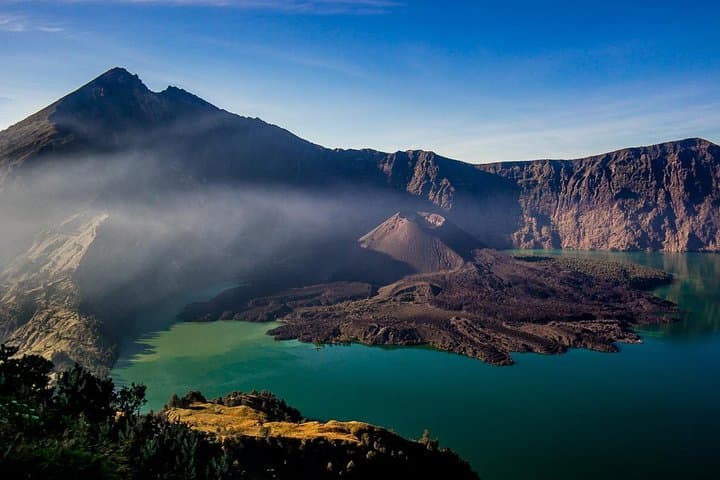
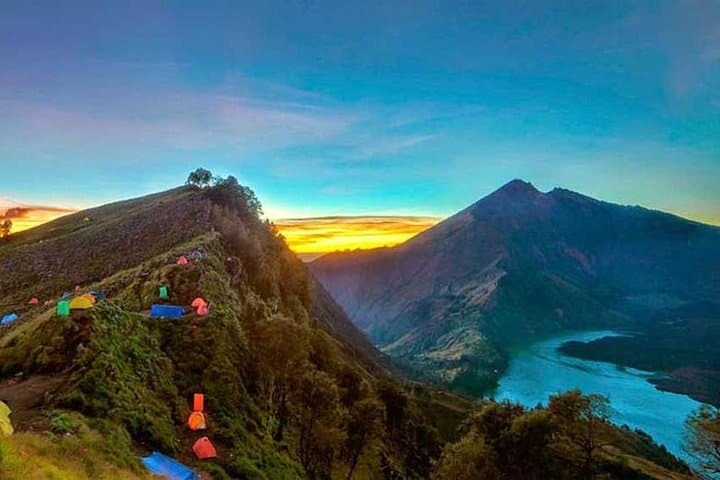
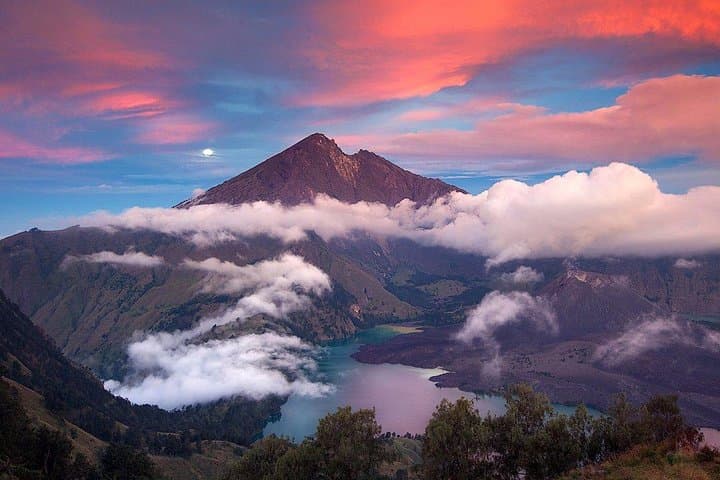
You crest the trail as the sky lightens and the caldera opens beneath you: a deep lake threaded with steam, a younger cone—Barujari—lighting the rim with shadow. The wind on Senaru’s crater rim pushes at your jacket like a guide urging you forward; views drop away in layered folds to Lombok’s northern coast.
You crest the trail as the sky lightens and the caldera opens beneath you: a deep lake threaded with steam, a younger cone—Barujari—lighting the rim with shadow. The wind on Senaru’s crater rim pushes at your jacket like a guide urging you forward; views drop away in layered folds to Lombok’s northern coast.
Mount Rinjani is an active stratovolcano whose last major eruptions reshaped the enormous caldera that now holds Segara Anak (the crater lake) and the smaller ‘‘baby volcano.’’ The Senaru route carries history of Sasak mountain culture and periodic pilgrimage; porters and guides here are part of a long local trekking tradition. Geology shows fresh lava flows, volcanic ash soils and steep talus underfoot—expect mixed volcanic scree and forested switchbacks.
This 2-day, 1-night itinerary places one night in Senaru village and one in a tent on the rim or nearby campsite. Distances and elevation vary by exact campsite but plan for several hours of uphill hiking each day, uneven terrain and short steep pitches. Children are accepted from age 10 on this operator’s route; guides and porters carry gear and set up camp.
Practical guidance: start before dawn to avoid midday heat and afternoon rain, carry 2–3 liters of water, and bring a layered system for wind and cold at night. Good ankle-support boots, a headlamp, and a windproof shell matter more than ultralight gear. Respect the park rules, pack out trash, and allow flexible weather windows—trips can be delayed when conditions are unsafe.