THE ADVENTURE COLLECTIVE® · Independent discovery and booking for outdoor travel

Two days of steady climbing from Senaru to the crater rim of Mount Rinjani, camping beneath the stars and waking to sunrise over Segara Anak. Ideal for hikers with moderate fitness who want a short, non-technical alpine experience with dramatic views.
Two days of steady climbing from Senaru to the crater rim of Mount Rinjani, camping beneath the stars and waking to sunrise over Segara Anak. Ideal for hikers with moderate fitness who want a short, non-technical alpine experience with dramatic views.
You break from the village road into a cool tunnel of rainforest; leaves drip, and the trail climbs with a steady, honest pull. By mid-afternoon the canopy gives way to grass-swept hills and the crater rim opens—Segara Anak lake sits like a blue eye in the hollow, steam and wind shaping the smoke of the new volcanic cone.
Verified experiences and guided adventures in the surrounding area.
Operated by Green Rinjani Trekking · Senaru, West Nusa Tenggara
You break from the village road into a cool tunnel of rainforest; leaves drip, and the trail climbs with a steady, honest pull. By mid-afternoon the canopy gives way to grass-swept hills and the crater rim opens—Segara Anak lake sits like a blue eye in the hollow, steam and wind shaping the smoke of the new volcanic cone.
Gunung Rinjani is young geology in motion: a caldera carved by massive eruptions, its walls revealing layers of lava and ash. Senaru village at the trailhead carries Sasak cultural traces—terraced farms, clove trees, and guides whose livelihoods tie to the mountain. Seasonal strawberries appear along the higher switchbacks in the dry season, and curious macaques patrol the campsites looking for loose snacks.
This 2-day, 1-night route ascends to the Senaru crater rim (approx. 2,641 m) with an overnight camp at Pelawangan Senaru. Expect 6–7 hours hiking day one through mixed jungle and open savanna, with steeper, stonier sections before the rim; day two is a long descent of 5–6 hours. Temperatures swing from warm in the valley to cold winds on the rim—wind does the work of moving the weather fast.
Practical edge: travel light, carry warm layers for the high camp, and drink frequently to offset the altitude. Trekking here is non-technical but exposed; book a licensed guide and porter system, pack out waste, and plan for variable weather—clear sunrise views are spectacular, but clouds rush in quickly.
moderate.
2 days (Day 1: ~7 hours up; Day 2: ~5–6 hours down).
Good walking fitness: comfortable with sustained uphill hiking, carrying a daypack and short bouts of steep, rocky terrain.
You should be comfortable hiking 6–7 hours with elevation gain; regular walkers and people with good cardio can complete it—no technical climbing required.
Local operators typically include a licensed guide and porters to carry communal equipment; confirm porter weight limits and tipping expectations before departure.
Overnight is in tents at the Pelawangan Senaru rim camp—operators provide tents, sleeping mats, and usually sleeping bags; bring a liner if you prefer extra warmth.
The dry season, roughly April–September (peaking July–September), offers the most stable conditions and clearer sunrise views over Segara Anak.
Rinjani’s caldera formed in major eruptions; the region has spiritual significance to Sasak people, and local villages have long guided pilgrimages and agricultural life around the mountain.
Trails see growing visitor numbers—use designated campsites, carry out all waste, and support operators that follow park regulations and reforestation efforts.
Green Rinjani Trekking operates guided outdoor trips and adventures with an emphasis on safety, stewardship, and memorable experiences.
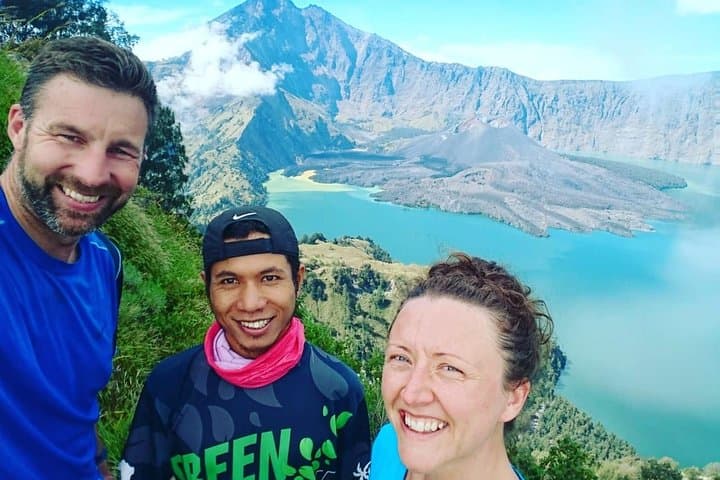

You break from the village road into a cool tunnel of rainforest; leaves drip, and the trail climbs with a steady, honest pull. By mid-afternoon the canopy gives way to grass-swept hills and the crater rim opens—Segara Anak lake sits like a blue eye in the hollow, steam and wind shaping the smoke of the new volcanic cone.
You break from the village road into a cool tunnel of rainforest; leaves drip, and the trail climbs with a steady, honest pull. By mid-afternoon the canopy gives way to grass-swept hills and the crater rim opens—Segara Anak lake sits like a blue eye in the hollow, steam and wind shaping the smoke of the new volcanic cone.
Gunung Rinjani is young geology in motion: a caldera carved by massive eruptions, its walls revealing layers of lava and ash. Senaru village at the trailhead carries Sasak cultural traces—terraced farms, clove trees, and guides whose livelihoods tie to the mountain. Seasonal strawberries appear along the higher switchbacks in the dry season, and curious macaques patrol the campsites looking for loose snacks.
This 2-day, 1-night route ascends to the Senaru crater rim (approx. 2,641 m) with an overnight camp at Pelawangan Senaru. Expect 6–7 hours hiking day one through mixed jungle and open savanna, with steeper, stonier sections before the rim; day two is a long descent of 5–6 hours. Temperatures swing from warm in the valley to cold winds on the rim—wind does the work of moving the weather fast.
Practical edge: travel light, carry warm layers for the high camp, and drink frequently to offset the altitude. Trekking here is non-technical but exposed; book a licensed guide and porter system, pack out waste, and plan for variable weather—clear sunrise views are spectacular, but clouds rush in quickly.