THE ADVENTURE COLLECTIVE® · Independent discovery and booking for outdoor travel

A compact 2-day trek from Senaru to Rinjani's crater rim that gains roughly 2,040 meters to 2,641 m. Expect dense forest, steep switchbacks, an overnight camp on the rim, and sunrise views over Segara Anak and Mount Agung.
A compact 2-day trek from Senaru to Rinjani's crater rim that gains roughly 2,040 meters to 2,641 m. Expect dense forest, steep switchbacks, an overnight camp on the rim, and sunrise views over Segara Anak and Mount Agung.
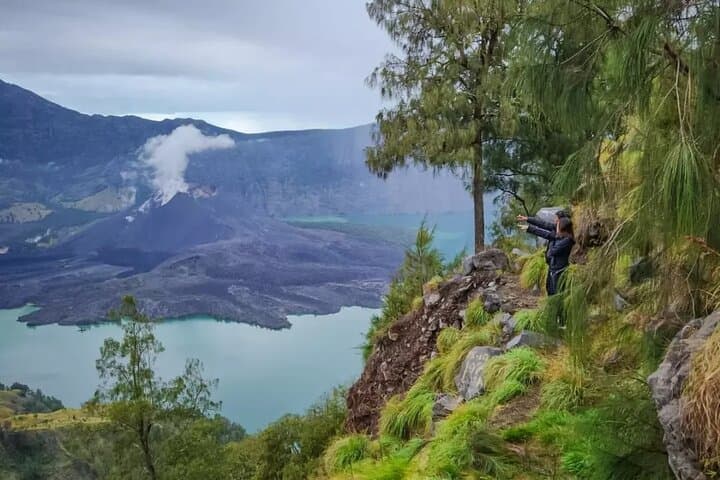
Dawn breaks over the jungle and the path threads upward, steam from the crater lake catching the first light. You start in Senaru village (about 601 m), cross banana gardens and step into a dense tropical forest where humidity drips off ferns and the trail tightens into switchbacks. The mountain pulls you up—2040 meters of gain to the Senaru crater rim at 2,641 m—and the air sharpens as you climb.
Verified experiences and guided adventures in the surrounding area.
Operated by Senaru Adventures · Senaru, West Nusa Tenggara
Dawn breaks over the jungle and the path threads upward, steam from the crater lake catching the first light. You start in Senaru village (about 601 m), cross banana gardens and step into a dense tropical forest where humidity drips off ferns and the trail tightens into switchbacks. The mountain pulls you up—2040 meters of gain to the Senaru crater rim at 2,641 m—and the air sharpens as you climb.
Rinjani is an active stratovolcano whose shape and crater lake, Segara Anak, record repeated eruptions and geological shaping. The mountain is culturally important to the Sasak people; pilgrims still make offerings at sacred spots. Geologically, expect layered lava flows, volcanic scree and occasional fumaroles near the rim that scent the air. Birdsong and the occasional macaque punctuate the forested lower slopes.
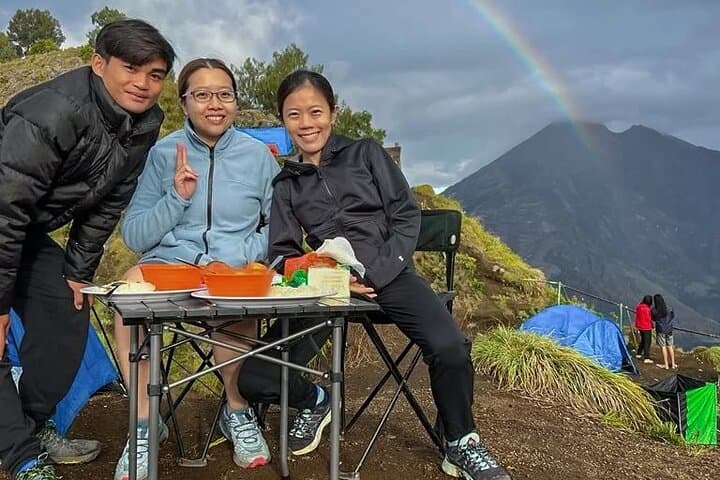
This 2-day, 1-night itinerary typically registers at the Rinjani Trek Center before an 08:00 start. Hike through evergreen understory to Post 2 (≈1,500 m), continue to Pos 3 (≈2,000 m) for lunch, then push two hours to the crater rim and camp for sunset over Bali’s Mount Agung. Dawn reveals Segara Anak and steamy fumaroles; descend the next day back to Senaru.
Practical guidance: plan for steep, uneven terrain and rapid temperature swings—daytime hiking is hot and humid, nights near freezing at the rim. Carry 2–3 liters water, layered clothing, sturdy boots and a headlamp. Move deliberately on loose volcanic scree, respect park rules, and hire local guides and porters—both for safety and to support the mountain communities.
challenging.
2 days (8–10 hours hiking total).
Good cardiovascular fitness and experience with sustained uphill hiking; able to carry a daypack and tolerate steep terrain.
Yes—entrance fees and park permits apply; this program includes the 150,000 IDR entrance ticket and local registration at the Rinjani Trek Center.
The route climbs roughly 2,040 m in one long push with mixed terrain—expect steep switchbacks and loose volcanic scree; a moderate-to-high fitness level is recommended.
Symptoms can occur above 2,000 m; ascend at a steady pace, hydrate, and tell your guide if you feel nausea, severe headache or dizziness—descent is the immediate remedy.
Typical inclusions are transport to/from Lombok points, one pre-trek night in Senaru, meals, camping equipment, guide and porters; check your booking for specifics.
Mount Rinjani holds spiritual significance for the Sasak people; many ceremonial sites and legends are tied to the mountain and Segara Anak lake.
Rinjani National Park limits group sizes and enforces trail rules—pack out waste, stick to established campsites, and hire local porters to keep impact low and benefits local.
Senaru Adventures operates guided outdoor trips and adventures with an emphasis on safety, stewardship, and memorable experiences.
Dawn breaks over the jungle and the path threads upward, steam from the crater lake catching the first light. You start in Senaru village (about 601 m), cross banana gardens and step into a dense tropical forest where humidity drips off ferns and the trail tightens into switchbacks. The mountain pulls you up—2040 meters of gain to the Senaru crater rim at 2,641 m—and the air sharpens as you climb.
Dawn breaks over the jungle and the path threads upward, steam from the crater lake catching the first light. You start in Senaru village (about 601 m), cross banana gardens and step into a dense tropical forest where humidity drips off ferns and the trail tightens into switchbacks. The mountain pulls you up—2040 meters of gain to the Senaru crater rim at 2,641 m—and the air sharpens as you climb.
Rinjani is an active stratovolcano whose shape and crater lake, Segara Anak, record repeated eruptions and geological shaping. The mountain is culturally important to the Sasak people; pilgrims still make offerings at sacred spots. Geologically, expect layered lava flows, volcanic scree and occasional fumaroles near the rim that scent the air. Birdsong and the occasional macaque punctuate the forested lower slopes.
This 2-day, 1-night itinerary typically registers at the Rinjani Trek Center before an 08:00 start. Hike through evergreen understory to Post 2 (≈1,500 m), continue to Pos 3 (≈2,000 m) for lunch, then push two hours to the crater rim and camp for sunset over Bali’s Mount Agung. Dawn reveals Segara Anak and steamy fumaroles; descend the next day back to Senaru.
Practical guidance: plan for steep, uneven terrain and rapid temperature swings—daytime hiking is hot and humid, nights near freezing at the rim. Carry 2–3 liters water, layered clothing, sturdy boots and a headlamp. Move deliberately on loose volcanic scree, respect park rules, and hire local guides and porters—both for safety and to support the mountain communities.