THE ADVENTURE COLLECTIVE® · Independent discovery and booking for outdoor travel

Spend a day moving between geological wonder and centuries of faith: walk among the 12‑meter Stob Pyramids, then explore Rila Monastery and the quiet pilgrimage path to St. Ivan’s grave. This accessible full‑day tour pairs short hikes with deep history, all within a scenic drive from Sofia.
Spend a day moving between geological wonder and centuries of faith: walk among the 12‑meter Stob Pyramids, then explore Rila Monastery and the quiet pilgrimage path to St. Ivan’s grave. This accessible full‑day tour pairs short hikes with deep history, all within a scenic drive from Sofia.
The bus eases out of Sofia while the city’s concrete grid softens into fir and beech. Windows frost with cloud as the Rila Mountains climb into view—gray ribs of rock and forest opening toward a courtyard that still hums with candlelight and whispered prayers. By midmorning you stand at the foot of the Stob Pyramids: columns of compacted earth, up to 12 meters high, balanced like an accidental skyline that wind and water have been drafting for millennia.
Verified experiences and guided adventures in the surrounding area.
Operated by Global Tour · Rila, Kyustendil Province
The bus eases out of Sofia while the city’s concrete grid softens into fir and beech. Windows frost with cloud as the Rila Mountains climb into view—gray ribs of rock and forest opening toward a courtyard that still hums with candlelight and whispered prayers. By midmorning you stand at the foot of the Stob Pyramids: columns of compacted earth, up to 12 meters high, balanced like an accidental skyline that wind and water have been drafting for millennia.
The day pairs two different kinds of Bulgarian clarity: geological patience at Stob, and human devotion at Rila Monastery. Stob’s formations are a recent spectacle in geological terms—river terraces and post-glacial erosion carving loam into hoodoos and spires. A short loop trail (roughly 1 km, mostly flat) threads past viewpoints where narrow pillars throw sharp, desert-like shadows. The site is a photographer’s study in scale, with a village backdrop and Rila’s peaks on the horizon.
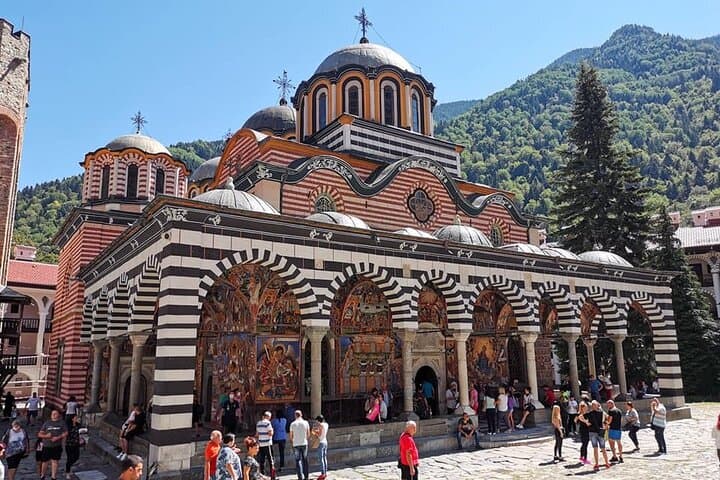
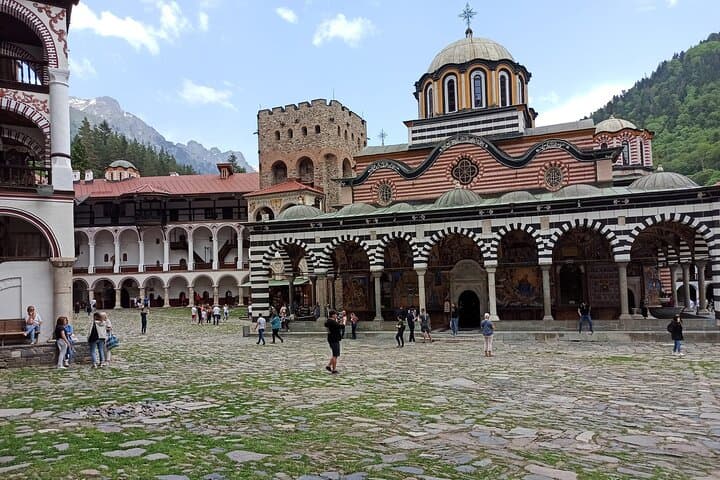
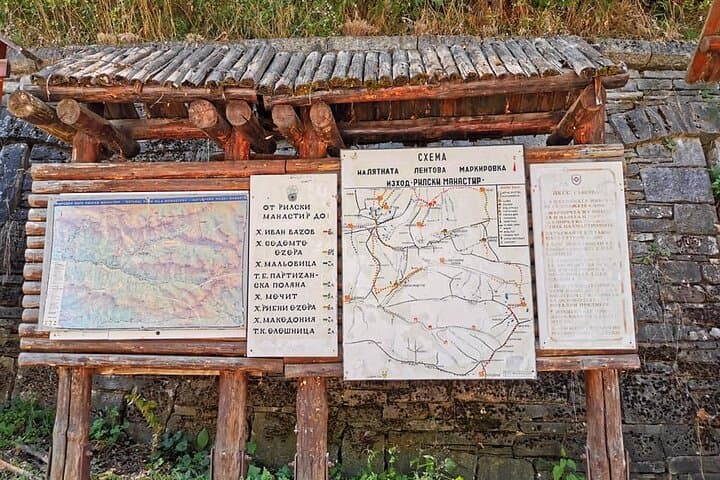
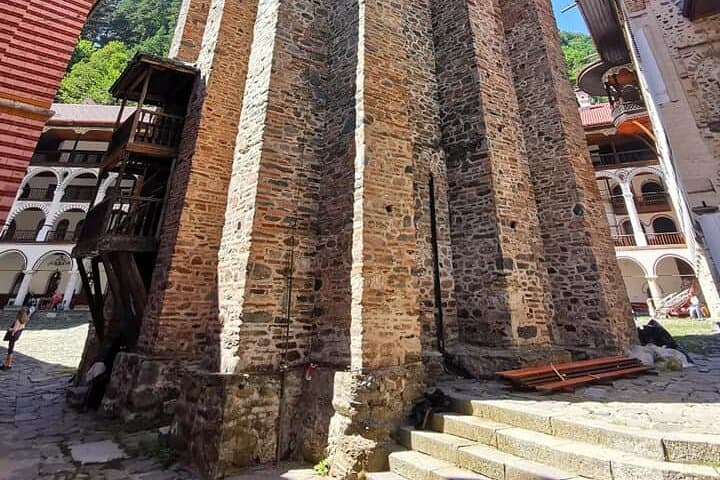
Later you arrive at Rila Monastery, founded by St. Ivan Rilski in the 10th century and now a UNESCO World Heritage site. The complex sits at roughly 1,150 m elevation, ringed by dark conifers. Its courtyard is a compact storybook of Bulgarian Orthodox architecture: painted exteriors, accordion-fold frescoes, and a museum that keeps manuscripts and icons older than many European nations. From the monastery a worn stone path leads uphill to St. Ivan’s grave—a short pilgrimage of about 1.8 km roundtrip with ~150 m of elevation gain. The path runs through quiet forest, guided by cairns and rustic footbridges; you’ll feel the place slow, as if the mountain itself were letting you walk into a quieter register.
This is a full but accessible day: expect about 10 hours total including transport (pick-up in Sofia and return by early evening). Wear grippy shoes for cobbled corridors and dirt tracks, pack layers—the mountain weather shifts fast—and bring modest clothing for the monastery interior. Admission to the monastery museum is separate from tour fees; tipping or a small donation for candle upkeep is customary.
Practical rhythm matters: arrive at Stob for morning light on the pinnacles, save the monastery for less crowded midday hours, and take the pilgrimage path in the afternoon when the light softens through the pines. Respect active religious spaces—quiet voices and covered shoulders are standard—and leave no trace at the pyramids.
By dusk the bus runs back toward Sofia while the mountains compress into a single dark line. You return with images and a two-part story: one written by water and gravity, the other by faith and centuries of caretakers. Both demand a slower pace to be understood.
moderate.
10 hours.
Moderate fitness: able to complete short hikes (1–2 km) with up to 150–200 m elevation gain and several flights of stone steps.
The advertised tour runs about 10 hours total (typically depart Sofia around 7:30 AM and return by about 6:00 PM); exact pickup details provided at booking.
Museum admissions and some chapel areas often require separate tickets or donations and are not always included—bring cash or confirm with the operator.
The pilgrimage trail is short (roughly 1.8 km roundtrip) with moderate elevation gain and uneven stone steps; it's suitable for most walkers with reasonable fitness.
No—modest dress is requested; cover shoulders and knees. Scarves and light wraps are acceptable and often provided at entrances.
Many tours offer multilingual guides or audio guides; check the tour listing for language options before booking.
The monastery courtyard is cobbled and the path to St. Ivan’s grave includes steps and uneven trail; accessibility is limited—contact the operator for assistance options.
Rila Monastery was founded in the 10th century by St. Ivan Rilski and evolved into a cultural center preserving manuscripts and Orthodox art; the Stob Pyramids are shaped by post‑glacial erosion and river terrace processes.
The monastery operates conservation programs for fresco and artifact preservation; visitors should stick to trails and avoid disturbing fragile soil at the Stob Pyramids to limit erosion.
Global Tour operates guided outdoor trips and adventures with an emphasis on safety, stewardship, and memorable experiences.
The bus eases out of Sofia while the city’s concrete grid softens into fir and beech. Windows frost with cloud as the Rila Mountains climb into view—gray ribs of rock and forest opening toward a courtyard that still hums with candlelight and whispered prayers. By midmorning you stand at the foot of the Stob Pyramids: columns of compacted earth, up to 12 meters high, balanced like an accidental skyline that wind and water have been drafting for millennia.
The bus eases out of Sofia while the city’s concrete grid softens into fir and beech. Windows frost with cloud as the Rila Mountains climb into view—gray ribs of rock and forest opening toward a courtyard that still hums with candlelight and whispered prayers. By midmorning you stand at the foot of the Stob Pyramids: columns of compacted earth, up to 12 meters high, balanced like an accidental skyline that wind and water have been drafting for millennia.
The day pairs two different kinds of Bulgarian clarity: geological patience at Stob, and human devotion at Rila Monastery. Stob’s formations are a recent spectacle in geological terms—river terraces and post-glacial erosion carving loam into hoodoos and spires. A short loop trail (roughly 1 km, mostly flat) threads past viewpoints where narrow pillars throw sharp, desert-like shadows. The site is a photographer’s study in scale, with a village backdrop and Rila’s peaks on the horizon.
Later you arrive at Rila Monastery, founded by St. Ivan Rilski in the 10th century and now a UNESCO World Heritage site. The complex sits at roughly 1,150 m elevation, ringed by dark conifers. Its courtyard is a compact storybook of Bulgarian Orthodox architecture: painted exteriors, accordion-fold frescoes, and a museum that keeps manuscripts and icons older than many European nations. From the monastery a worn stone path leads uphill to St. Ivan’s grave—a short pilgrimage of about 1.8 km roundtrip with ~150 m of elevation gain. The path runs through quiet forest, guided by cairns and rustic footbridges; you’ll feel the place slow, as if the mountain itself were letting you walk into a quieter register.
This is a full but accessible day: expect about 10 hours total including transport (pick-up in Sofia and return by early evening). Wear grippy shoes for cobbled corridors and dirt tracks, pack layers—the mountain weather shifts fast—and bring modest clothing for the monastery interior. Admission to the monastery museum is separate from tour fees; tipping or a small donation for candle upkeep is customary.
Practical rhythm matters: arrive at Stob for morning light on the pinnacles, save the monastery for less crowded midday hours, and take the pilgrimage path in the afternoon when the light softens through the pines. Respect active religious spaces—quiet voices and covered shoulders are standard—and leave no trace at the pyramids.
By dusk the bus runs back toward Sofia while the mountains compress into a single dark line. You return with images and a two-part story: one written by water and gravity, the other by faith and centuries of caretakers. Both demand a slower pace to be understood.