THE ADVENTURE COLLECTIVE® · Independent discovery and booking for outdoor travel

Discover Rijal Almaa’s stacked stone palaces and community museum on a guided day tour from Abha. Expect panoramic overlooks, vivid traditional architecture, and curated local history with plenty of photo stops.
Discover Rijal Almaa’s stacked stone palaces and community museum on a guided day tour from Abha. Expect panoramic overlooks, vivid traditional architecture, and curated local history with plenty of photo stops.
You step from the air-conditioned vehicle onto a narrow lane where stone palaces rise like stacked cake tiers, their ochre plaster punctuated by carved wooden windows and bright geometric panels. The mountain wind nudges you toward the rim of the village; below, terraced slopes fold into distant ridgelines and sunlight moves like a slow hand across the valley.
Verified experiences and guided adventures in the surrounding area.
Operated by TourDragon - Saudi Arabia Tours · Rijal Almaa, Asir
You step from the air-conditioned vehicle onto a narrow lane where stone palaces rise like stacked cake tiers, their ochre plaster punctuated by carved wooden windows and bright geometric panels. The mountain wind nudges you toward the rim of the village; below, terraced slopes fold into distant ridgelines and sunlight moves like a slow hand across the valley.
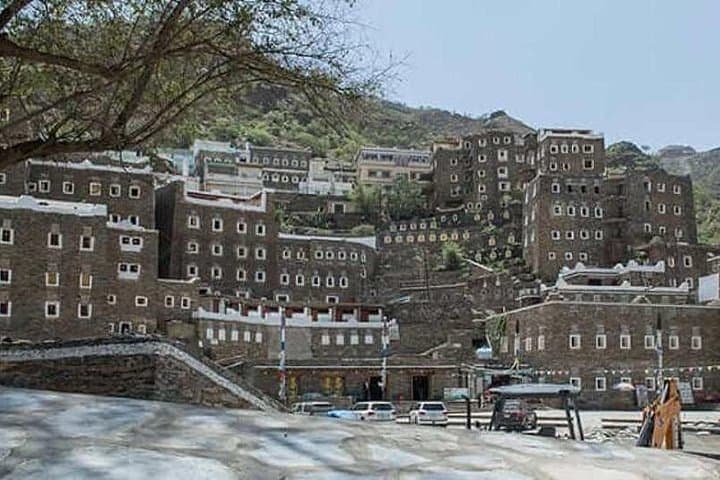
Rijal Almaa sits at a crossroads of trade and culture: a centuries‑old stop on routes linking Yemen, the Hijaz and the Levant. Its multi-story houses—built of stone, clay and timber—reflect local building techniques adapted to steep terrain and seasonal rains. The village’s forts and granaries tell a pragmatic story of defense and storage; in 1985 locals turned one fortress into a community museum to preserve artifacts and oral histories.
Geologically the site occupies rugged foothills carved by ancient drainage; views emphasize layered strata and agricultural ledges that cling to narrow terraces. Culturally, the village is alive with craft traditions and a hospitality shaped by desert and mountain trade.
Practical angle: this is a half-day to full-day guided visit best begun in the morning for cooler light and easier footwork. Wear grippy shoes for uneven stone steps, carry 1–2 liters of water, and bring a wind shell for exposed panoramic overlooks. Photography is the highlight—ask your guide for the best vantage points and observe local signage inside the museum.
Expect a relaxed, interpretive pace with plenty of photo stops, basic walking over uneven surfaces, and close encounters with restored architecture and community‑run exhibits that map the village’s role in regional history.
easy.
6–7 hours.
Suitable for most fitness levels; requires steady balance on stairs and short uphill sections.
The trip runs about 6–7 hours (360–420 minutes), including transport and guided time in the village and museum.
No—it's rated easy, but expect uneven stone steps and short uphill walks; steady footwear is recommended.
Museum access is included as part of the guided visit; confirm with the operator if special exhibits have separate fees.
An English‑speaking tour leader/driver is provided, per the trip inclusions.
Rijal Almaa evolved as a fortified trading stop on routes between Yemen, the Hijaz and the Levant; many houses and forts date back centuries and were adapted for defense and storage.
Local restoration supported by the Saudi tourism authority aims to stabilize structures and manage visitor impact; visitors should stay on marked paths and avoid touching fragile surfaces.
TourDragon - Saudi Arabia Tours operates guided outdoor trips and adventures with an emphasis on safety, stewardship, and memorable experiences.
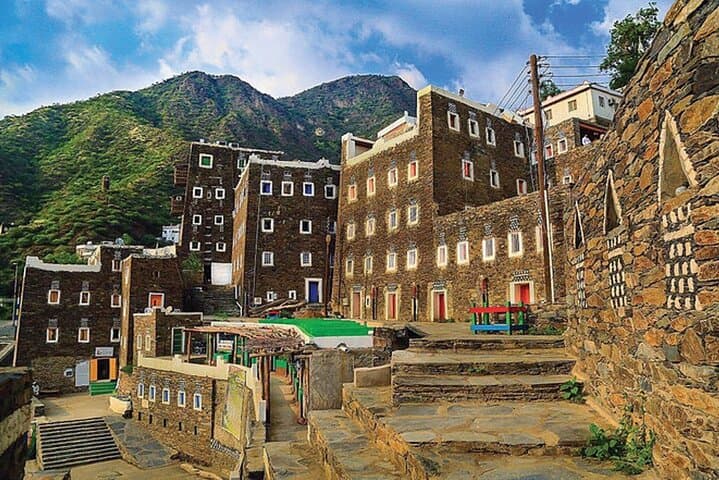
You step from the air-conditioned vehicle onto a narrow lane where stone palaces rise like stacked cake tiers, their ochre plaster punctuated by carved wooden windows and bright geometric panels. The mountain wind nudges you toward the rim of the village; below, terraced slopes fold into distant ridgelines and sunlight moves like a slow hand across the valley.
You step from the air-conditioned vehicle onto a narrow lane where stone palaces rise like stacked cake tiers, their ochre plaster punctuated by carved wooden windows and bright geometric panels. The mountain wind nudges you toward the rim of the village; below, terraced slopes fold into distant ridgelines and sunlight moves like a slow hand across the valley.
Rijal Almaa sits at a crossroads of trade and culture: a centuries‑old stop on routes linking Yemen, the Hijaz and the Levant. Its multi-story houses—built of stone, clay and timber—reflect local building techniques adapted to steep terrain and seasonal rains. The village’s forts and granaries tell a pragmatic story of defense and storage; in 1985 locals turned one fortress into a community museum to preserve artifacts and oral histories.
Geologically the site occupies rugged foothills carved by ancient drainage; views emphasize layered strata and agricultural ledges that cling to narrow terraces. Culturally, the village is alive with craft traditions and a hospitality shaped by desert and mountain trade.
Practical angle: this is a half-day to full-day guided visit best begun in the morning for cooler light and easier footwork. Wear grippy shoes for uneven stone steps, carry 1–2 liters of water, and bring a wind shell for exposed panoramic overlooks. Photography is the highlight—ask your guide for the best vantage points and observe local signage inside the museum.
Expect a relaxed, interpretive pace with plenty of photo stops, basic walking over uneven surfaces, and close encounters with restored architecture and community‑run exhibits that map the village’s role in regional history.