THE ADVENTURE COLLECTIVE® · Independent discovery and booking for outdoor travel

Travel from Zurich to the Rigi massif and Lucerne in a single day: cableway to Rigi Kaltbad, Europe’s historic cogwheel train to Rigi‑Kulm, then a scenic boat to Lucerne. Expect panoramic lake views, accessible summit trails, and convenient transport connections.
Travel from Zurich to the Rigi massif and Lucerne in a single day: cableway to Rigi Kaltbad, Europe’s historic cogwheel train to Rigi‑Kulm, then a scenic boat to Lucerne. Expect panoramic lake views, accessible summit trails, and convenient transport connections.
A low-slung panoramic coach eases out of Zurich and the road carves over the Albis Pass, the city shrinking behind you as Lake Lucerne glints and the air sharpens. By the time you reach Weggis the lake seems to reach up the mountainside; an aerial cableway lifts you to Rigi Kaltbad where the pines lean into the wind and the massif opens like a mapped landscape.
Verified experiences and guided adventures in the surrounding area.
Operated by Keytours (Switzerland) · Zurich, Zurich
A low-slung panoramic coach eases out of Zurich and the road carves over the Albis Pass, the city shrinking behind you as Lake Lucerne glints and the air sharpens. By the time you reach Weggis the lake seems to reach up the mountainside; an aerial cableway lifts you to Rigi Kaltbad where the pines lean into the wind and the massif opens like a mapped landscape.
Rigi has long drawn visitors — Victorian travelers christened it the “Queen of the Mountains,” and Europe’s first mountain railway, the Rigi Bahn (opened in the 1870s), still runs its cogwheel route to Rigi-Kulm at 1,797 m. Geologically the massif is a raised platform of molasse and older sediments, its rounded ridges offering wide views rather than jagged peaks. Culture here is pragmatic alpine: mountain restaurants serve cheese-forward dishes, and small chapels mark historical waypoints.
Expect well-marked short trails, sweeping lake views, and the tactile click of cogwheels and cable grips; visibility shapes the experience more than technical difficulty. After a summit loop and a visit to the little Rigi Kulm chapel, descend by cogwheel train to Vitznau and glide across the water to Lucerne, where the Chapel Bridge and the KKL give a neat contrast between medieval streets and contemporary architecture.
Practical notes: this is a full-day outing (about 11 hours). Check cable car maintenance schedules — the train is the fallback — and monitor weather; early mornings deliver the clearest vistas. Pack layers, a windproof, sturdy walking shoes, water and a power bank: alpine light changes fast and you’ll want to stay out to the end of the boat ride.
easy.
11 hours (full-day).
Suitable for general fitness; includes short uphill walks and standing during transfers—no technical fitness required.
The tour runs about 11 hours round-trip, including coach transfers, summit time, and the Vitznau–Lucerne boat cruise.
If the aerial cableway is closed for maintenance, the itinerary uses the cogwheel train to reach Rigi Kaltbad and Rigi‑Kulm instead.
Yes—strollers are possible on flat sections and in transport, but expect steps and uneven ground at some viewpoints and restaurants.
Most mountain restaurants and Lucerne businesses accept cards, but small cash (Swiss francs) can be handy for snacks or remote vendors.
Rigi was a Victorian travel magnet and the site of Europe’s first mountain railway in the 1870s, which helped pioneer alpine tourism and scenic rail travel.
Stick to marked paths and pack out waste—alpine soils are thin and recover slowly. Boat operators and railways follow regional rules to limit emissions, but minimizing single-use plastics helps local stewardship.
Keytours (Switzerland) operates guided outdoor trips and adventures with an emphasis on safety, stewardship, and memorable experiences.
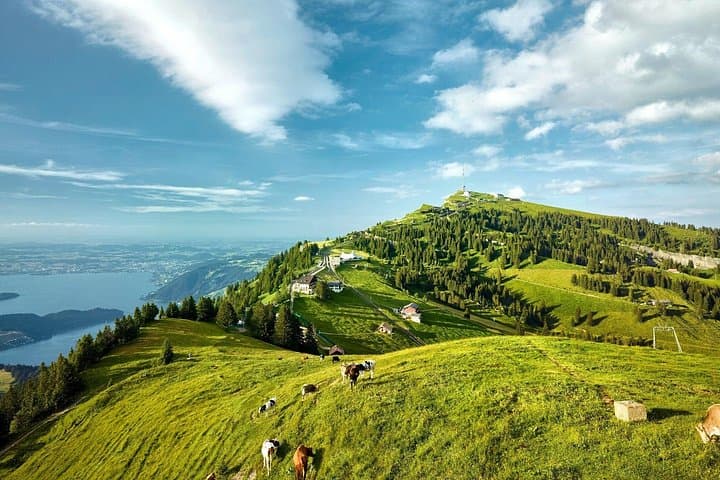
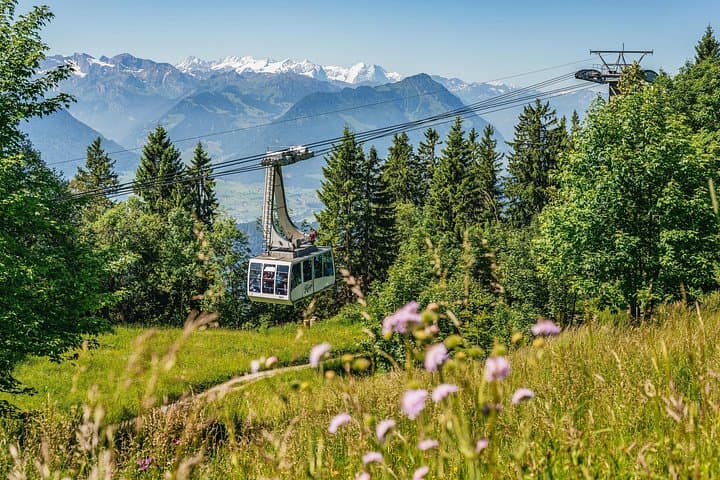
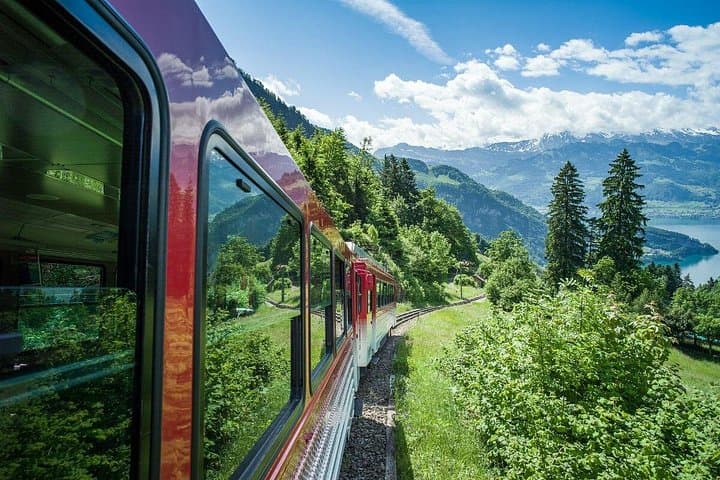
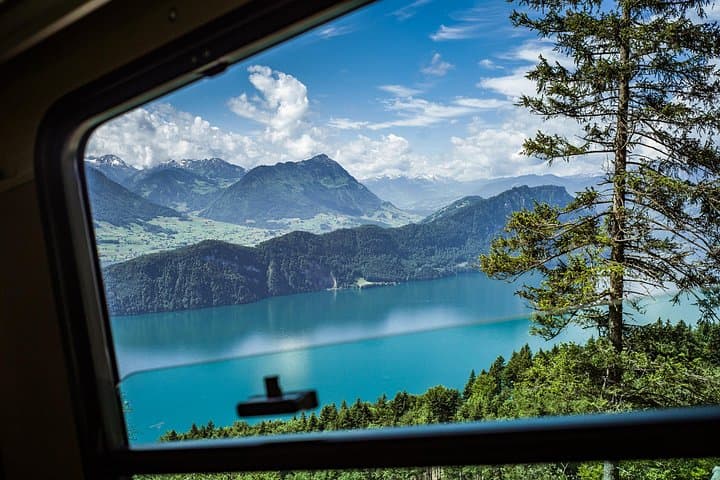
A low-slung panoramic coach eases out of Zurich and the road carves over the Albis Pass, the city shrinking behind you as Lake Lucerne glints and the air sharpens. By the time you reach Weggis the lake seems to reach up the mountainside; an aerial cableway lifts you to Rigi Kaltbad where the pines lean into the wind and the massif opens like a mapped landscape.
A low-slung panoramic coach eases out of Zurich and the road carves over the Albis Pass, the city shrinking behind you as Lake Lucerne glints and the air sharpens. By the time you reach Weggis the lake seems to reach up the mountainside; an aerial cableway lifts you to Rigi Kaltbad where the pines lean into the wind and the massif opens like a mapped landscape.
Rigi has long drawn visitors — Victorian travelers christened it the “Queen of the Mountains,” and Europe’s first mountain railway, the Rigi Bahn (opened in the 1870s), still runs its cogwheel route to Rigi-Kulm at 1,797 m. Geologically the massif is a raised platform of molasse and older sediments, its rounded ridges offering wide views rather than jagged peaks. Culture here is pragmatic alpine: mountain restaurants serve cheese-forward dishes, and small chapels mark historical waypoints.
Expect well-marked short trails, sweeping lake views, and the tactile click of cogwheels and cable grips; visibility shapes the experience more than technical difficulty. After a summit loop and a visit to the little Rigi Kulm chapel, descend by cogwheel train to Vitznau and glide across the water to Lucerne, where the Chapel Bridge and the KKL give a neat contrast between medieval streets and contemporary architecture.
Practical notes: this is a full-day outing (about 11 hours). Check cable car maintenance schedules — the train is the fallback — and monitor weather; early mornings deliver the clearest vistas. Pack layers, a windproof, sturdy walking shoes, water and a power bank: alpine light changes fast and you’ll want to stay out to the end of the boat ride.