THE ADVENTURE COLLECTIVE® · Independent discovery and booking for outdoor travel

Feel the track push you forward on a soft bobsleigh near Riga — a head-first, low-to-the-sled ride built for adrenaline without Olympic-level speed. This guide explains what to expect, how to prepare, and when to go for the best run.
Feel the track push you forward on a soft bobsleigh near Riga — a head-first, low-to-the-sled ride built for adrenaline without Olympic-level speed. This guide explains what to expect, how to prepare, and when to go for the best run.
The track curves into view like a cold tongue of steel, and for a few heartbeats the world narrows to the line ahead. On a winter afternoon outside Riga you lie flat on a soft bobsleigh, hands gripping the sides as the guide gives the shove. The sled eats the incline, the wind pulls at your face, and the run presses you forward — fast, controlled, and sharper than it looks.
Verified experiences and guided adventures in the surrounding area.
Operated by Riga Stag Weekend · Riga, Riga
The track curves into view like a cold tongue of steel, and for a few heartbeats the world narrows to the line ahead. On a winter afternoon outside Riga you lie flat on a soft bobsleigh, hands gripping the sides as the guide gives the shove. The sled eats the incline, the wind pulls at your face, and the run presses you forward — fast, controlled, and sharper than it looks.
Bobsleigh in this region has roots in Soviet-era winter sports development and today the nearest competitive track doubles as a public attraction for visitors seeking a sanitized taste of the Olympic experience. Geology here is rolling moraine country: compacted glacial deposits create natural drops and bends that designers used to shape sled runs. Culturally, a trip to the track often pairs with visits to Gauja National Park and the medieval sites around Sigulda — a short drive from Riga where winter sports and forested valleys meet.
Practically, the soft-sled ride is designed for wide accessibility: safety equipment is supplied, and physical exertion is minimal, but motion and speed are intense. Expect briefing, one or two trial runs, and a repeatable adrenaline hit in about two hours. Dress for cold, bring eye protection and a small dry bag for phones. Pregnant travelers should avoid this activity and organizers typically limit bookings to one person per sled. Peak season is mid-December through February when the track is firm; shoulder months may offer a slower, wet-sled alternative. If you want the fastest, clearest run, book early in the day when temperatures are lowest and the ice is hardest.
easy.
2–3 hours.
Suitable for most fitness levels — minimal exertion required though you must be able to lie prone and follow instructions.
Yes — operators provide helmets and padding and runs are designed to limit top speed compared to Olympic sleds; follow staff instructions carefully.
Age and size restrictions vary by operator; many providers allow older children but require a supervising adult — confirm during booking.
Warm, layered clothing, gloves, and a windproof jacket; avoid loose scarves and unsecured hats.
Runs can be modified for mild thaw conditions, but heavy rain or unsafe ice may lead to adjustments rather than refunds, so check cancellation policies.
The regional bobsleigh tradition grew during the Soviet period when winter sports infrastructure was expanded; modern public runs reuse that legacy as visitor attractions.
Operators often work within Gauja National Park guidelines; stay on marked paths outside the track and pack out waste to protect fragile winter habitats.
Riga Stag Weekend operates guided outdoor trips and adventures with an emphasis on safety, stewardship, and memorable experiences.
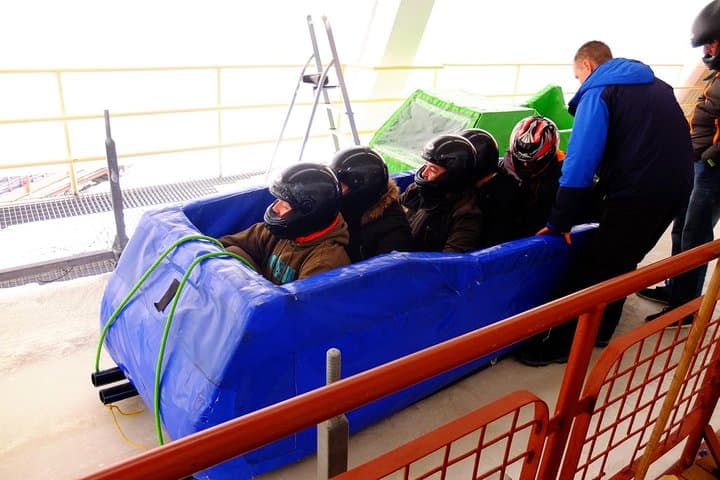
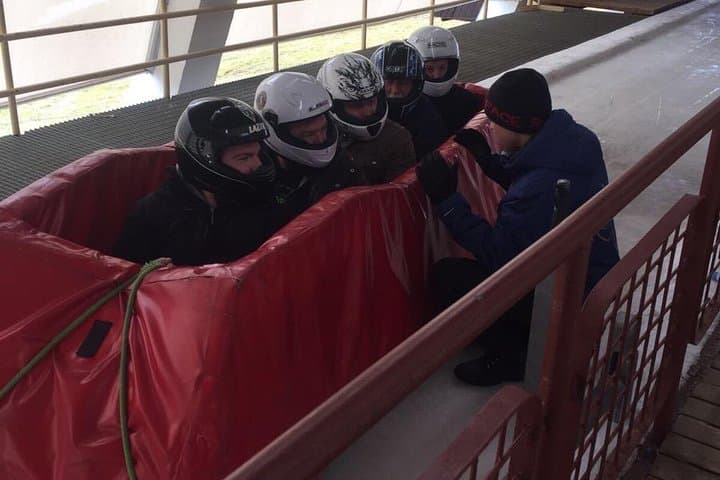
The track curves into view like a cold tongue of steel, and for a few heartbeats the world narrows to the line ahead. On a winter afternoon outside Riga you lie flat on a soft bobsleigh, hands gripping the sides as the guide gives the shove. The sled eats the incline, the wind pulls at your face, and the run presses you forward — fast, controlled, and sharper than it looks.
The track curves into view like a cold tongue of steel, and for a few heartbeats the world narrows to the line ahead. On a winter afternoon outside Riga you lie flat on a soft bobsleigh, hands gripping the sides as the guide gives the shove. The sled eats the incline, the wind pulls at your face, and the run presses you forward — fast, controlled, and sharper than it looks.
Bobsleigh in this region has roots in Soviet-era winter sports development and today the nearest competitive track doubles as a public attraction for visitors seeking a sanitized taste of the Olympic experience. Geology here is rolling moraine country: compacted glacial deposits create natural drops and bends that designers used to shape sled runs. Culturally, a trip to the track often pairs with visits to Gauja National Park and the medieval sites around Sigulda — a short drive from Riga where winter sports and forested valleys meet.
Practically, the soft-sled ride is designed for wide accessibility: safety equipment is supplied, and physical exertion is minimal, but motion and speed are intense. Expect briefing, one or two trial runs, and a repeatable adrenaline hit in about two hours. Dress for cold, bring eye protection and a small dry bag for phones. Pregnant travelers should avoid this activity and organizers typically limit bookings to one person per sled. Peak season is mid-December through February when the track is firm; shoulder months may offer a slower, wet-sled alternative. If you want the fastest, clearest run, book early in the day when temperatures are lowest and the ice is hardest.