THE ADVENTURE COLLECTIVE® · Independent discovery and booking for outdoor travel

A private day tour from Riga that pairs Gauja Valley’s sandstone cliffs and medieval ruins with the intimate legends of Turaida and Gutman’s Cave. Ideal for travelers who want history, short hikes and dramatic river views without a long trek.
A private day tour from Riga that pairs Gauja Valley’s sandstone cliffs and medieval ruins with the intimate legends of Turaida and Gutman’s Cave. Ideal for travelers who want history, short hikes and dramatic river views without a long trek.
Morning light spreads along the River Gauja and the road from Riga dips toward a landscape of cliffs, dark forest and scattered stone. The driver eases the vehicle into the valley and the air changes—cool, pine-scented, a little damp where the river dares you close to its banks. Walks from the parking area climb short hills, and within an hour the red brick of Turaida tower rises above birch and spruce.
Verified experiences and guided adventures in the surrounding area.
Operated by Riga With Us · Sigulda, Vidzeme
Morning light spreads along the River Gauja and the road from Riga dips toward a landscape of cliffs, dark forest and scattered stone. The driver eases the vehicle into the valley and the air changes—cool, pine-scented, a little damp where the river dares you close to its banks. Walks from the parking area climb short hills, and within an hour the red brick of Turaida tower rises above birch and spruce.
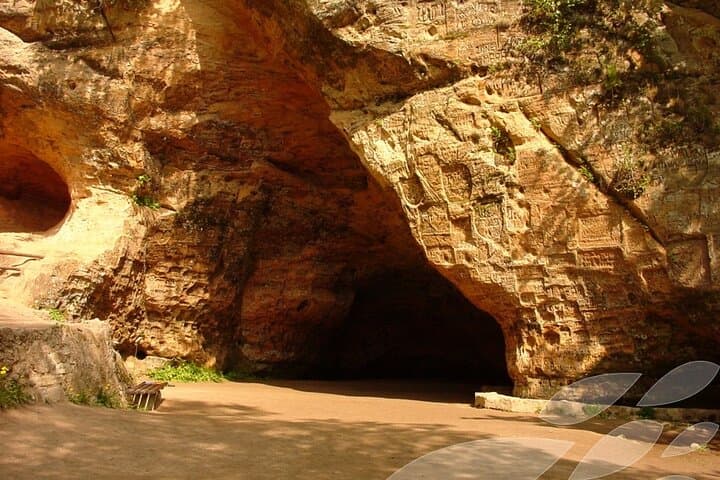
This route threads Livonian Order history with local legend: Turaida and Sigulda castles stand where medieval lords watched the river corridor, and Gutman’s Cave holds the scratched names and the sorrowful Rose of Turaida tale. Geologically the Gauja Valley exposes Devonian sandstone cliffs and caves carved by millennia of water—sandstone faces you can study close-up, not just admire from a distance.
Cesis adds a different beat: a compact medieval town with a fortress keep and cobbled streets that reflect Hanseatic trade once passing through the region.
Practical guidance is straightforward. Expect 2–5 km of walking at each stop, modest elevation changes (tens of metres), and several sets of stairs in castle towers. Wear grippy shoes for uneven trails, pack water and a light rain layer, and aim for morning light at lookouts to avoid crowds. If visiting in summer, bring sunscreen; in shoulder seasons, layer for cool wind on ridges. Facilities are basic at some sites—cafés appear near main attractions but carry small-change for entry or souvenirs.
A private tour from Riga compresses transport and time, letting you focus on ruins, views and the slow, human history written into stone and river.
easy.
4–8 hours.
Light to moderate fitness; able to walk several short uphill sections and climb stairs in towers.
Typical private tours run 4–8 hours door-to-door depending on stops and traffic; this option lists 240–480 minutes.
Most stops are family-friendly but some castle areas have stairs and uneven ground; strollers can be used near entry areas but not on all paths.
Some areas, like portions of castle parks, offer accessible paths and transportation is wheelchair accessible, but tower climbs and caves are not fully accessible.
Admission for main castles is often available on-site, but for a private tour tickets can be included or arranged in advance—confirm when booking.
The Gauja corridor was contested by Livonian and Teutonic orders; the region’s castles grew where trade and military routes crossed the river. The Rose of Turaida is a local legend tied to Gutman’s Cave.
This area sits inside Gauja National Park with active preservation efforts; stick to trails, avoid removing stones or artifacts, and carry out waste to minimize visitor impact.
Riga With Us operates guided outdoor trips and adventures with an emphasis on safety, stewardship, and memorable experiences.
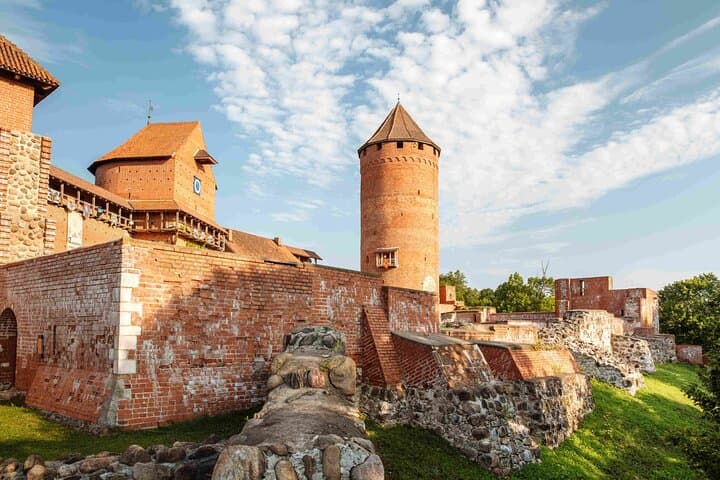
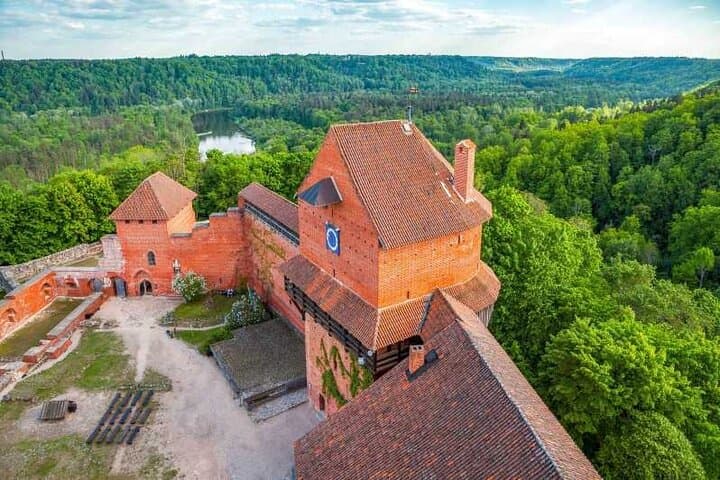
Morning light spreads along the River Gauja and the road from Riga dips toward a landscape of cliffs, dark forest and scattered stone. The driver eases the vehicle into the valley and the air changes—cool, pine-scented, a little damp where the river dares you close to its banks. Walks from the parking area climb short hills, and within an hour the red brick of Turaida tower rises above birch and spruce.
Morning light spreads along the River Gauja and the road from Riga dips toward a landscape of cliffs, dark forest and scattered stone. The driver eases the vehicle into the valley and the air changes—cool, pine-scented, a little damp where the river dares you close to its banks. Walks from the parking area climb short hills, and within an hour the red brick of Turaida tower rises above birch and spruce.
This route threads Livonian Order history with local legend: Turaida and Sigulda castles stand where medieval lords watched the river corridor, and Gutman’s Cave holds the scratched names and the sorrowful Rose of Turaida tale. Geologically the Gauja Valley exposes Devonian sandstone cliffs and caves carved by millennia of water—sandstone faces you can study close-up, not just admire from a distance.
Cesis adds a different beat: a compact medieval town with a fortress keep and cobbled streets that reflect Hanseatic trade once passing through the region.
Practical guidance is straightforward. Expect 2–5 km of walking at each stop, modest elevation changes (tens of metres), and several sets of stairs in castle towers. Wear grippy shoes for uneven trails, pack water and a light rain layer, and aim for morning light at lookouts to avoid crowds. If visiting in summer, bring sunscreen; in shoulder seasons, layer for cool wind on ridges. Facilities are basic at some sites—cafés appear near main attractions but carry small-change for entry or souvenirs.
A private tour from Riga compresses transport and time, letting you focus on ruins, views and the slow, human history written into stone and river.