THE ADVENTURE COLLECTIVE® · Independent discovery and booking for outdoor travel

Slide into the passenger seat as a seasoned driver sculpts arcs across an ice track outside Riga. In about three hours you’ll learn how winter becomes playground — and why Baltic drivers chase the first snowfall.
Slide into the passenger seat as a seasoned driver sculpts arcs across an ice track outside Riga. In about three hours you’ll learn how winter becomes playground — and why Baltic drivers chase the first snowfall.
The engine pops and a plume of steam hangs in the cold Baltic air as a brutish coupe slides sideways over a field of packed snow. You’re strapped into a passenger seat while the driver teases the throttle, the rear end yawing with confident, practiced aggression — snow sprays like a brief white curtain and the world narrows to the squeal of tires and a horizon of frosted pines.
Verified experiences and guided adventures in the surrounding area.
Operated by Latvian Gem · Riga, Riga
The engine pops and a plume of steam hangs in the cold Baltic air as a brutish coupe slides sideways over a field of packed snow. You’re strapped into a passenger seat while the driver teases the throttle, the rear end yawing with confident, practiced aggression — snow sprays like a brief white curtain and the world narrows to the squeal of tires and a horizon of frosted pines.
Latvia’s long winters and straight rural roads cultivated a local motorsport culture; from informal frozen-lake laps to organized ice-track events, drivers here learned to use low grip as a classroom. Many ice tracks around Riga occupy former agricultural fields and shallow lakes, their ruts and berms carved by repeated runs rather than geology. The scene borrows from Baltic rally tradition: precise car control, modest vehicles, and a social streak — crews compare lines and laugh in steaming overalls.
Practical details matter: expect a 25–40 minute transfer from central Riga, around 30 minutes actually on the ice, and roughly three hours total for pickup, briefing, and return. Operators provide helmets and a briefing; self-drive can be arranged with advance notice and extra paperwork. Dress in windproof, insulated layers and bring secure footwear; pocketed phones can fly in a drift, so tether cameras or use a chest rig.
This is low-impact sightseeing turned loud and kinetic — follow the instructor, respect track boundaries, and you’ll leave with a clearer idea of how drivers lean into winter rather than fight it.
moderate.
3 hours.
No special fitness required — must be able to sit securely and tolerate short bursts of lateral force.
Expect roughly 25–40 minutes of transfer each way and about 30 minutes on the ice itself within a three-hour total window.
Self-drive is possible if arranged in advance — operators usually require extra paperwork, an assessment, and may restrict which vehicles are available.
The experience is not recommended for pregnant travelers; child participation depends on age, size, and operator policy — check minimum age rules when booking.
Trips may be canceled or rescheduled if conditions make the track unsafe; operators typically offer full refunds if canceled at least 24 hours in advance.
Winter driving and rallying have long roots in the Baltics; frozen fields and improvised tracks historically helped local drivers refine low-grip techniques.
Use designated tracks to avoid damaging vegetation or fragile frozen wetlands; operators should follow local rules to minimize noise and soil disturbance.
Latvian Gem operates guided outdoor trips and adventures with an emphasis on safety, stewardship, and memorable experiences.
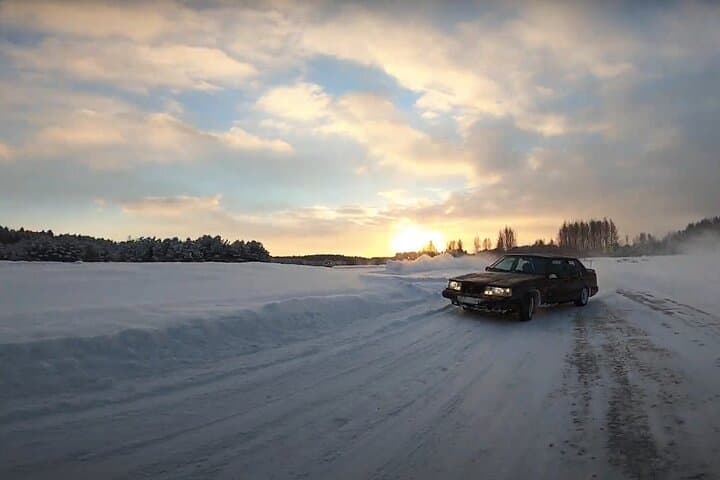
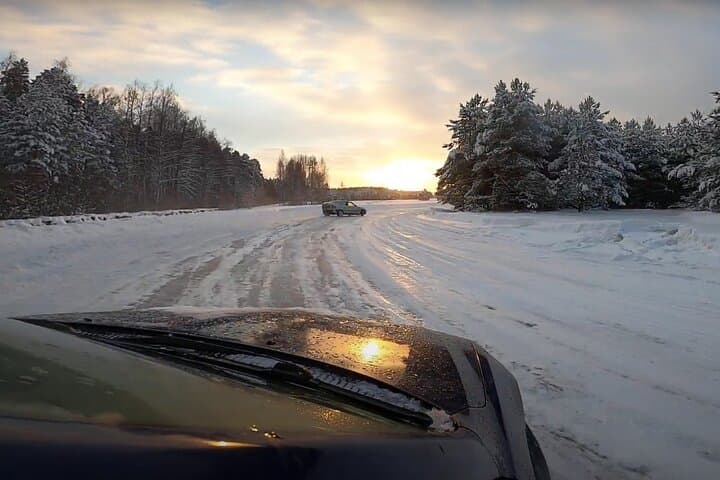
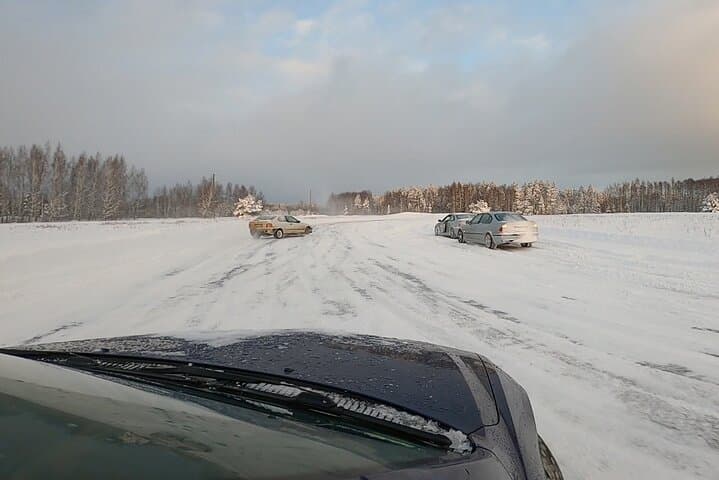
The engine pops and a plume of steam hangs in the cold Baltic air as a brutish coupe slides sideways over a field of packed snow. You’re strapped into a passenger seat while the driver teases the throttle, the rear end yawing with confident, practiced aggression — snow sprays like a brief white curtain and the world narrows to the squeal of tires and a horizon of frosted pines.
The engine pops and a plume of steam hangs in the cold Baltic air as a brutish coupe slides sideways over a field of packed snow. You’re strapped into a passenger seat while the driver teases the throttle, the rear end yawing with confident, practiced aggression — snow sprays like a brief white curtain and the world narrows to the squeal of tires and a horizon of frosted pines.
Latvia’s long winters and straight rural roads cultivated a local motorsport culture; from informal frozen-lake laps to organized ice-track events, drivers here learned to use low grip as a classroom. Many ice tracks around Riga occupy former agricultural fields and shallow lakes, their ruts and berms carved by repeated runs rather than geology. The scene borrows from Baltic rally tradition: precise car control, modest vehicles, and a social streak — crews compare lines and laugh in steaming overalls.
Practical details matter: expect a 25–40 minute transfer from central Riga, around 30 minutes actually on the ice, and roughly three hours total for pickup, briefing, and return. Operators provide helmets and a briefing; self-drive can be arranged with advance notice and extra paperwork. Dress in windproof, insulated layers and bring secure footwear; pocketed phones can fly in a drift, so tether cameras or use a chest rig.
This is low-impact sightseeing turned loud and kinetic — follow the instructor, respect track boundaries, and you’ll leave with a clearer idea of how drivers lean into winter rather than fight it.