THE ADVENTURE COLLECTIVE® · Independent discovery and booking for outdoor travel

Board Yangon’s Circle Train for a three-hour portrait of daily Burmese life: vendors, monks, and shifting urban fringes glide by as the carriage threads 38 stations. This half-day loop is equal parts cultural immersion and practical transport—ideal for travelers who want a ground-level view of the city.
Board Yangon’s Circle Train for a three-hour portrait of daily Burmese life: vendors, monks, and shifting urban fringes glide by as the carriage threads 38 stations. This half-day loop is equal parts cultural immersion and practical transport—ideal for travelers who want a ground-level view of the city.
Morning light slants through rusted window frames as the Yangon Circle Train pulls out of Central Station. Vendors balance trays of boiled peanuts and fried snacks in the vestibules, monks in maroon robes fold into wooden benches, and the city’s edges—rice paddies, canals, low-rise tin roofs—slowly come into view. The carriage is both observation deck and living room: a place where Yangon’s daily rhythms reveal themselves in motion.
Verified experiences and guided adventures in the surrounding area.
Operated by Astoria Travels Tours · Yangon, Yangon Region
Morning light slants through rusted window frames as the Yangon Circle Train pulls out of Central Station. Vendors balance trays of boiled peanuts and fried snacks in the vestibules, monks in maroon robes fold into wooden benches, and the city’s edges—rice paddies, canals, low-rise tin roofs—slowly come into view. The carriage is both observation deck and living room: a place where Yangon’s daily rhythms reveal themselves in motion.
The Circle Train is a relic of Yangon’s railway network that still functions as a commuter artery. Built on infrastructure from the colonial era, the line now threads 38 stations across urban neighborhoods and industrial margins, giving riders a cross-section of the city’s social and economic life. Geologically, the route runs across Yangon’s flat delta plain, so expect open, lowland vistas rather than steep climbs or dramatic rock formations.
Culturally, the ride is a lesson in small economies—station-side vendors, mobile snack sellers, and commuters who ride for hours every day. Bring curiosity and a camera, but also respect local norms: modest dress and polite distance around monks and families go a long way.
Practical tips: the full circuit takes about three hours (operators often package this as a half-day tour), buy tickets at the station or through your guide, and board early for a seat on the shaded side. Expect crowded carriages, uneven platforms, and frequent stops; watch your bag when vendors hop on. Hydrate, pack small change for snacks, and allow time after the return to unwind—this is a slow, honest urban adventure rather than a checklist attraction.
moderate.
3–4 hours.
Light physical demands—able to stand or move through crowded platforms for short periods; basic mobility required.
The full circuit takes about three hours; most guided half-day tours including transfers run around four hours total.
Yes—on the public Circle Train you can disembark and reboard on later services, but if you’re on an organized tour check with your guide first.
Many guided tours arrange or buy station tickets for you as part of the package; confirm at booking if you prefer to handle your own fare.
Generally yes—this is a regular commuter service—but normal urban precautions apply: keep valuables close and be mindful during crowded stops.
The Circle Train runs on rail infrastructure with roots in the colonial era and has served Yangon’s commuters for generations, linking inner-city districts to outlying suburbs.
Travelers should minimize plastic waste from snacks and support vendors with reusable containers; respect platforms and avoid littering to keep community spaces clean.
Astoria Travels Tours operates guided outdoor trips and adventures with an emphasis on safety, stewardship, and memorable experiences.
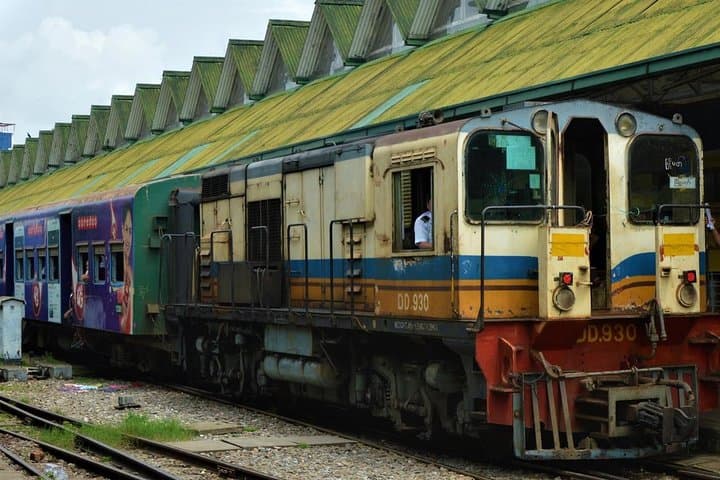
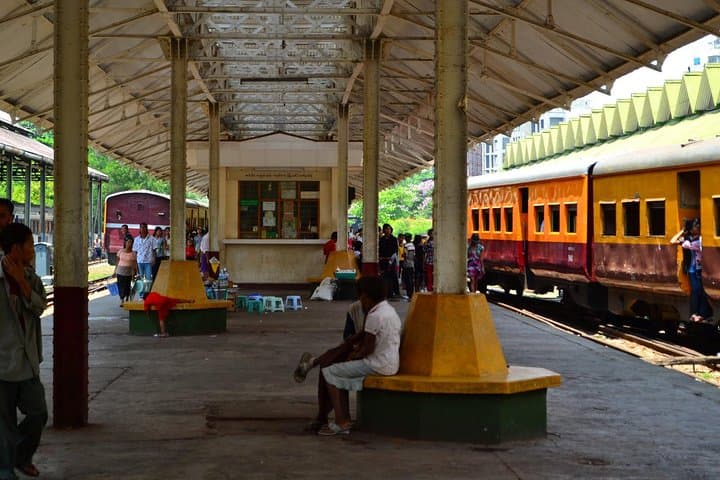
Morning light slants through rusted window frames as the Yangon Circle Train pulls out of Central Station. Vendors balance trays of boiled peanuts and fried snacks in the vestibules, monks in maroon robes fold into wooden benches, and the city’s edges—rice paddies, canals, low-rise tin roofs—slowly come into view. The carriage is both observation deck and living room: a place where Yangon’s daily rhythms reveal themselves in motion.
Morning light slants through rusted window frames as the Yangon Circle Train pulls out of Central Station. Vendors balance trays of boiled peanuts and fried snacks in the vestibules, monks in maroon robes fold into wooden benches, and the city’s edges—rice paddies, canals, low-rise tin roofs—slowly come into view. The carriage is both observation deck and living room: a place where Yangon’s daily rhythms reveal themselves in motion.
The Circle Train is a relic of Yangon’s railway network that still functions as a commuter artery. Built on infrastructure from the colonial era, the line now threads 38 stations across urban neighborhoods and industrial margins, giving riders a cross-section of the city’s social and economic life. Geologically, the route runs across Yangon’s flat delta plain, so expect open, lowland vistas rather than steep climbs or dramatic rock formations.
Culturally, the ride is a lesson in small economies—station-side vendors, mobile snack sellers, and commuters who ride for hours every day. Bring curiosity and a camera, but also respect local norms: modest dress and polite distance around monks and families go a long way.
Practical tips: the full circuit takes about three hours (operators often package this as a half-day tour), buy tickets at the station or through your guide, and board early for a seat on the shaded side. Expect crowded carriages, uneven platforms, and frequent stops; watch your bag when vendors hop on. Hydrate, pack small change for snacks, and allow time after the return to unwind—this is a slow, honest urban adventure rather than a checklist attraction.