THE ADVENTURE COLLECTIVE® · Independent discovery and booking for outdoor travel

Explore Vilnius’s Soviet past by bike on a 3‑hour, 14 km guided loop that moves beyond the Old Town to reveal austere architecture, wooden neighborhoods, and riverfront boulevards. Local guides pair historical context with practical urban cycling—perfect for curious riders.
Explore Vilnius’s Soviet past by bike on a 3‑hour, 14 km guided loop that moves beyond the Old Town to reveal austere architecture, wooden neighborhoods, and riverfront boulevards. Local guides pair historical context with practical urban cycling—perfect for curious riders.
The group moves off from a broad city square, bicycle tires whispering over stone as grey facades and bold concrete blocks slide into view. Cyclists negotiate narrow lanes and broad Soviet boulevards alike, guided by a local who points out the telltale rhythms of an occupied city: austere apartment towers, a once-grand concert hall now silent, and wooden neighborhoods that predate the empire.
Verified experiences and guided adventures in the surrounding area.
Operated by Bike Baltic Velotakas · Vilnius, Vilnius County
The group moves off from a broad city square, bicycle tires whispering over stone as grey facades and bold concrete blocks slide into view. Cyclists negotiate narrow lanes and broad Soviet boulevards alike, guided by a local who points out the telltale rhythms of an occupied city: austere apartment towers, a once-grand concert hall now silent, and wooden neighborhoods that predate the empire.
This three-hour, 14 km loop takes riders beyond the Old Town to places that map-guides often omit. The route threads former administrative centers, early Soviet skyscrapers, and a long straight 19th-century avenue designed as the imperial centerpiece. Along the Neris River’s lower terraces, geology is simple—flat river plains with occasional cobbled streets—but the built environment records political change: interwar refurbishments, Soviet planning, and recent post-Soviet redevelopment.
Culturally, the tour sketches lives shaped by occupation and resilience: Armenian enclaves, Jewish cemetery sites, and communal housing that reveals everyday Soviet routines. Local guides add oral histories that humanize architecture, turning facades into stories.
Practical guidance: expect urban riding—short stretches of cobbles and light traffic—and frequent stops for explanations and photos. Helmets and bikes are provided; wear closed shoes and layers against wind off the river. Bring a small bottle of water and a charged phone for maps and photos. The pace is steady but accessible; groups top out near 15 riders. Book in advance in spring and summer when demand is highest, and be ready to swap the route in heavy rain.
moderate.
3 hours.
Light to moderate fitness—comfortable cycling for 14 km with periodic stops; ability to mount/dismount and ride in urban traffic recommended.
Yes—bicycles and helmets are provided by the operator; you can request an infant seat or child seat when booking.
Yes—the tour is labeled suitable for most fitness levels, but riders should be comfortable cycling in urban traffic and over short cobbled sections.
The meeting point is centrally located in Vilnius and the guided loop covers approximately 14 km over about 3 hours, including stops for commentary and photos.
The operator may cancel in heavy rain; optional raincoats are provided and cancellations 24 hours prior allow a full refund per the booking policy.
Vilnius bears layered histories: 19th-century imperial planning reshaped its center, while Soviet occupation left large-scale housing and administrative buildings that now serve new civic functions.
Riders are encouraged to stick to paved routes and avoid tram tracks; local guides emphasize preserving cemetery sites and minimizing litter in riverfront areas.
Bike Baltic Velotakas operates guided outdoor trips and adventures with an emphasis on safety, stewardship, and memorable experiences.
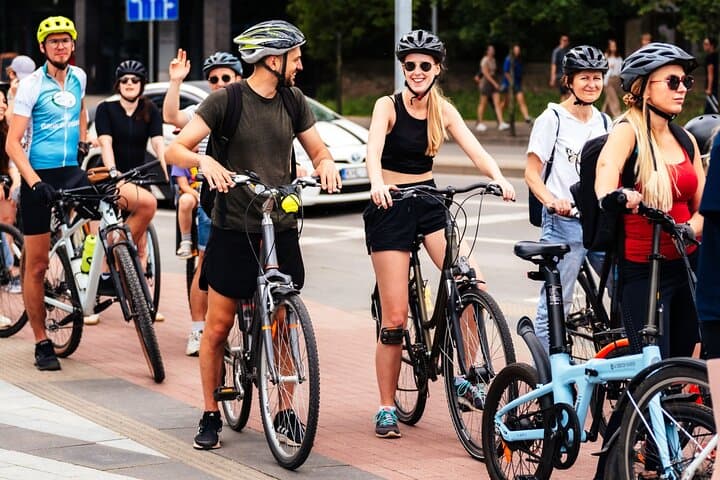
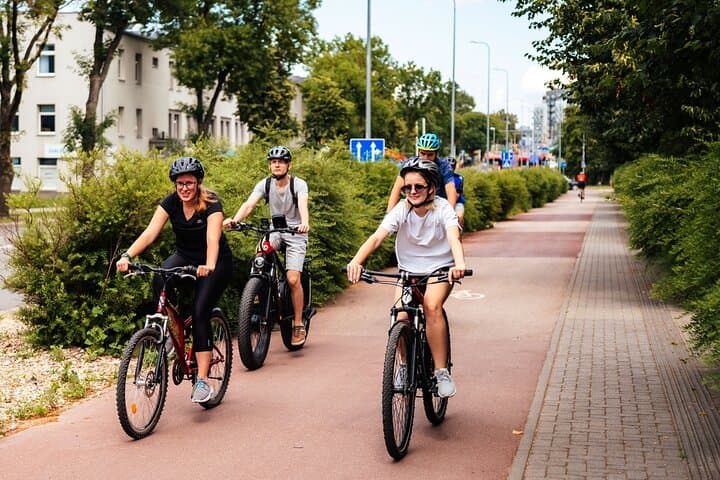
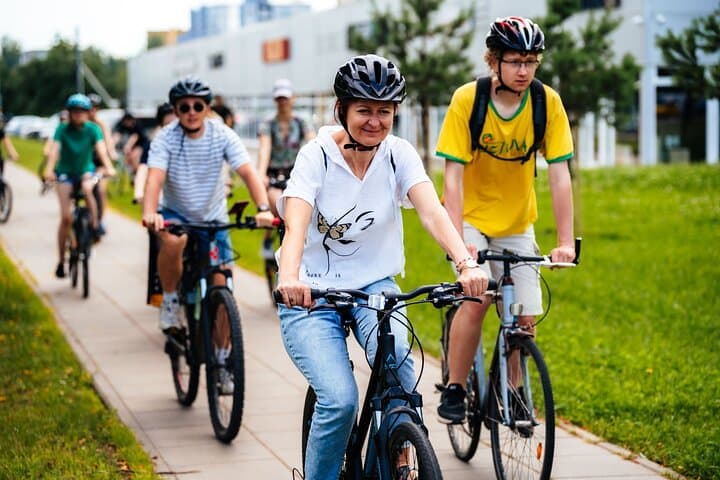
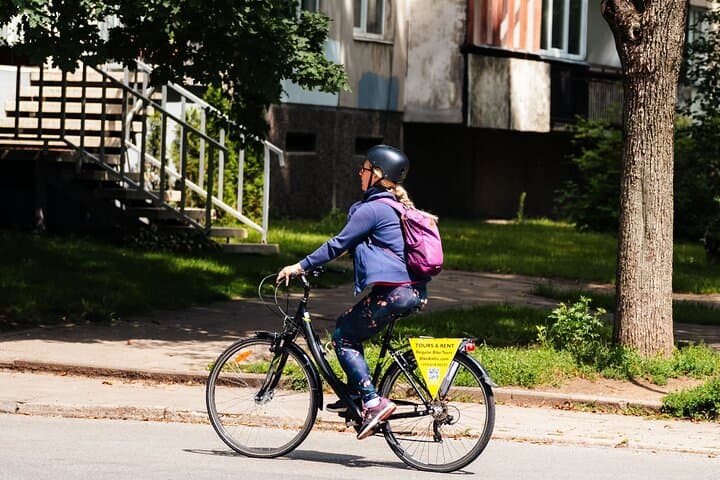
The group moves off from a broad city square, bicycle tires whispering over stone as grey facades and bold concrete blocks slide into view. Cyclists negotiate narrow lanes and broad Soviet boulevards alike, guided by a local who points out the telltale rhythms of an occupied city: austere apartment towers, a once-grand concert hall now silent, and wooden neighborhoods that predate the empire.
The group moves off from a broad city square, bicycle tires whispering over stone as grey facades and bold concrete blocks slide into view. Cyclists negotiate narrow lanes and broad Soviet boulevards alike, guided by a local who points out the telltale rhythms of an occupied city: austere apartment towers, a once-grand concert hall now silent, and wooden neighborhoods that predate the empire.
This three-hour, 14 km loop takes riders beyond the Old Town to places that map-guides often omit. The route threads former administrative centers, early Soviet skyscrapers, and a long straight 19th-century avenue designed as the imperial centerpiece. Along the Neris River’s lower terraces, geology is simple—flat river plains with occasional cobbled streets—but the built environment records political change: interwar refurbishments, Soviet planning, and recent post-Soviet redevelopment.
Culturally, the tour sketches lives shaped by occupation and resilience: Armenian enclaves, Jewish cemetery sites, and communal housing that reveals everyday Soviet routines. Local guides add oral histories that humanize architecture, turning facades into stories.
Practical guidance: expect urban riding—short stretches of cobbles and light traffic—and frequent stops for explanations and photos. Helmets and bikes are provided; wear closed shoes and layers against wind off the river. Bring a small bottle of water and a charged phone for maps and photos. The pace is steady but accessible; groups top out near 15 riders. Book in advance in spring and summer when demand is highest, and be ready to swap the route in heavy rain.