THE ADVENTURE COLLECTIVE® · Independent discovery and booking for outdoor travel

Board a period‑costumed trolley to explore Boston’s most notorious sites and two colonial burying grounds. Half riding, half walking, the tour blends historical facts, cemetery iconography, and theatrical storytelling for a compact, eerie city history lesson.
Board a period‑costumed trolley to explore Boston’s most notorious sites and two colonial burying grounds. Half riding, half walking, the tour blends historical facts, cemetery iconography, and theatrical storytelling for a compact, eerie city history lesson.
Fog licks the harbor and the trolley's lantern glow throws long shadows across cobblestone as you climb aboard at Long Wharf. The guide — dressed as a 17th‑century grave digger — keeps a dry, sardonic cadence while the city slides past: brick rowhouses, salt-stiff air, and the bell towers that marked Boston's earliest deaths.
Verified experiences and guided adventures in the surrounding area.
Operated by Historic Tours Of America · Boston, Massachusetts
Fog licks the harbor and the trolley's lantern glow throws long shadows across cobblestone as you climb aboard at Long Wharf. The guide — dressed as a 17th‑century grave digger — keeps a dry, sardonic cadence while the city slides past: brick rowhouses, salt-stiff air, and the bell towers that marked Boston's earliest deaths.
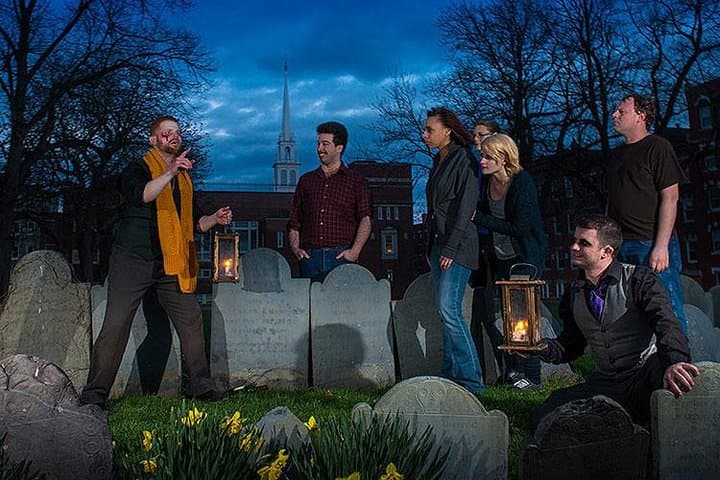
This is a walking-and-riding tour of Boston's darker archives. You step out onto Granary and Copp's Hill burying grounds to read stonework carved with winged skulls and hourglasses — iconography born of Puritan theology and 17th‑18th century mortality. The route brushes Revolutionary-era sites, maritime stories, and later urban crimes like the Boston Strangler, layering social history over colonial geology: glacial till underfoot and reclaimed landfill along the waterfront.
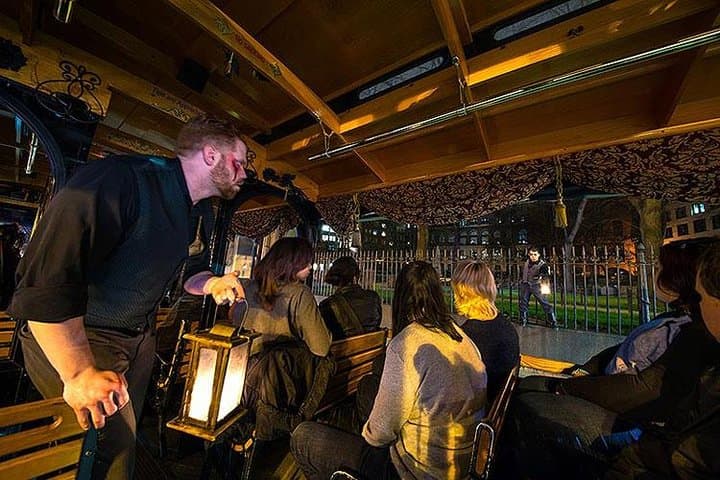
Expect theatrical narration grounded in documented events, with detours into local lore and interpretations of funerary art. The experience balances on-board storytelling with short, guided walks through graveyards and historic streets; roughly half the time is seated, half walking.
Practical bits: check in at the kiosk outside the Long Wharf Marriott 20–30 minutes before departure, wear comfortable shoes for uneven stone and short stair sections, and bring a rain shell — the tour runs in light rain. Children under six are not permitted. For photographers, low light and crowded plots demand a steady hand and respectful distance from monuments.
If you want a concise, atmospheric way to read Boston's human past through its memorials and misdemeanors, this trolley delivers history with a theatrical edge and clear logistics.
easy.
2 hours.
Low; suitable for most fitness levels but requires standing and short walks on uneven stone.
The trolley departs from the ticket kiosk at 200 Atlantic Avenue (Long Wharf Marriott); arrive 20–30 minutes early to check in and guarantee your seat.
Children under 6 are not permitted; older children can attend but the content is macabre and includes discussion of real crimes and deaths.
Tours run in light rain; they are only canceled for dangerous weather. Bring a rain jacket and expect some outdoor walking.
Stops in Granary and Copp's Hill are brief — typically 10–15 minutes each — long enough to view headstones and hear interpretive commentary.
The tour ties Boston’s colonial funerary art and Revolutionary figures to later urban crime stories, using burial grounds such as Granary (site of Hancock and Revere’s graves) as narrative anchors.
Visitors should stay on paved paths and avoid touching or leaning on fragile headstones; preservation groups monitor wear and discourage climbing on monuments.
Historic Tours Of America operates guided outdoor trips and adventures with an emphasis on safety, stewardship, and memorable experiences.
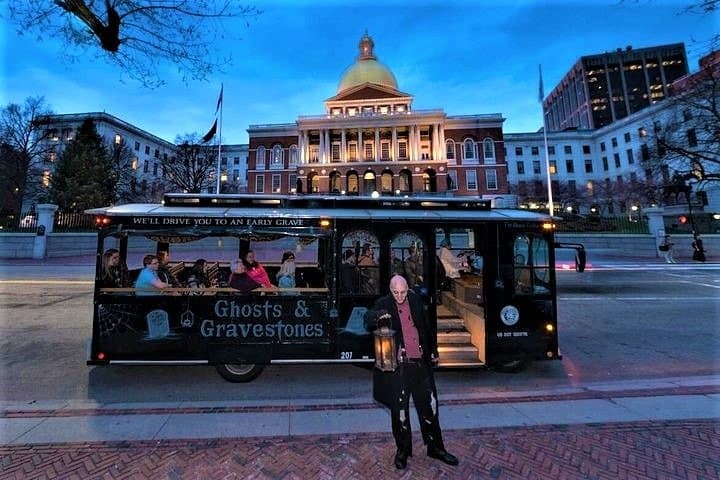
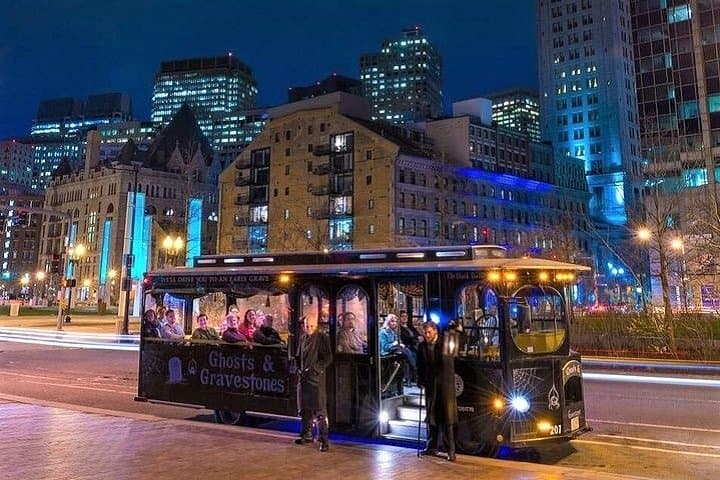
Fog licks the harbor and the trolley's lantern glow throws long shadows across cobblestone as you climb aboard at Long Wharf. The guide — dressed as a 17th‑century grave digger — keeps a dry, sardonic cadence while the city slides past: brick rowhouses, salt-stiff air, and the bell towers that marked Boston's earliest deaths.
Fog licks the harbor and the trolley's lantern glow throws long shadows across cobblestone as you climb aboard at Long Wharf. The guide — dressed as a 17th‑century grave digger — keeps a dry, sardonic cadence while the city slides past: brick rowhouses, salt-stiff air, and the bell towers that marked Boston's earliest deaths.
This is a walking-and-riding tour of Boston's darker archives. You step out onto Granary and Copp's Hill burying grounds to read stonework carved with winged skulls and hourglasses — iconography born of Puritan theology and 17th‑18th century mortality. The route brushes Revolutionary-era sites, maritime stories, and later urban crimes like the Boston Strangler, layering social history over colonial geology: glacial till underfoot and reclaimed landfill along the waterfront.
Expect theatrical narration grounded in documented events, with detours into local lore and interpretations of funerary art. The experience balances on-board storytelling with short, guided walks through graveyards and historic streets; roughly half the time is seated, half walking.
Practical bits: check in at the kiosk outside the Long Wharf Marriott 20–30 minutes before departure, wear comfortable shoes for uneven stone and short stair sections, and bring a rain shell — the tour runs in light rain. Children under six are not permitted. For photographers, low light and crowded plots demand a steady hand and respectful distance from monuments.
If you want a concise, atmospheric way to read Boston's human past through its memorials and misdemeanors, this trolley delivers history with a theatrical edge and clear logistics.