THE ADVENTURE COLLECTIVE® · Independent discovery and booking for outdoor travel

Cycle between Mount Kilimanjaro and Mount Meru on quiet backroads, passing coffee farms, Maasai homesteads, and pockets of wildlife. This two-day supported ride from Moshi blends volcanic geology and local culture with manageable climbs and big views.
Cycle between Mount Kilimanjaro and Mount Meru on quiet backroads, passing coffee farms, Maasai homesteads, and pockets of wildlife. This two-day supported ride from Moshi blends volcanic geology and local culture with manageable climbs and big views.
Dawn breaks over Moshi and the two giants—Kilimanjaro’s snowy dome and Meru’s serrated ridge—sit like old guardians above a ribbon of backroad. You push off on a well-tuned mountain bike, tires whispering over packed dirt as acacia thickets and open savannah slide past; the light angles make the plains look almost liquid.
Verified experiences and guided adventures in the surrounding area.
Operated by PINNACLE ADVENTURES & SAFARIS LTD. · Moshi, Kilimanjaro Region
Dawn breaks over Moshi and the two giants—Kilimanjaro’s snowy dome and Meru’s serrated ridge—sit like old guardians above a ribbon of backroad. You push off on a well-tuned mountain bike, tires whispering over packed dirt as acacia thickets and open savannah slide past; the light angles make the plains look almost liquid.
The land here is volcanic: Kilimanjaro and Meru formed from successive eruptions and the foothills bear the long fingerprints of lava and erosion. The route threads through territory long inhabited by the Chagga and Maasai peoples; you’ll pass coffee terraces carved into the slopes and Maasai homesteads where oral history still marks seasons.
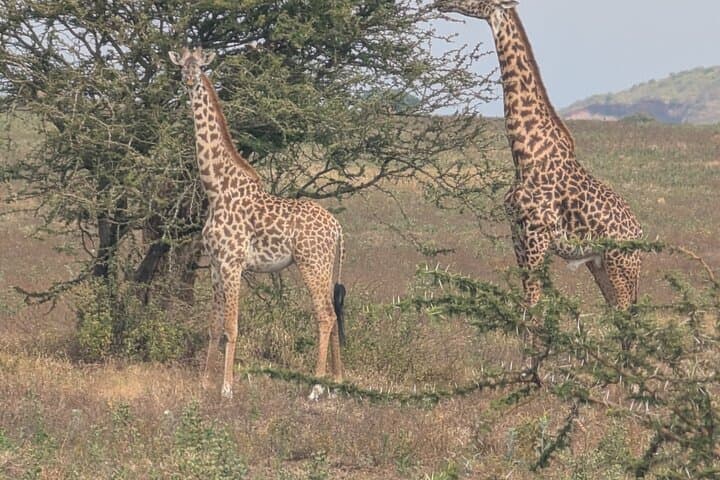
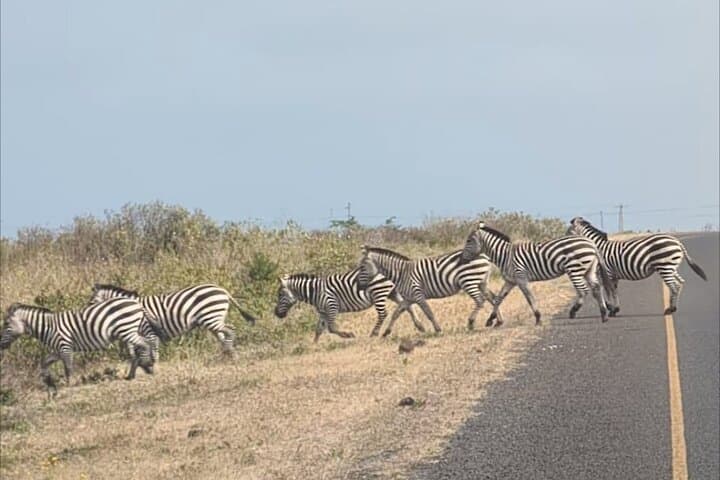
Wildlife is quiet company—giraffes browsing in the distance, troops of monkeys in riverine trees, and skylines punctuated by kite-like raptors. Small lodges and a traditional Maasai village keep the nights low-key and local, with stars carving the sky above.
Practical guide: expect 2 days and roughly 70–100 km total on mixed surfaces—paved feeder roads, compact dirt, and occasional rocky stretches—with cumulative climbing around 600–1,200 m depending on chosen lines. Daily distances commonly fall between 30–60 km; average moving pace 10–15 km/h with stops. A support vehicle carries luggage and offers mechanical help, but bring a basic repair kit, hydration system (2–3L capacity), sun protection, and layered clothing for early starts and cooling afternoons. Start early to avoid midday heat, respect local customs when entering villages, and keep wildlife distance—photographs are better from the saddle than from a crowd. With moderate fitness and careful packing, this route delivers big views, quiet wildlife encounters, and genuine cultural exchange.
moderate.
2 days (approx. 48 hours).
Requires moderate fitness: comfortable riding 30–60 km/day on mixed terrain and climbing short-steep sections.
A moderate level of fitness is required: you should be comfortable cycling 30–60 km in a day and able to handle short climbs; the support vehicle is available if you need a break.
Accommodation is typically a rural lodge or a traditional Maasai homestead for one night—expect simple, clean rooms and local meals included in the trip.
Yes—giraffes, antelope, and various birds are frequently seen along the route; always observe wildlife from a distance and avoid approaching or feeding animals.
High-quality mountain bikes are provided and maintained, but experienced riders can often use their own bike if pre-arranged; confirm compatibility and transport logistics with the operator.
The route crosses land shaped by volcanic activity and centuries of human settlement—Chagga terraces and Maasai grazing routes reflect long-standing land use patterns.
Operators emphasize low-impact travel: stay on established roads, avoid feeding wildlife, and support local economies by using village services and guides.
PINNACLE ADVENTURES & SAFARIS LTD. operates guided outdoor trips and adventures with an emphasis on safety, stewardship, and memorable experiences.
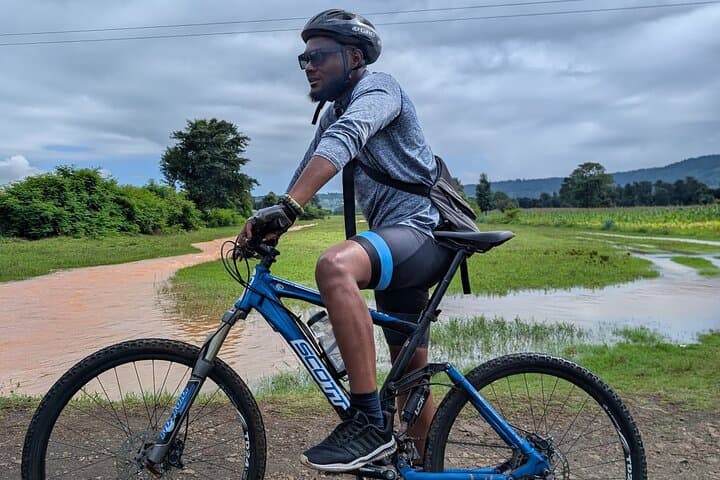
Dawn breaks over Moshi and the two giants—Kilimanjaro’s snowy dome and Meru’s serrated ridge—sit like old guardians above a ribbon of backroad. You push off on a well-tuned mountain bike, tires whispering over packed dirt as acacia thickets and open savannah slide past; the light angles make the plains look almost liquid.
Dawn breaks over Moshi and the two giants—Kilimanjaro’s snowy dome and Meru’s serrated ridge—sit like old guardians above a ribbon of backroad. You push off on a well-tuned mountain bike, tires whispering over packed dirt as acacia thickets and open savannah slide past; the light angles make the plains look almost liquid.
The land here is volcanic: Kilimanjaro and Meru formed from successive eruptions and the foothills bear the long fingerprints of lava and erosion. The route threads through territory long inhabited by the Chagga and Maasai peoples; you’ll pass coffee terraces carved into the slopes and Maasai homesteads where oral history still marks seasons.
Wildlife is quiet company—giraffes browsing in the distance, troops of monkeys in riverine trees, and skylines punctuated by kite-like raptors. Small lodges and a traditional Maasai village keep the nights low-key and local, with stars carving the sky above.
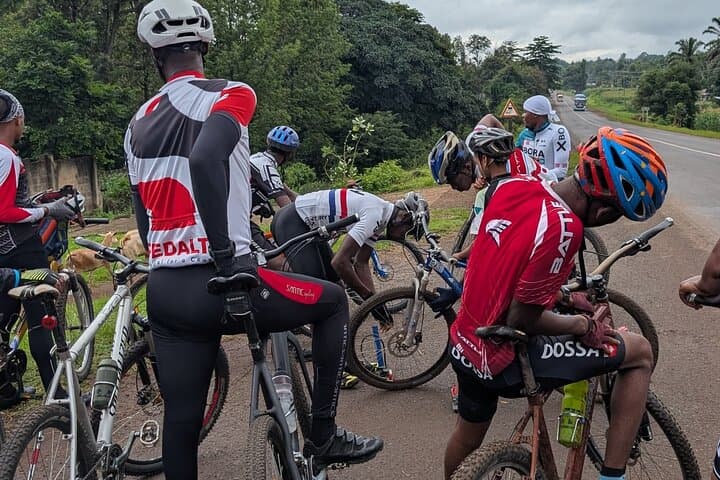
Practical guide: expect 2 days and roughly 70–100 km total on mixed surfaces—paved feeder roads, compact dirt, and occasional rocky stretches—with cumulative climbing around 600–1,200 m depending on chosen lines. Daily distances commonly fall between 30–60 km; average moving pace 10–15 km/h with stops. A support vehicle carries luggage and offers mechanical help, but bring a basic repair kit, hydration system (2–3L capacity), sun protection, and layered clothing for early starts and cooling afternoons. Start early to avoid midday heat, respect local customs when entering villages, and keep wildlife distance—photographs are better from the saddle than from a crowd. With moderate fitness and careful packing, this route delivers big views, quiet wildlife encounters, and genuine cultural exchange.