THE ADVENTURE COLLECTIVE® · Independent discovery and booking for outdoor travel

Move through Kathmandu's narrow arteries by pedal-powered rickshaw, arriving at Durbar Square and threading the vibrant Asan Bazaar. This three- to four-hour private tour offers close-up views of Newar architecture, living traditions like the Kumari, and everyday market life.
Move through Kathmandu's narrow arteries by pedal-powered rickshaw, arriving at Durbar Square and threading the vibrant Asan Bazaar. This three- to four-hour private tour offers close-up views of Newar architecture, living traditions like the Kumari, and everyday market life.
The rickshaw glides between shuttered storefronts and a tangle of prayer flags, the pedalist's rhythm setting the city's tempo as you slide through lanes too narrow for cars. Morning light finds brick walls cool; by midday the air fills with spice smoke and bargaining voices, and the rickshaw lets you watch Kathmandu move at a measured pace.
Verified experiences and guided adventures in the surrounding area.
Operated by Himalayan Smile Treks and Adventure Pvt. Ltd · Kathmandu, Bagmati Province
The rickshaw glides between shuttered storefronts and a tangle of prayer flags, the pedalist's rhythm setting the city's tempo as you slide through lanes too narrow for cars. Morning light finds brick walls cool; by midday the air fills with spice smoke and bargaining voices, and the rickshaw lets you watch Kathmandu move at a measured pace.
This ride threads through centuries: centuries-old Newar woodcarving and the stonework of Kathmandu Durbar Square—largely shaped under the Malla kings—stand close to street-level commerce that has supplied Nepali households for generations. Asan Bazaar sits at a crossroads of trades, a living market where metalsmiths, spice vendors and cloth sellers keep crafts used since the 18th century.
Geology here is close to the surface—compact river silt and brick rubble shaped by the valley's bowl—so streets can feel uneven and the city's layers are visible in architecture and urban layout. Culture shows in small courtyards where the Kumari, the living goddess, is still revered; expect to see local rituals and daily commerce side by side.
Practically, the tour is a slow urban adventure: bring sun protection and a reusable water bottle, plan for three to four hours, and be ready to dismount and walk short stretches. The rickshaw gives access to alleys that larger vehicles cannot reach, letting you photograph carved struts, step into temples, and pause at a tea stall. Keep valuables secure in crowds, tip your driver for navigating tight lanes, and allow time to explore Asan's side streets on foot.
easy.
3–4 hours.
Light activity; able to step in and out of a rickshaw and walk short distances on uneven surfaces.
Yes—this listing describes a private rickshaw tour tailored to your group for the scheduled duration.
No—entrance fees to museums or temples are generally not included; your guide will advise which sites require tickets.
Generally yes for children and most older adults, but it’s not recommended for pregnant travelers or those with serious back/spinal issues.
The tour lasts about 3–4 hours with periodic stops; expect several short walks from the rickshaw to enter courtyards and marketplaces.
Kathmandu Durbar Square was developed largely under the Malla kings and remains a focal point of Newar urbanism; the Kumari tradition preserves an ancient living-deity practice.
Post-2015 earthquake restoration has focused on stabilizing historic structures; visitors are encouraged to respect barriers and support local conservation initiatives by following guide directions.
Himalayan Smile Treks and Adventure Pvt. Ltd operates guided outdoor trips and adventures with an emphasis on safety, stewardship, and memorable experiences.
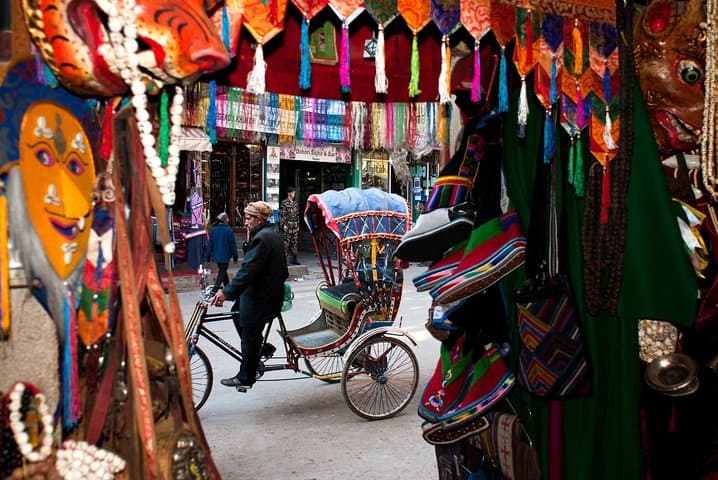
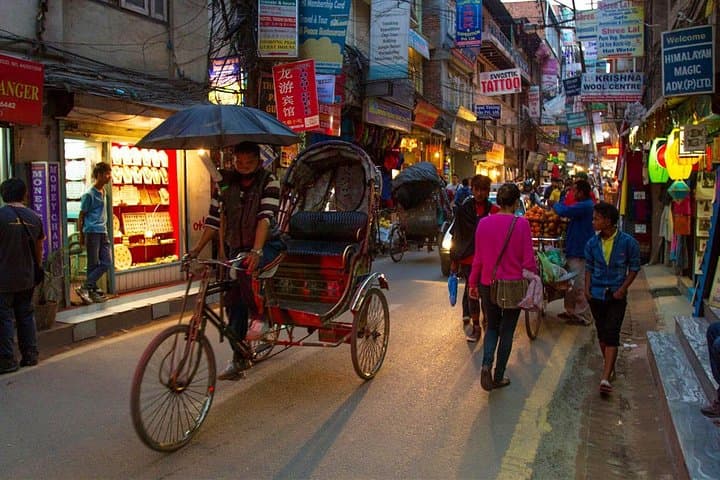
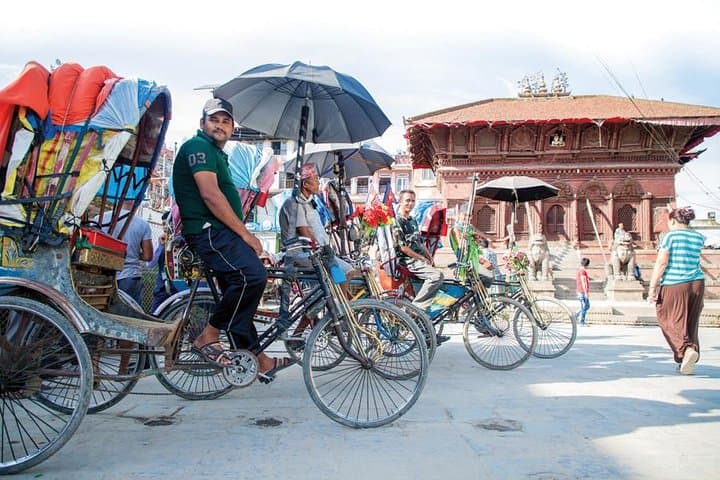
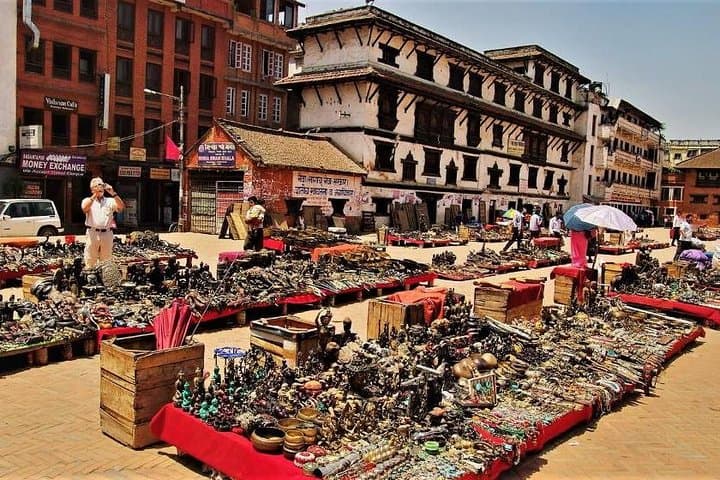
The rickshaw glides between shuttered storefronts and a tangle of prayer flags, the pedalist's rhythm setting the city's tempo as you slide through lanes too narrow for cars. Morning light finds brick walls cool; by midday the air fills with spice smoke and bargaining voices, and the rickshaw lets you watch Kathmandu move at a measured pace.
The rickshaw glides between shuttered storefronts and a tangle of prayer flags, the pedalist's rhythm setting the city's tempo as you slide through lanes too narrow for cars. Morning light finds brick walls cool; by midday the air fills with spice smoke and bargaining voices, and the rickshaw lets you watch Kathmandu move at a measured pace.
This ride threads through centuries: centuries-old Newar woodcarving and the stonework of Kathmandu Durbar Square—largely shaped under the Malla kings—stand close to street-level commerce that has supplied Nepali households for generations. Asan Bazaar sits at a crossroads of trades, a living market where metalsmiths, spice vendors and cloth sellers keep crafts used since the 18th century.
Geology here is close to the surface—compact river silt and brick rubble shaped by the valley's bowl—so streets can feel uneven and the city's layers are visible in architecture and urban layout. Culture shows in small courtyards where the Kumari, the living goddess, is still revered; expect to see local rituals and daily commerce side by side.
Practically, the tour is a slow urban adventure: bring sun protection and a reusable water bottle, plan for three to four hours, and be ready to dismount and walk short stretches. The rickshaw gives access to alleys that larger vehicles cannot reach, letting you photograph carved struts, step into temples, and pause at a tea stall. Keep valuables secure in crowds, tip your driver for navigating tight lanes, and allow time to explore Asan's side streets on foot.