THE ADVENTURE COLLECTIVE® · Independent discovery and booking for outdoor travel

Glide through Ahmedabad’s old city lanes by rickshaw on a compact 3-hour heritage circuit. See carved jalis, a royal fort, a five-story stepwell and bustling bazaars while getting an intimate, street-level view of city life.
Glide through Ahmedabad’s old city lanes by rickshaw on a compact 3-hour heritage circuit. See carved jalis, a royal fort, a five-story stepwell and bustling bazaars while getting an intimate, street-level view of city life.
The rickshaw threads into a maze of stone, spice stalls and voices—wheels whispering against tight lanes as morning light slices across carved sandstone. You feel the city press close: balconies lean in, shopkeepers call, and the Sabarmati River dares you to chase its slower pace just beyond the old walls.
Verified experiences and guided adventures in the surrounding area.
Operated by The House of MG · Ahmedabad, Gujarat
The rickshaw threads into a maze of stone, spice stalls and voices—wheels whispering against tight lanes as morning light slices across carved sandstone. You feel the city press close: balconies lean in, shopkeepers call, and the Sabarmati River dares you to chase its slower pace just beyond the old walls.
This three-hour circuit visits landmark sites that map Ahmedabad’s layered history. You’ll pass the fine latticework of Sidi Saiyad Mosque (1572) and the royal footprint of Bhadra Fort (early 1400s), slide past the domes of the private royal mosque, and stop at the octagonal Dada Harir stepwell—a five-story, carved repository of water and craft from 1485. The geology here is Deccan-era basalt and sandstone; builders carved cool interiors to temper summer heat, while bazaars grew where trade routes met the river plain.
Culture is tactile: havelis with engraved brackets, neighborhood POLs (residential clusters) where daily life unfolds in courtyards, and food stalls that announce themselves by smell. Photography is rewarding but respectful: many religious sites request modest dress.
Practical guidance: the tour covers narrow, uneven lanes (expect short walks of 5–15 minutes at each stop and roughly 4–6 km of route by rickshaw). Wear closed, grippy shoes for steps at the stepwell; bring water and a sun hat in summer; schedule morning or late afternoon to avoid peak heat. Space in a rickshaw is tight—pack light, secure valuables, and be ready to hop out for short walks. The trip is low-impact physically but rich in sensory detail—ideal for curious travelers who want history, architecture and city life rolled into one compact ride.
easy.
3 hours.
Minimal fitness required—able to walk short distances and climb a few steps at stops.
Standard auto-rickshaws carry 2–3 passengers plus a driver; private tours often use a sequence of rickshaws or larger vehicles for groups—confirm capacity when booking.
This tour’s itinerary notes admission included at listed stops, but verify if entry to any special exhibitions or access areas requires separate fees.
Yes—infants must sit on an adult’s lap; consider stroller practicality in narrow lanes and bring baby carriers for short walks.
Guides commonly speak English and Hindi/Gujarati; request a preferred language when booking to ensure communication.
Ahmedabad was founded in the early 15th century by Sultan Ahmad Shah and became a regional capital; its city core preserves examples of Indo-Islamic architecture and stepwell engineering from the 1400s–1500s.
Many heritage structures are under conservation to preserve carved stonework and stepwells; visitors should avoid touching fragile carvings and use marked paths to minimize wear.
The House of MG operates guided outdoor trips and adventures with an emphasis on safety, stewardship, and memorable experiences.
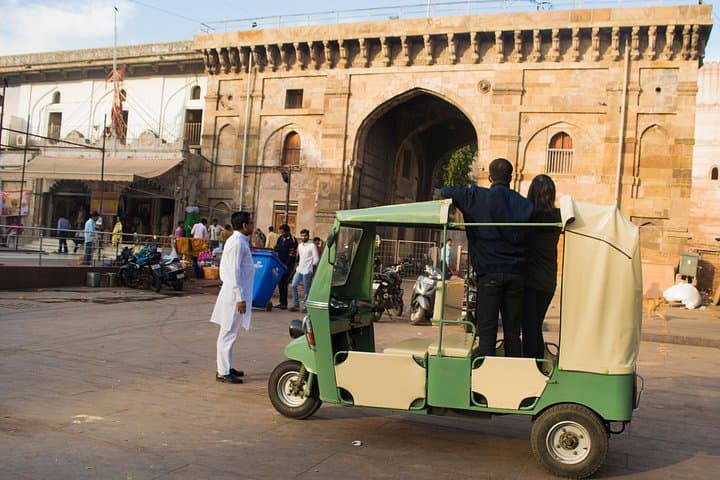
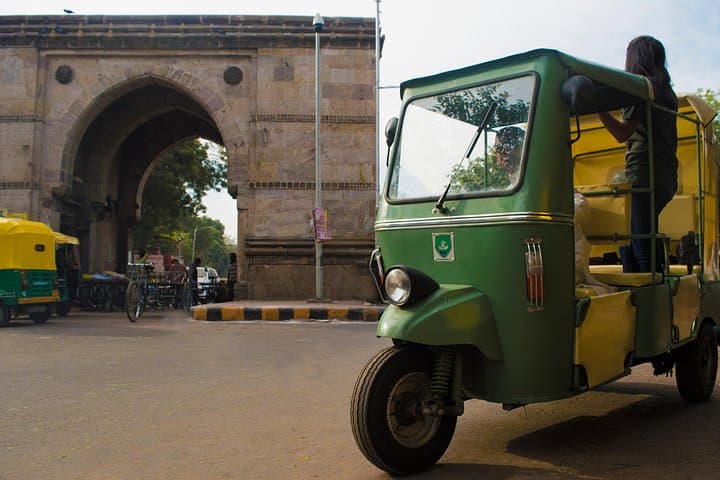
The rickshaw threads into a maze of stone, spice stalls and voices—wheels whispering against tight lanes as morning light slices across carved sandstone. You feel the city press close: balconies lean in, shopkeepers call, and the Sabarmati River dares you to chase its slower pace just beyond the old walls.
The rickshaw threads into a maze of stone, spice stalls and voices—wheels whispering against tight lanes as morning light slices across carved sandstone. You feel the city press close: balconies lean in, shopkeepers call, and the Sabarmati River dares you to chase its slower pace just beyond the old walls.
This three-hour circuit visits landmark sites that map Ahmedabad’s layered history. You’ll pass the fine latticework of Sidi Saiyad Mosque (1572) and the royal footprint of Bhadra Fort (early 1400s), slide past the domes of the private royal mosque, and stop at the octagonal Dada Harir stepwell—a five-story, carved repository of water and craft from 1485. The geology here is Deccan-era basalt and sandstone; builders carved cool interiors to temper summer heat, while bazaars grew where trade routes met the river plain.
Culture is tactile: havelis with engraved brackets, neighborhood POLs (residential clusters) where daily life unfolds in courtyards, and food stalls that announce themselves by smell. Photography is rewarding but respectful: many religious sites request modest dress.
Practical guidance: the tour covers narrow, uneven lanes (expect short walks of 5–15 minutes at each stop and roughly 4–6 km of route by rickshaw). Wear closed, grippy shoes for steps at the stepwell; bring water and a sun hat in summer; schedule morning or late afternoon to avoid peak heat. Space in a rickshaw is tight—pack light, secure valuables, and be ready to hop out for short walks. The trip is low-impact physically but rich in sensory detail—ideal for curious travelers who want history, architecture and city life rolled into one compact ride.