THE ADVENTURE COLLECTIVE® · Independent discovery and booking for outdoor travel

Follow a shaded river through Richtis Gorge to a 20‑metre waterfall on an 8 km guided hike. This route through the Sitia Geopark mixes old water mills, endemic plants and cool pools — ideal for hikers seeking a moderate, scenic Crete day trip.
Follow a shaded river through Richtis Gorge to a 20‑metre waterfall on an 8 km guided hike. This route through the Sitia Geopark mixes old water mills, endemic plants and cool pools — ideal for hikers seeking a moderate, scenic Crete day trip.
You step off the coastal road and into cool shade: the gorge closes around you, a narrow corridor of rock and water where the river dares you to follow it downstream. Wooden footbridges click underfoot, moss-dark stones glint where small pools catch the light, and the air smells of wet earth and pine. Ahead, the sound of falling water grows until the 20‑metre Richtis cascade appears, a sudden vertical slice through limestone.
Verified experiences and guided adventures in the surrounding area.
Operated by Cretan Hikers · Exo Mouliana, Crete
You step off the coastal road and into cool shade: the gorge closes around you, a narrow corridor of rock and water where the river dares you to follow it downstream. Wooden footbridges click underfoot, moss-dark stones glint where small pools catch the light, and the air smells of wet earth and pine. Ahead, the sound of falling water grows until the 20‑metre Richtis cascade appears, a sudden vertical slice through limestone.
Geologically, Richtis is part of the Sitia Geopark — an east‑Crete gorge carved in calcareous rock with clear perennial flow, unusual on an otherwise dry island. Culturally the trail threads past old stone water mills that once powered village life; the route still carries endemic plant communities and seasonal wildflowers unique to Crete.
Practically, the guided route runs about 8 km round trip with moderate terrain and intermittent steep sections; expect roughly 250–350 m of cumulative elevation change depending on your start/end points. Most of the trail follows the riverbed with packed dirt, exposed roots and short rocky scrambles; shade covers much of the route, making summer hikes feasible if you start early. Guides typically provide bottled water, snacks and private transfers, and the pace allows time at the waterfall for photos and a cool rinse.
Bring sturdy footwear, a light rain layer, and a headlamp if you plan to linger after dusk. Aim for morning light on the falls, respect marked paths to protect endemic flora, and carry out all trash — the gorge’s flowing personality depends on visitors who leave it as they found it.
moderate.
4–8 hours.
Moderate fitness: comfortable walking on uneven terrain, short steep sections and river crossings.
The guided loop or point‑to‑point hike covers about 8 km total; with stops and transfers expect 4–8 hours depending on pickup and pace.
Moderate fitness is required; children used to walking 2–4 hours on uneven ground can usually manage with supervision, but the route is not recommended for those with serious mobility limitations.
Yes — Richtis has perennial flow with pools and small falls; guides supply bottled water but carry a personal refill bottle if you prefer.
Most visitors stay in Sitia or Agios Nikolaos; the tour typically includes private transfer from arranged pickup points, while independent travelers can drive to the trailhead near Exo Mouliana and follow signed access roads.
Richtis Gorge has long supported local villages via seasonal irrigation and small water mills; its geology and cultural remains are part of the Sitia Geopark network.
The gorge hosts endemic plants and year‑round water; stick to trails, avoid swimming in sensitive pools during dry months, and pack out all waste to protect fragile habitats.
Cretan Hikers operates guided outdoor trips and adventures with an emphasis on safety, stewardship, and memorable experiences.
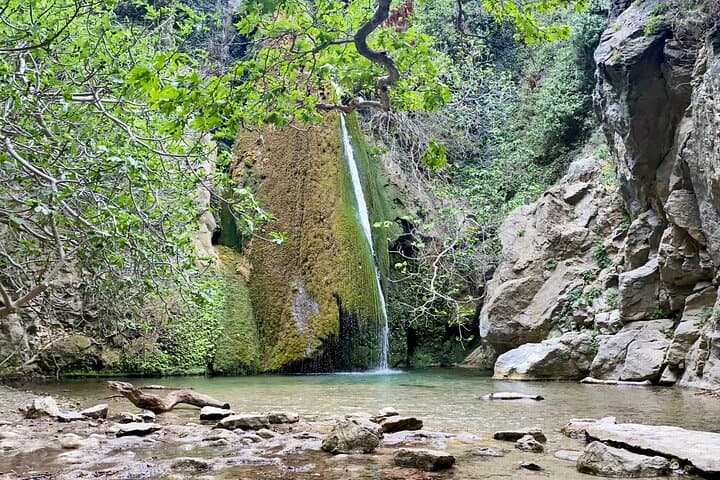
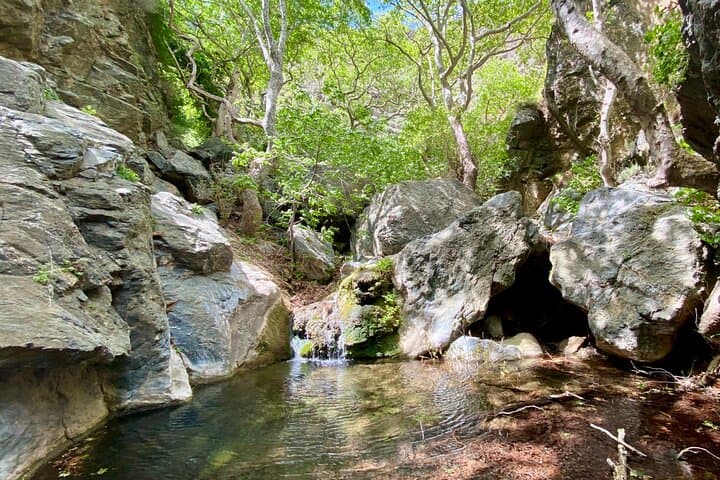
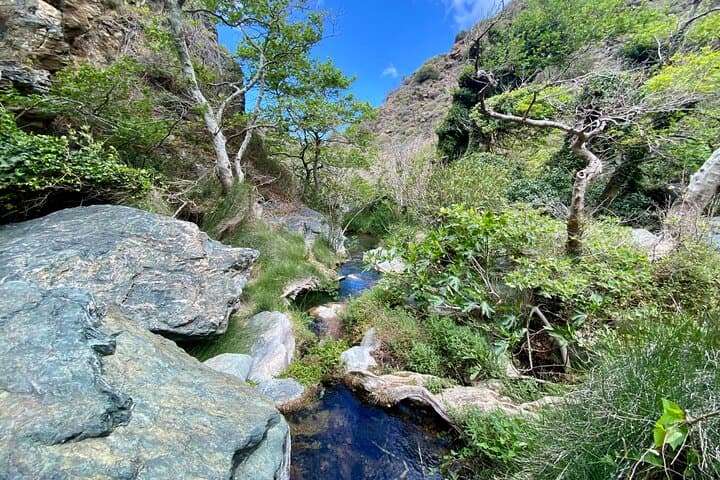

You step off the coastal road and into cool shade: the gorge closes around you, a narrow corridor of rock and water where the river dares you to follow it downstream. Wooden footbridges click underfoot, moss-dark stones glint where small pools catch the light, and the air smells of wet earth and pine. Ahead, the sound of falling water grows until the 20‑metre Richtis cascade appears, a sudden vertical slice through limestone.
You step off the coastal road and into cool shade: the gorge closes around you, a narrow corridor of rock and water where the river dares you to follow it downstream. Wooden footbridges click underfoot, moss-dark stones glint where small pools catch the light, and the air smells of wet earth and pine. Ahead, the sound of falling water grows until the 20‑metre Richtis cascade appears, a sudden vertical slice through limestone.
Geologically, Richtis is part of the Sitia Geopark — an east‑Crete gorge carved in calcareous rock with clear perennial flow, unusual on an otherwise dry island. Culturally the trail threads past old stone water mills that once powered village life; the route still carries endemic plant communities and seasonal wildflowers unique to Crete.
Practically, the guided route runs about 8 km round trip with moderate terrain and intermittent steep sections; expect roughly 250–350 m of cumulative elevation change depending on your start/end points. Most of the trail follows the riverbed with packed dirt, exposed roots and short rocky scrambles; shade covers much of the route, making summer hikes feasible if you start early. Guides typically provide bottled water, snacks and private transfers, and the pace allows time at the waterfall for photos and a cool rinse.
Bring sturdy footwear, a light rain layer, and a headlamp if you plan to linger after dusk. Aim for morning light on the falls, respect marked paths to protect endemic flora, and carry out all trash — the gorge’s flowing personality depends on visitors who leave it as they found it.