THE ADVENTURE COLLECTIVE® · Independent discovery and booking for outdoor travel

A two-hour, expert-led walk across Richmond’s Capitol grounds that pairs architectural close-reads with local history. Ideal for history buffs and curious travelers who want an accessible, small-group look at Virginia’s political landscape.
A two-hour, expert-led walk across Richmond’s Capitol grounds that pairs architectural close-reads with local history. Ideal for history buffs and curious travelers who want an accessible, small-group look at Virginia’s political landscape.
You step off Bank Street into a patchwork of stone, oaks, and statuary; the Capitol lawns open like pages from Virginia’s past, and the guide’s voice threads facts with locality. The two-hour walk moves deliberately across the Capitol grounds, pausing at the Washington statue, the Edgar Allan Poe monument, and the building Thomas Jefferson helped reimagine after the Revolution.
Verified experiences and guided adventures in the surrounding area.
Operated by Strange Richmond Tours · Richmond, Virginia
You step off Bank Street into a patchwork of stone, oaks, and statuary; the Capitol lawns open like pages from Virginia’s past, and the guide’s voice threads facts with locality. The two-hour walk moves deliberately across the Capitol grounds, pausing at the Washington statue, the Edgar Allan Poe monument, and the building Thomas Jefferson helped reimagine after the Revolution.
The Virginia State Capitol sits on a low rise above the James River floodplain and was influenced by Jefferson’s admiration for classical Roman façades—its plan and columns echo the Maison Carrée in Nîmes. Beneath the paved walkways are older stories: the Powhatan peoples who fished and farmed along the river long before Richmond became the colonial and state capital. The tour highlights how architecture, civic memory, and monument placement shaped public story-telling here through the 19th and 20th centuries.
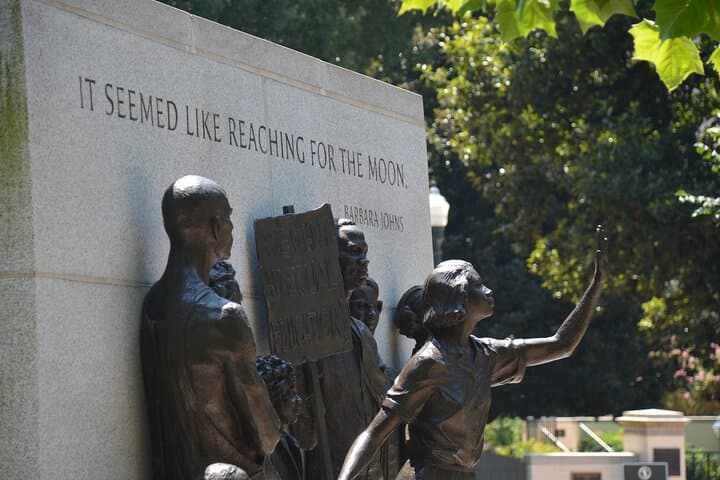
Expect close-up looks at carved state seals, bronze plaques, and interpretive anecdotes about political rituals conducted on these grounds. The trees and river breeze become almost conversational—offering shade in summer and tossing leaves in autumn—setting a calm rhythm to the narrative.
Practical notes: the route is flat and fully accessible, lasts about two hours, and is best scheduled in the morning or late afternoon to avoid midday heat. Bring comfortable walking shoes, a refillable water bottle, and a light layer for breezy weather. The meeting point is Sefton Coffee Company; groups are small, the guide is an expert historian, and cancellations are allowed up to 24 hours prior.
easy.
2 hours.
Suitable for most fitness levels; requires standing and walking up to 2 miles on paved surfaces.
The meeting point is Sefton Coffee Company in downtown Richmond; the walk loops around the Capitol grounds and returns there.
Yes — the itinerary and grounds are wheelchair- and stroller-accessible; notify the operator of special requirements when booking.
Shared tours are limited to small groups (up to about 12 travelers) for an intimate experience and easier movement between monuments.
For a full refund cancel at least 24 hours before the scheduled departure; the operator may cancel in bad weather and issue refunds accordingly.
The Capitol’s neoclassical design reflects Thomas Jefferson’s post-Revolution interest in Roman civic architecture; the building and grounds have been a civic focal point since the late 18th century.
The grounds are managed by state parks and local agencies prioritizing preservation of historic fabric and mature trees; visitors are asked to stick to paths and avoid touching sensitive monuments.
Strange Richmond Tours operates guided outdoor trips and adventures with an emphasis on safety, stewardship, and memorable experiences.
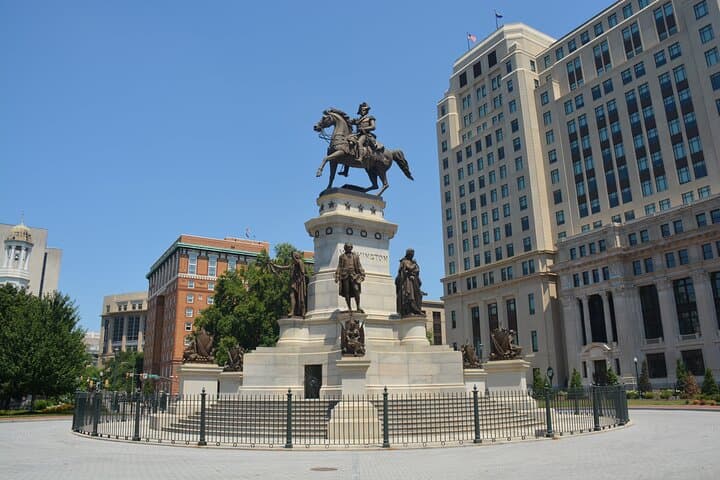

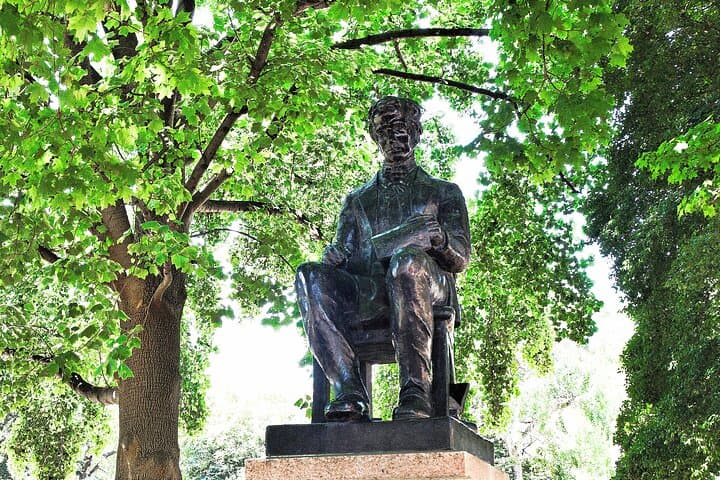
You step off Bank Street into a patchwork of stone, oaks, and statuary; the Capitol lawns open like pages from Virginia’s past, and the guide’s voice threads facts with locality. The two-hour walk moves deliberately across the Capitol grounds, pausing at the Washington statue, the Edgar Allan Poe monument, and the building Thomas Jefferson helped reimagine after the Revolution.
You step off Bank Street into a patchwork of stone, oaks, and statuary; the Capitol lawns open like pages from Virginia’s past, and the guide’s voice threads facts with locality. The two-hour walk moves deliberately across the Capitol grounds, pausing at the Washington statue, the Edgar Allan Poe monument, and the building Thomas Jefferson helped reimagine after the Revolution.
The Virginia State Capitol sits on a low rise above the James River floodplain and was influenced by Jefferson’s admiration for classical Roman façades—its plan and columns echo the Maison Carrée in Nîmes. Beneath the paved walkways are older stories: the Powhatan peoples who fished and farmed along the river long before Richmond became the colonial and state capital. The tour highlights how architecture, civic memory, and monument placement shaped public story-telling here through the 19th and 20th centuries.
Expect close-up looks at carved state seals, bronze plaques, and interpretive anecdotes about political rituals conducted on these grounds. The trees and river breeze become almost conversational—offering shade in summer and tossing leaves in autumn—setting a calm rhythm to the narrative.
Practical notes: the route is flat and fully accessible, lasts about two hours, and is best scheduled in the morning or late afternoon to avoid midday heat. Bring comfortable walking shoes, a refillable water bottle, and a light layer for breezy weather. The meeting point is Sefton Coffee Company; groups are small, the guide is an expert historian, and cancellations are allowed up to 24 hours prior.