THE ADVENTURE COLLECTIVE® · Independent discovery and booking for outdoor travel

Spend five hours aboard a private boat exploring Ria Formosa’s barrier islands: three curated stops for swimming, beach walks and birdwatching. This personalized tour blends local ecology, fishing culture and adaptable itineraries timed to tide and light.
Spend five hours aboard a private boat exploring Ria Formosa’s barrier islands: three curated stops for swimming, beach walks and birdwatching. This personalized tour blends local ecology, fishing culture and adaptable itineraries timed to tide and light.
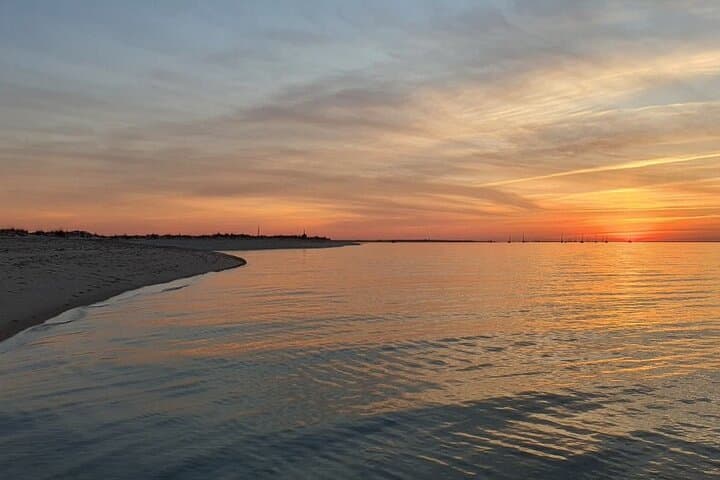
A low bow of the motor cuts glassy salt channels as the boat slips from Faro’s quay and the lagoon opens—miles of pale sand, reed-lined marshes and islands that change with the tide. Salt air sharpens the light; wading birds pivot like punctuation marks along the shallows. On a private five‑hour loop with three stops, the Ria Formosa reveals itself in stages: narrow tidal channels, mudflats alive with shrimp and shellfish, then wide beaches where the Atlantic pushes a steady, cooling breath.
Verified experiences and guided adventures in the surrounding area.
Operated by Culatratours · Faro, Algarve
A low bow of the motor cuts glassy salt channels as the boat slips from Faro’s quay and the lagoon opens—miles of pale sand, reed-lined marshes and islands that change with the tide. Salt air sharpens the light; wading birds pivot like punctuation marks along the shallows. On a private five‑hour loop with three stops, the Ria Formosa reveals itself in stages: narrow tidal channels, mudflats alive with shrimp and shellfish, then wide beaches where the Atlantic pushes a steady, cooling breath.
Geologically the Ria Formosa is a barrier‑island lagoon formed after the last ice age, its shifting sandbanks shaped by currents and storms. Culturally the islands support centuries‑old oyster and clam nurseries and fishing villages where wooden boats still land the day’s catch. Guides point out how salt flats, almond groves and traditional aquaculture shaped local diets and settlement patterns.
Practical guidance centers on the tide: low and high tides change landing spots and bird activity, so timing defines the experience. Expect mixed terrain—boarded jetties, packed sand and short, sandy paths across dunes—so footwear that handles water and walking is best. Sun and wind demand layered protection and reef‑safe sunscreen; fresh water is essential on longer summer runs. Photography is best with a polarizer for reflections and a fast lens for birds on the wing.
The tour suits travelers wanting nature, quiet beach time and accessible wildlife viewing without strenuous hiking. Bring a light daypack, binoculars and patience—here, the landscape moves with the tide and rewards those who slow down.
easy.
5 hours.
Suitable for people of average fitness; minimal walking and no steep climbs, but expect short sandy walks during landings.
Yes—most itineraries include a beach stop suitable for swimming; water temperature and currents vary by season and guide assessment.
The operator lists wheelchair accessibility, but individual landings may have sandy or uneven surfaces—check specifics when booking.
Bird sightings depend on season and tide; greater flamingos, terns and waders are common, particularly in spring and autumn migrations.
This is a private experience—capacity varies by boat, but the tour is tailored to your group and interests.
Ria Formosa arose after post‑glacial sea‑level rise; its islands and marshes have sustained salt production, oyster beds and small fishing settlements for centuries.
The area is a designated Natural Park—stay on permitted landing areas, avoid disturbing birds and use reef‑safe products to protect seagrass and marine life.
Culatratours operates guided outdoor trips and adventures with an emphasis on safety, stewardship, and memorable experiences.
A low bow of the motor cuts glassy salt channels as the boat slips from Faro’s quay and the lagoon opens—miles of pale sand, reed-lined marshes and islands that change with the tide. Salt air sharpens the light; wading birds pivot like punctuation marks along the shallows. On a private five‑hour loop with three stops, the Ria Formosa reveals itself in stages: narrow tidal channels, mudflats alive with shrimp and shellfish, then wide beaches where the Atlantic pushes a steady, cooling breath.
A low bow of the motor cuts glassy salt channels as the boat slips from Faro’s quay and the lagoon opens—miles of pale sand, reed-lined marshes and islands that change with the tide. Salt air sharpens the light; wading birds pivot like punctuation marks along the shallows. On a private five‑hour loop with three stops, the Ria Formosa reveals itself in stages: narrow tidal channels, mudflats alive with shrimp and shellfish, then wide beaches where the Atlantic pushes a steady, cooling breath.
Geologically the Ria Formosa is a barrier‑island lagoon formed after the last ice age, its shifting sandbanks shaped by currents and storms. Culturally the islands support centuries‑old oyster and clam nurseries and fishing villages where wooden boats still land the day’s catch. Guides point out how salt flats, almond groves and traditional aquaculture shaped local diets and settlement patterns.
Practical guidance centers on the tide: low and high tides change landing spots and bird activity, so timing defines the experience. Expect mixed terrain—boarded jetties, packed sand and short, sandy paths across dunes—so footwear that handles water and walking is best. Sun and wind demand layered protection and reef‑safe sunscreen; fresh water is essential on longer summer runs. Photography is best with a polarizer for reflections and a fast lens for birds on the wing.
The tour suits travelers wanting nature, quiet beach time and accessible wildlife viewing without strenuous hiking. Bring a light daypack, binoculars and patience—here, the landscape moves with the tide and rewards those who slow down.