THE ADVENTURE COLLECTIVE® · Independent discovery and booking for outdoor travel

Cruise Ria Formosa with a marine biologist, swim at Deserta Island, and explore the fishing village of Culatra. This three-hour small-group tour blends wildlife viewing, coastal geology, and local culture on the Algarve’s barrier islands.
Cruise Ria Formosa with a marine biologist, swim at Deserta Island, and explore the fishing village of Culatra. This three-hour small-group tour blends wildlife viewing, coastal geology, and local culture on the Algarve’s barrier islands.
The bow parts the glassy lagoon before dawn, and salt-sweet air slides across your face as the boat threads between barrier islands. A marine biologist at your side points out tidal channels and a ragged line of dunes; beyond them, sandy spits and fishing houses appear like punctuation marks on the coast. You disembark on Deserta for a half-hour swim — the sand takes on a warm, fine grain underfoot — then drift to Culatra, a working fishing village with narrow lanes and low white houses.
Verified experiences and guided adventures in the surrounding area.
Operated by Ocean Vibes Algarve · Faro, Algarve
The bow parts the glassy lagoon before dawn, and salt-sweet air slides across your face as the boat threads between barrier islands. A marine biologist at your side points out tidal channels and a ragged line of dunes; beyond them, sandy spits and fishing houses appear like punctuation marks on the coast. You disembark on Deserta for a half-hour swim — the sand takes on a warm, fine grain underfoot — then drift to Culatra, a working fishing village with narrow lanes and low white houses.
Ria Formosa is a young coastal system carved over millennia by tides and sediment, a chain of barrier islands that buffers the Algarve from the Atlantic. It became a protected natural park in 1987; its shallow lagoons support migratory birds, shellfish beds, and a small, resilient fishing culture on Culatra island. The geology is simple and readable: sandbars, tidal channels, and a coastline constantly rearranged by currents that dare you to keep up.
Expect clear, shallow swimming on Deserta and time to stroll Culatra’s village, meet local fishers, and photograph the low lighthouse at Cabo de Santa Maria — the southernmost point of mainland Portugal. The tour runs roughly three hours, with lifejackets and expert commentary included for groups of up to eight. Practical prep matters: reef shoes for rocky ladders ashore, reef-safe sunscreen, and a wind layer for the return leg. Boats can cancel in rough weather, so book with a flexible window and arrive at Faro harbour early to find the flags and your guide. This trip reads as a compact primer in coastal ecology and island life — immediate, educational, and quietly restorative.
easy.
3 hours.
Minimal fitness required — able to board a small boat, walk on sand and short village streets, and swim if desired.
Yes — there is a stop at Deserta island intended for swimming; lifejackets are provided and the guide will advise on conditions before you enter the water.
The tour is classed as physically easy and suitable for most ages, but expect boat boarding and brief walks on sand; those with mobility issues should check in advance.
Meet at Faro harbour at the Santa Maria Petisca Ria flags; the confirmation will state the exact time — arrive 15 minutes early to check in.
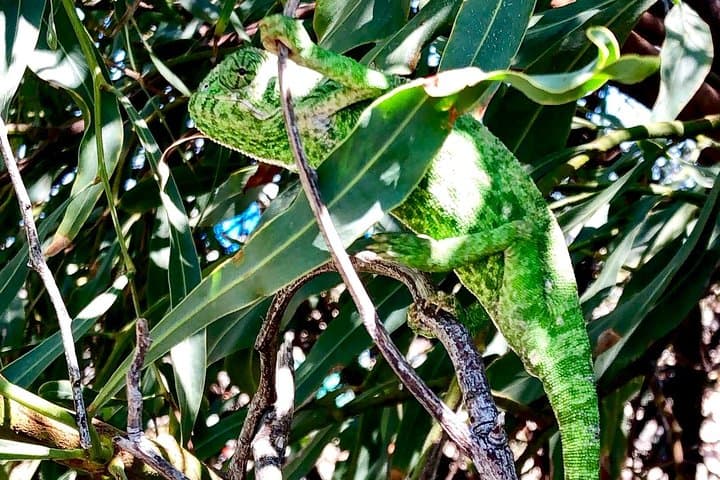
Common sightings include wading birds, gulls, and in some seasons flamingos or Audouin’s gulls; guides may also point out Mediterranean chameleons on shore vegetation.
Ria Formosa has long been central to Algarve fishing and salt production; Culatra remains inhabited by families who have fished these channels for generations.
The area is protected as a natural park — follow leave-no-trace principles, avoid disturbing nesting birds, and use reef-safe products to limit ecological impact.
Ocean Vibes Algarve operates guided outdoor trips and adventures with an emphasis on safety, stewardship, and memorable experiences.



The bow parts the glassy lagoon before dawn, and salt-sweet air slides across your face as the boat threads between barrier islands. A marine biologist at your side points out tidal channels and a ragged line of dunes; beyond them, sandy spits and fishing houses appear like punctuation marks on the coast. You disembark on Deserta for a half-hour swim — the sand takes on a warm, fine grain underfoot — then drift to Culatra, a working fishing village with narrow lanes and low white houses.
The bow parts the glassy lagoon before dawn, and salt-sweet air slides across your face as the boat threads between barrier islands. A marine biologist at your side points out tidal channels and a ragged line of dunes; beyond them, sandy spits and fishing houses appear like punctuation marks on the coast. You disembark on Deserta for a half-hour swim — the sand takes on a warm, fine grain underfoot — then drift to Culatra, a working fishing village with narrow lanes and low white houses.
Ria Formosa is a young coastal system carved over millennia by tides and sediment, a chain of barrier islands that buffers the Algarve from the Atlantic. It became a protected natural park in 1987; its shallow lagoons support migratory birds, shellfish beds, and a small, resilient fishing culture on Culatra island. The geology is simple and readable: sandbars, tidal channels, and a coastline constantly rearranged by currents that dare you to keep up.
Expect clear, shallow swimming on Deserta and time to stroll Culatra’s village, meet local fishers, and photograph the low lighthouse at Cabo de Santa Maria — the southernmost point of mainland Portugal. The tour runs roughly three hours, with lifejackets and expert commentary included for groups of up to eight. Practical prep matters: reef shoes for rocky ladders ashore, reef-safe sunscreen, and a wind layer for the return leg. Boats can cancel in rough weather, so book with a flexible window and arrive at Faro harbour early to find the flags and your guide. This trip reads as a compact primer in coastal ecology and island life — immediate, educational, and quietly restorative.