THE ADVENTURE COLLECTIVE® · Independent discovery and booking for outdoor travel

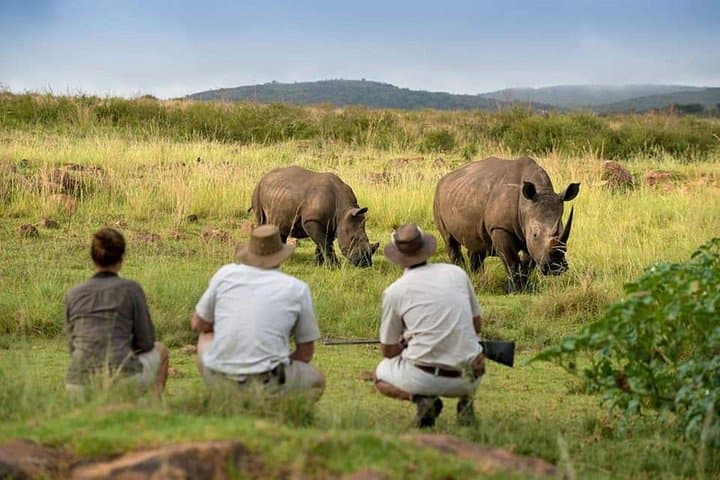
Get close to rhinos on a two-hour guided bush walk near Livingstone. Experienced rangers lead a short, educational trail where you can observe rhino behavior, learn about conservation, and experience the raw presence of these animals up close.
Get close to rhinos on a two-hour guided bush walk near Livingstone. Experienced rangers lead a short, educational trail where you can observe rhino behavior, learn about conservation, and experience the raw presence of these animals up close.
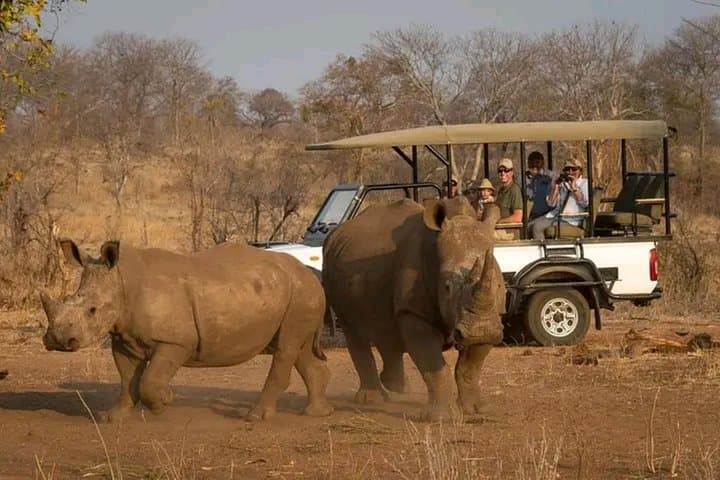
You step off the vehicle and the bush closes in: low combretum trees, the dusty scent of earth, and a distant, deliberate breathing that makes every step feel measured. Guides move with quiet confidence, scanning scrub and waterholes until the bulk of a rhino resolves from the heat haze — a slow, grounded presence that reorients the whole landscape.
Verified experiences and guided adventures in the surrounding area.
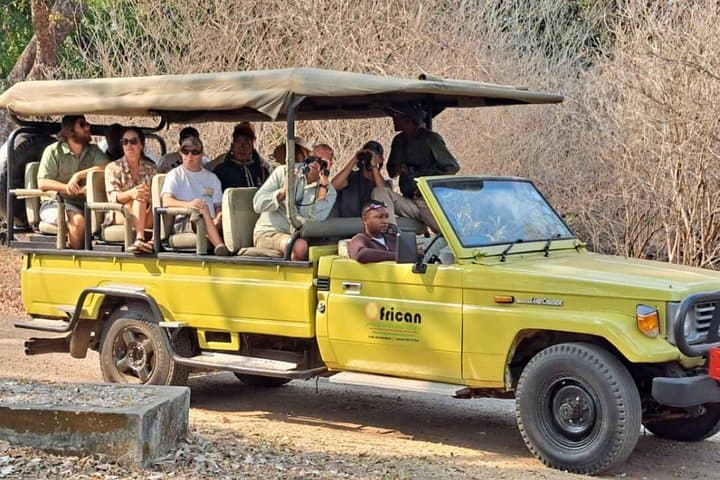
Operated by African Joined Tours and Safaris · Livingstone, Southern Province
You step off the vehicle and the bush closes in: low combretum trees, the dusty scent of earth, and a distant, deliberate breathing that makes every step feel measured. Guides move with quiet confidence, scanning scrub and waterholes until the bulk of a rhino resolves from the heat haze — a slow, grounded presence that reorients the whole landscape.
This two-hour walking experience around Livingstone sits within the broader conservation landscape that protects Zambia’s megafauna. Geologically, the region is a gently undulating floodplain carved by seasonal rivers; soils are sandy and trails can be narrow. Culturally, the area blends Tonga rural life with the conservation work stemming from late-20th-century anti-poaching efforts. Guides talk about rhino social behavior, territorial markings, and the complex history of poaching and recovery strategies that shape every patrol and public encounter.
Expect short distances on uneven ground — roughly 2–3 km over flat to slightly rolling terrain with minimal elevation gain. The rhythm of the walk is deliberate: slow approach, observation, and educational stops between sightings. Cameras are welcome but guided rules on flash and movement are strict for safety.
Practical guidance: wear sturdy closed-toe shoes, bring 1–1.5 liters of water, and dress in muted colors. Early morning or late afternoon slots offer cooler temperatures and more active animals. Follow guide instructions at all times; do not attempt to touch or feed wildlife. The walk supports local conservation through permit fees and ranger employment, so your participation directly benefits protection efforts on the ground.
easy.
2 hours.
Able to walk 2–3 km on uneven, sandy terrain; suitable for most fitness levels.
Guides control approach distance for safety and animal welfare; you may be within a few dozen meters depending on behavior, but never close enough to touch.
Infants must sit on laps; the tour is generally family-friendly but young children should be supervised and comfortable sitting quietly.
The operator’s cancellation policy applies; rain can make trails slippery and may affect visibility, but light showers don’t always cancel the walk — check with your operator.
This activity is described as physically easy but is not recommended for people with serious back or spinal injuries; discuss mobility needs when booking.
Rhino populations in Zambia were heavily impacted by 20th-century poaching; recent conservation projects and private reserves have focused on anti-poaching, translocations, and community engagement to rebuild herds.
Walks are conducted under permit and support ranger employment and anti-poaching efforts; staying on route and following rules minimizes disturbance to breeding and feeding behavior.
African Joined Tours and Safaris operates guided outdoor trips and adventures with an emphasis on safety, stewardship, and memorable experiences.
You step off the vehicle and the bush closes in: low combretum trees, the dusty scent of earth, and a distant, deliberate breathing that makes every step feel measured. Guides move with quiet confidence, scanning scrub and waterholes until the bulk of a rhino resolves from the heat haze — a slow, grounded presence that reorients the whole landscape.
You step off the vehicle and the bush closes in: low combretum trees, the dusty scent of earth, and a distant, deliberate breathing that makes every step feel measured. Guides move with quiet confidence, scanning scrub and waterholes until the bulk of a rhino resolves from the heat haze — a slow, grounded presence that reorients the whole landscape.
This two-hour walking experience around Livingstone sits within the broader conservation landscape that protects Zambia’s megafauna. Geologically, the region is a gently undulating floodplain carved by seasonal rivers; soils are sandy and trails can be narrow. Culturally, the area blends Tonga rural life with the conservation work stemming from late-20th-century anti-poaching efforts. Guides talk about rhino social behavior, territorial markings, and the complex history of poaching and recovery strategies that shape every patrol and public encounter.
Expect short distances on uneven ground — roughly 2–3 km over flat to slightly rolling terrain with minimal elevation gain. The rhythm of the walk is deliberate: slow approach, observation, and educational stops between sightings. Cameras are welcome but guided rules on flash and movement are strict for safety.
Practical guidance: wear sturdy closed-toe shoes, bring 1–1.5 liters of water, and dress in muted colors. Early morning or late afternoon slots offer cooler temperatures and more active animals. Follow guide instructions at all times; do not attempt to touch or feed wildlife. The walk supports local conservation through permit fees and ranger employment, so your participation directly benefits protection efforts on the ground.