THE ADVENTURE COLLECTIVE® · Independent discovery and booking for outdoor travel

Explore medieval lanes, WWII history, and striking industrial landscapes on a private 4-hour tour from Rheinberg. Visit a Commonwealth cemetery, Kloster Kamp gardens, Halde Rheinpreußen’s summit, and the fortified riverside town of Orsoy.
Explore medieval lanes, WWII history, and striking industrial landscapes on a private 4-hour tour from Rheinberg. Visit a Commonwealth cemetery, Kloster Kamp gardens, Halde Rheinpreußen’s summit, and the fortified riverside town of Orsoy.
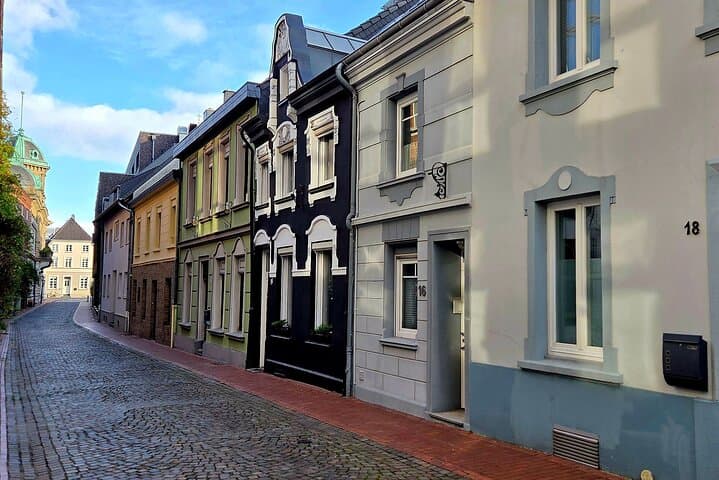
A brisk morning in Rheinberg opens with brick lanes still cool underfoot and the Rhine’s current daring you to follow its course.
Verified experiences and guided adventures in the surrounding area.
Operated by TRUE TOURS - Lower Rhine · Rheinberg, North Rhine-Westphalia
A brisk morning in Rheinberg opens with brick lanes still cool underfoot and the Rhine’s current daring you to follow its course.
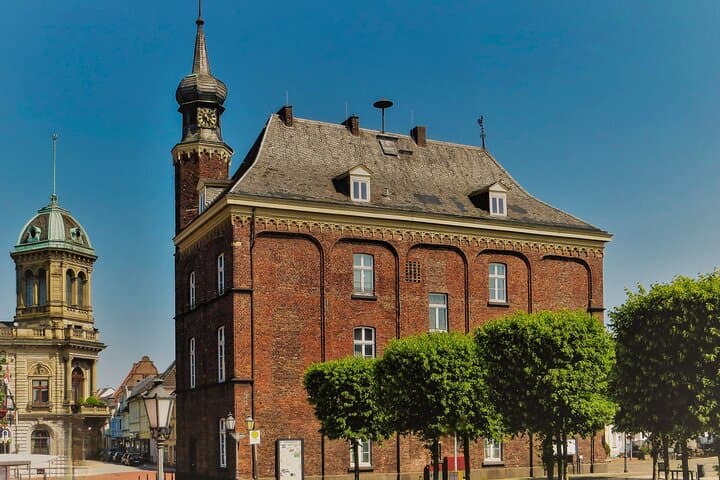
The tour begins in the town’s medieval core—compact streets of red brick and gabled roofs that speak to centuries of trade and floodplain life. From there a born-and-raised guide traces the area’s wartime hinge: the Commonwealth War Cemetery and the story of Operation Plunder, the 1945 crossing that remapped borders and memory along the Lower Rhine.
Geology and industry meet at Halde Rheinpreußen, a reclaimed mining heap topped by a red lamp sculpture at 103 m. The rise is human-made but reads like natural topography; from its rim you get broad, lowland panoramas where river meanders and patchwork fields stretch to the horizon.
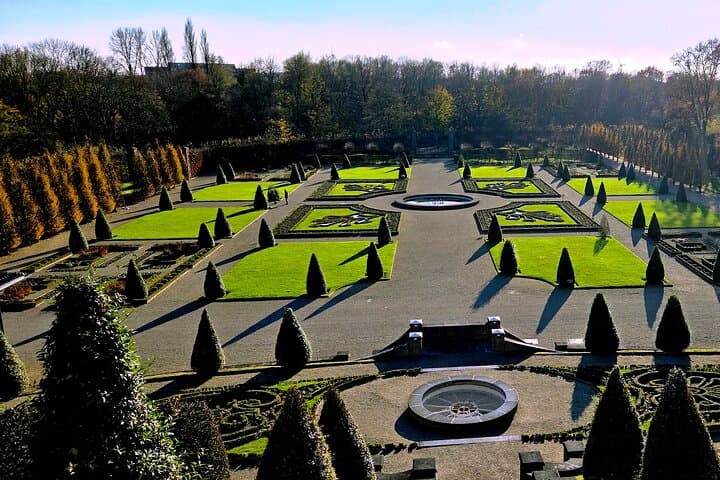
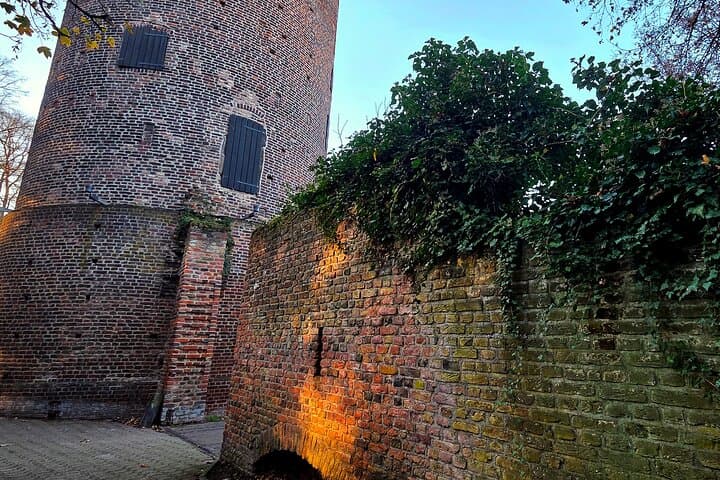
Kloster Kamp offers a quieter chapter—Cistercian origins (1123) shaped into terraced Baroque gardens—while Orsoy’s fortified embankments recall a river system that was long both highway and defense.
Practicalities: this is a four-hour private driving tour with short walks (uphill at the Halde) on well-graded paths. Expect light gravel underfoot, a few steady inclines, and mostly outdoor stops. Wear sturdy shoes, layer for river winds, and bring a camera—lightweight binoculars help for birdwatching along the embankment. Timing matters: earlier hours are cooler and quieter; avoid Mondays for food stops. The experience balances local history, industrial heritage, and accessible viewpoints—ideal for travelers who want context with their countryside.
easy.
4 hours.
Suitable for anyone with normal mobility; includes short uphill walk to Halde summit that requires steady footing.
Walks are short at each stop—typically 10–40 minutes—though the Halde requires a continuous uphill walk of moderate effort.
Access to Kloster Kamp can be subject to availability; if the gardens are closed the guide will substitute nearby scenic viewpoints.
Yes—well-behaved dogs are allowed on private tours and outdoor stops, but church interiors and some sites may restrict pets.
Yes—physical demands are low, but the Halde summit’s incline may be challenging for those with limited mobility; inform the operator of any mobility concerns when booking.
The region’s identity is shaped by lowland trade, Cistercian settlement (Kloster Kamp, 1123), and pivotal WWII events like Operation Plunder in 1945.
Halde Rheinpreußen is a rehabilitated industrial site; visitors are asked to stay on paths and respect memorial grounds to protect habitats and historic fabric.
TRUE TOURS - Lower Rhine operates guided outdoor trips and adventures with an emphasis on safety, stewardship, and memorable experiences.
A brisk morning in Rheinberg opens with brick lanes still cool underfoot and the Rhine’s current daring you to follow its course.
A brisk morning in Rheinberg opens with brick lanes still cool underfoot and the Rhine’s current daring you to follow its course.
The tour begins in the town’s medieval core—compact streets of red brick and gabled roofs that speak to centuries of trade and floodplain life. From there a born-and-raised guide traces the area’s wartime hinge: the Commonwealth War Cemetery and the story of Operation Plunder, the 1945 crossing that remapped borders and memory along the Lower Rhine.
Geology and industry meet at Halde Rheinpreußen, a reclaimed mining heap topped by a red lamp sculpture at 103 m. The rise is human-made but reads like natural topography; from its rim you get broad, lowland panoramas where river meanders and patchwork fields stretch to the horizon.
Kloster Kamp offers a quieter chapter—Cistercian origins (1123) shaped into terraced Baroque gardens—while Orsoy’s fortified embankments recall a river system that was long both highway and defense.
Practicalities: this is a four-hour private driving tour with short walks (uphill at the Halde) on well-graded paths. Expect light gravel underfoot, a few steady inclines, and mostly outdoor stops. Wear sturdy shoes, layer for river winds, and bring a camera—lightweight binoculars help for birdwatching along the embankment. Timing matters: earlier hours are cooler and quieter; avoid Mondays for food stops. The experience balances local history, industrial heritage, and accessible viewpoints—ideal for travelers who want context with their countryside.