THE ADVENTURE COLLECTIVE® · Independent discovery and booking for outdoor travel

In a single day from Reykjavík you can stand between continents, watch geysers blow skyward, and feel the wind off a thundering glacier-fed waterfall. This private Golden Circle tour pairs geology and history with accessible walking and flexible pickup options.
In a single day from Reykjavík you can stand between continents, watch geysers blow skyward, and feel the wind off a thundering glacier-fed waterfall. This private Golden Circle tour pairs geology and history with accessible walking and flexible pickup options.
You step out of Reykjavík’s steady hum into air that tastes like iron and rain. In less than an hour the city’s modern edges fall away and the landscape begins to speak in tectonic lines and steaming breath — the Golden Circle unfurls like a classroom for the planet. Your driver-guide parks near the rift at Thingvellir and for a moment you find yourself standing where two continents pull apart beneath your feet and the Icelandic parliament, the Althing, once argued law over lava rock.
Verified experiences and guided adventures in the surrounding area.
Operated by Reykjavik Segway Tours · Reykjavik, Capital Region
You step out of Reykjavík’s steady hum into air that tastes like iron and rain. In less than an hour the city’s modern edges fall away and the landscape begins to speak in tectonic lines and steaming breath — the Golden Circle unfurls like a classroom for the planet. Your driver-guide parks near the rift at Thingvellir and for a moment you find yourself standing where two continents pull apart beneath your feet and the Icelandic parliament, the Althing, once argued law over lava rock.
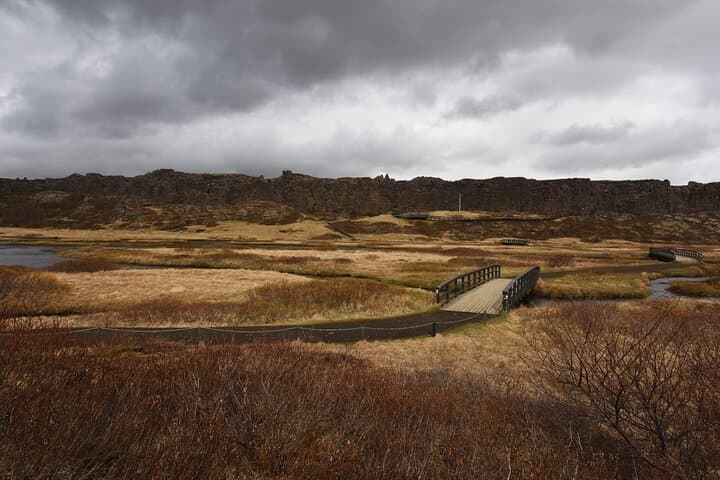
Thingvellir’s low, grassy ridges and clear streams offer an immediate lesson in geology and history. The plate boundary is visible as a series of fissures and cliffs; the area is a UNESCO World Heritage site because it holds both the cradle of Icelandic democracy, founded in 930, and a rare open-air example of continental drift. A short, firm path leads to viewing platforms that outline the fault lines — the Eurasian Plate to the east, the North American to the west — and grasses that survive on a thin layer of soil stitched over cooled lava.
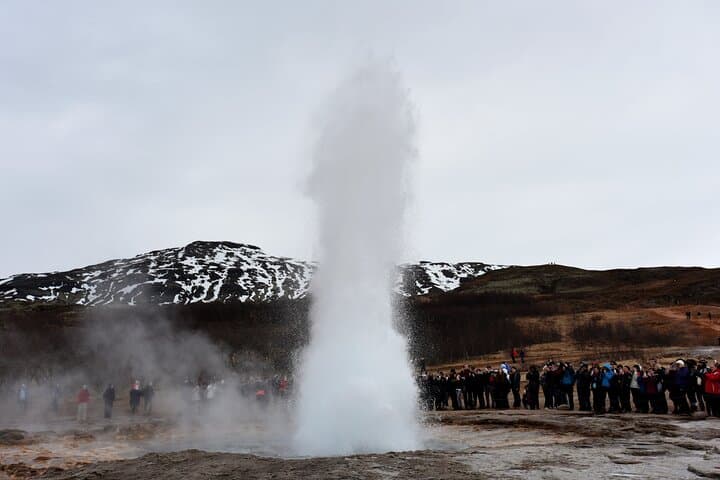
From there the road pushes east, and the ground grows louder. Geysir’s geothermal field is a crowded, entertaining theater where Strokkur hurls a column of boiling water skyward every few minutes. The ground hisses; minerals coat the edges in orange, white, and sulfur-yellow halos. It is a reminder that Iceland sits above a hot, shallow mantle — a place where steam still wants to escape.
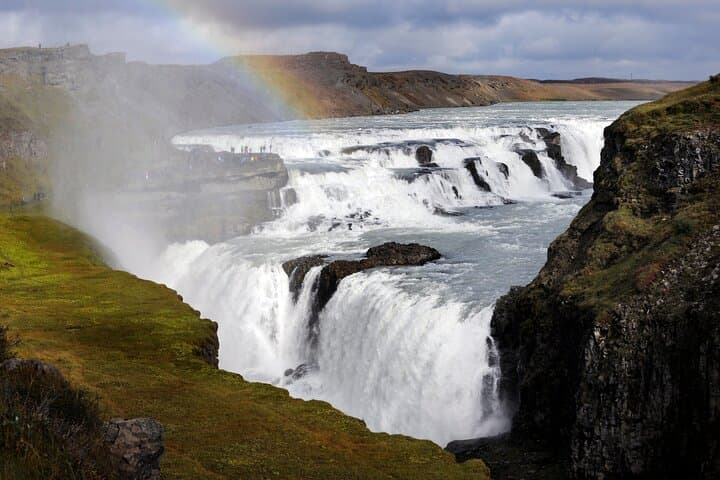
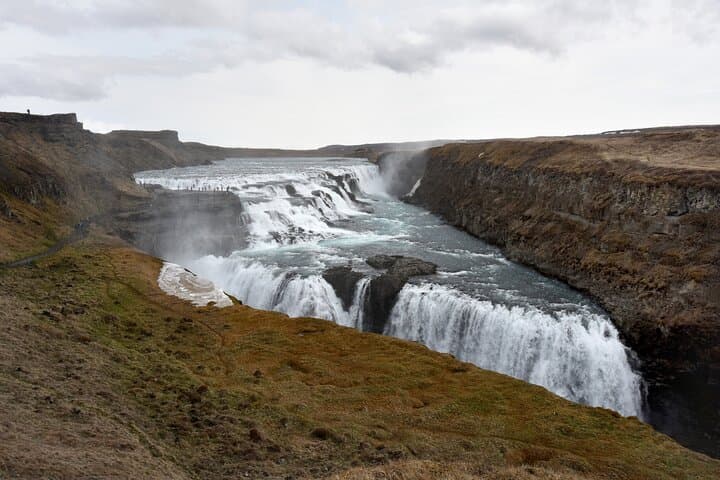
The crescendo is Gullfoss. Approaching the falls, the Hvítá river starts to hurry, as if excited. The final drop is two-tiered, dramatic and efficient, throwing spray like a curtain off a stage. Walk the wooden boardwalks for multiple angles: upstream for the river’s approach, then down to feel the gusts that want to push you toward the railing.
Practical side: this private tour runs roughly eight hours and is driven in a licensed vehicle with an English-speaking guide. Walking at each stop involves short, easy distances on maintained paths and steps; anticipate 1–3 kilometers of gentle walking total, with some uneven terrain and slippery boardwalks near the falls. Weather moves fast — bring layered, waterproof clothing, sturdy hiking shoes, and a camera with a fast shutter if you want to freeze Strokkur mid-spout. Mornings are cooler and quieter; aim for an early start to dodge coach crowds at Geysir and Gullfoss.
Culturally, listen for stories about settlement-era lawmaking and later uses of geothermal power; they reveal how Icelanders read their landscape as resource and identity. Environmentally, stick to marked trails: lichens and moss on lava take decades to recover from a single footprint. In forty miles of road and three main stops, the Golden Circle gives you geology, history, and theatrical nature — all within a day’s easy reach of Reykjavík.
easy.
7–8 hours.
Suitable for most fitness levels; involves short, easy walks and some steps
The tour is approximately eight hours from pickup to drop-off, including time at Thingvellir, Geysir, and Gullfoss.
Yes — the operator offers pickup and drop-off across the Greater Reykjavik Area and from cruise ports by arrangement.
Many viewpoints and paths are wheelchair accessible, but some boardwalks and viewing platforms have steps; contact the supplier to confirm specific access needs.
Parking fees are included; certain sites may have small admission fees or visitor center charges that the tour covers per the booking details.
Dress in layers with a waterproof outer layer and sturdy shoes; wind and spray at Gullfoss make warmer insulation useful even in summer.
The guide is English-speaking, but the operator may be able to provide German, Italian, Polish, Danish, or Spanish on request — ask when booking.
Thingvellir hosted the Althing, one of the world’s oldest parliaments founded in 930; the area marks the rift between the North American and Eurasian tectonic plates.
Thingvellir is a UNESCO World Heritage site with fragile moss and lichens; visitors are expected to stay on trails to prevent irreversible damage.
Reykjavik Segway Tours operates guided outdoor trips and adventures with an emphasis on safety, stewardship, and memorable experiences.
You step out of Reykjavík’s steady hum into air that tastes like iron and rain. In less than an hour the city’s modern edges fall away and the landscape begins to speak in tectonic lines and steaming breath — the Golden Circle unfurls like a classroom for the planet. Your driver-guide parks near the rift at Thingvellir and for a moment you find yourself standing where two continents pull apart beneath your feet and the Icelandic parliament, the Althing, once argued law over lava rock.
You step out of Reykjavík’s steady hum into air that tastes like iron and rain. In less than an hour the city’s modern edges fall away and the landscape begins to speak in tectonic lines and steaming breath — the Golden Circle unfurls like a classroom for the planet. Your driver-guide parks near the rift at Thingvellir and for a moment you find yourself standing where two continents pull apart beneath your feet and the Icelandic parliament, the Althing, once argued law over lava rock.
Thingvellir’s low, grassy ridges and clear streams offer an immediate lesson in geology and history. The plate boundary is visible as a series of fissures and cliffs; the area is a UNESCO World Heritage site because it holds both the cradle of Icelandic democracy, founded in 930, and a rare open-air example of continental drift. A short, firm path leads to viewing platforms that outline the fault lines — the Eurasian Plate to the east, the North American to the west — and grasses that survive on a thin layer of soil stitched over cooled lava.
From there the road pushes east, and the ground grows louder. Geysir’s geothermal field is a crowded, entertaining theater where Strokkur hurls a column of boiling water skyward every few minutes. The ground hisses; minerals coat the edges in orange, white, and sulfur-yellow halos. It is a reminder that Iceland sits above a hot, shallow mantle — a place where steam still wants to escape.
The crescendo is Gullfoss. Approaching the falls, the Hvítá river starts to hurry, as if excited. The final drop is two-tiered, dramatic and efficient, throwing spray like a curtain off a stage. Walk the wooden boardwalks for multiple angles: upstream for the river’s approach, then down to feel the gusts that want to push you toward the railing.
Practical side: this private tour runs roughly eight hours and is driven in a licensed vehicle with an English-speaking guide. Walking at each stop involves short, easy distances on maintained paths and steps; anticipate 1–3 kilometers of gentle walking total, with some uneven terrain and slippery boardwalks near the falls. Weather moves fast — bring layered, waterproof clothing, sturdy hiking shoes, and a camera with a fast shutter if you want to freeze Strokkur mid-spout. Mornings are cooler and quieter; aim for an early start to dodge coach crowds at Geysir and Gullfoss.
Culturally, listen for stories about settlement-era lawmaking and later uses of geothermal power; they reveal how Icelanders read their landscape as resource and identity. Environmentally, stick to marked trails: lichens and moss on lava take decades to recover from a single footprint. In forty miles of road and three main stops, the Golden Circle gives you geology, history, and theatrical nature — all within a day’s easy reach of Reykjavík.