THE ADVENTURE COLLECTIVE® · Independent discovery and booking for outdoor travel

A fast RIB ride from Reykjavík’s Old Harbour puts you meters from puffin colonies on volcanic islets. This one-hour tour maximizes wildlife time with guided narration, safety suits and an environmental approach to viewing seabirds.
A fast RIB ride from Reykjavík’s Old Harbour puts you meters from puffin colonies on volcanic islets. This one-hour tour maximizes wildlife time with guided narration, safety suits and an environmental approach to viewing seabirds.
The RIB cuts through Reykjavik’s grey-green water and the city slips aft — a low line of roofs and cranes — while the ocean begins to pull you toward a cluster of rocky islets. Puffins rocket out of cliff faces in ragged formations; their short wings beat like small engines as they argue for airspace. The captain eases the engine and the boat becomes a quiet platform for watching birds work the wind.
Verified experiences and guided adventures in the surrounding area.
Operated by Elding Whale Watching · Reykjavík, Capital Region
The RIB cuts through Reykjavik’s grey-green water and the city slips aft — a low line of roofs and cranes — while the ocean begins to pull you toward a cluster of rocky islets. Puffins rocket out of cliff faces in ragged formations; their short wings beat like small engines as they argue for airspace. The captain eases the engine and the boat becomes a quiet platform for watching birds work the wind.
These islands sit on young volcanic substrate shaped by repeated eruptions and glacial carve. Lundey (Puffin Island) and nearby Akurey sprouted from lava and tephra, then gathered soil and seabird colonies. Puffins have fed Icelanders for centuries and today are a seasonal emblem — smart, noisy, efficient hunters that return each spring to breed.
On a one-hour RIB tour from Reykjavík’s Old Harbour you’ll get fast transit and extended viewing time; guides point out identification cues, nesting behavior and local lore while the vessel can be shut down near colonies for quieter observation. Elding operates with an environmental code: limited approach, flotation suits, and minimal disturbance.
Practical: arrive at the Old Harbour early, dress in windproof layers and waterproof footwear, and expect sharp sea spray even on calm days. Tours run best May–August when puffins are ashore; seasickness medication is wise for anyone who’s prone. Cameras with a 200–400mm equivalent are ideal for close shots; binoculars are enough to study behavior. Minimum age and height rules apply and trips cancel in poor weather, so check confirmation windows before you go.
moderate.
1 hour.
Moderate fitness required for boarding and steadying on a small, fast boat; ambulatory passengers should be comfortable with short climbs and wet decks.
Puffins are most reliably present from late April through August, with peak breeding and chick-feeding activity in June and July.
Yes — operators often allow children but enforce a minimum age/height (check the tour’s specific policy); lifejackets and flotation suits are provided.
Tours typically cancel in poor sea conditions; operators offer full refunds or alternative dates if canceled due to weather — confirm the 24-hour cancellation policy at booking.
Guides follow wildlife-friendly approach distances and may shut engines to reduce disturbance; the RIB’s design lets you observe without landing or entering nesting areas.
Reykjavík’s Old Harbour shifted from industrial whaling and fishing toward tourism; the nearshore islands have been used for subsistence seabird harvesting and are now protected breeding sites.
Operators limit close approaches and carry life jackets and flotation suits; visitors should avoid littering, keep voice levels low during shut-down observations, and follow guide instructions to reduce disturbance.
Elding Whale Watching operates guided outdoor trips and adventures with an emphasis on safety, stewardship, and memorable experiences.
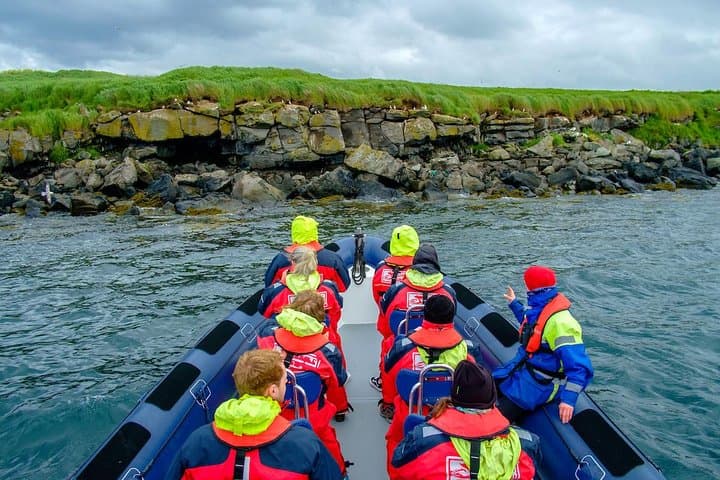
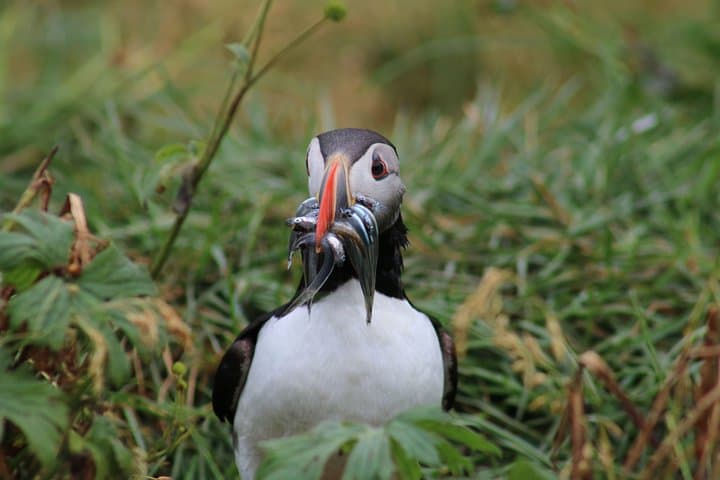
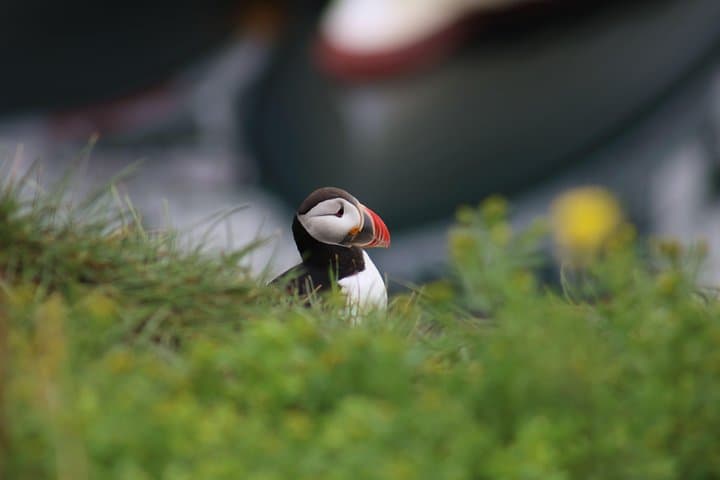
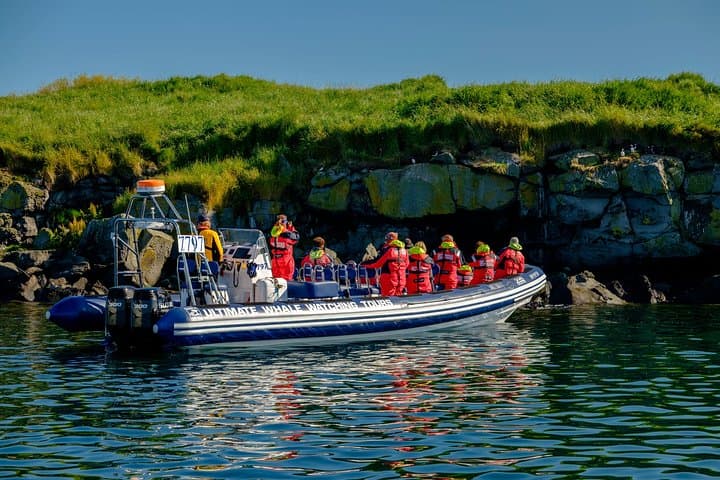
The RIB cuts through Reykjavik’s grey-green water and the city slips aft — a low line of roofs and cranes — while the ocean begins to pull you toward a cluster of rocky islets. Puffins rocket out of cliff faces in ragged formations; their short wings beat like small engines as they argue for airspace. The captain eases the engine and the boat becomes a quiet platform for watching birds work the wind.
The RIB cuts through Reykjavik’s grey-green water and the city slips aft — a low line of roofs and cranes — while the ocean begins to pull you toward a cluster of rocky islets. Puffins rocket out of cliff faces in ragged formations; their short wings beat like small engines as they argue for airspace. The captain eases the engine and the boat becomes a quiet platform for watching birds work the wind.
These islands sit on young volcanic substrate shaped by repeated eruptions and glacial carve. Lundey (Puffin Island) and nearby Akurey sprouted from lava and tephra, then gathered soil and seabird colonies. Puffins have fed Icelanders for centuries and today are a seasonal emblem — smart, noisy, efficient hunters that return each spring to breed.
On a one-hour RIB tour from Reykjavík’s Old Harbour you’ll get fast transit and extended viewing time; guides point out identification cues, nesting behavior and local lore while the vessel can be shut down near colonies for quieter observation. Elding operates with an environmental code: limited approach, flotation suits, and minimal disturbance.
Practical: arrive at the Old Harbour early, dress in windproof layers and waterproof footwear, and expect sharp sea spray even on calm days. Tours run best May–August when puffins are ashore; seasickness medication is wise for anyone who’s prone. Cameras with a 200–400mm equivalent are ideal for close shots; binoculars are enough to study behavior. Minimum age and height rules apply and trips cancel in poor weather, so check confirmation windows before you go.