THE ADVENTURE COLLECTIVE® · Independent discovery and booking for outdoor travel

Walk Rethymno’s Old Town with a private guide—two hours that trace Venetian arches, Ottoman mosques, and a hands-on phyllo pastry demo. Perfect for travelers who want history, food, and compact coastal views without a rigid group schedule.
Walk Rethymno’s Old Town with a private guide—two hours that trace Venetian arches, Ottoman mosques, and a hands-on phyllo pastry demo. Perfect for travelers who want history, food, and compact coastal views without a rigid group schedule.
You meet your guide at the church of the Four Martyrs; cobbles gleam and a salt breeze tugs at loose scarves as the narrow streets begin to speak. The walk threads from pale stone churches into shadowed alleys, past carved lintels and wooden shutters that have watched Venetian galleys and Ottoman sails alike.
Verified experiences and guided adventures in the surrounding area.
Operated by Opatrip.com Greece · Rethymno, Crete
You meet your guide at the church of the Four Martyrs; cobbles gleam and a salt breeze tugs at loose scarves as the narrow streets begin to speak. The walk threads from pale stone churches into shadowed alleys, past carved lintels and wooden shutters that have watched Venetian galleys and Ottoman sails alike.
Rethymno’s Old Town is a living chapter of Crete’s layered past: Venetian loggias and fountains from the 16th century, Ottoman-era mosques that later became community spaces, and a compact citadel (the Fortezza) that looks over the coast. Geology matters here—limestone cliffs and sandstone beds shaped rooflines and the harbor’s shallow curves, while the Mediterranean climate colors plant life and market hours.
Culturally the town hums with pragmatic warmth: bakery ovens and phyllo demonstrations offer a tactile lesson in daily life, museums house pottery and bronze finds, and music schools still practice in repurposed religious buildings.
Practical guidance: the private tour lasts roughly two hours and covers uneven cobbles and short flights of stone steps—good gripping shoes make a difference. Museums often charge separate admission; bring small bills and ID. Travel early in spring or late afternoon in summer to avoid peak sun. Ask your guide about quieter courtyards and rooftop viewpoints for photos.
This is a low-impact, walkable way to read Rethymno’s history at street level—expect lively narration, hands-on pastry demos at local workshops, and time to pause at the fountain or harbor to watch gulls circle the wind.
easy.
2 hours.
Suitable for most fitness levels; requires standing and walking on uneven surfaces for two hours
Most museums and some attractions require separate admission; the guide will point out fees and can advise on combined tickets.
Yes—this private, easy-paced walking tour suits families and older visitors, though there are cobbled streets and some steps to navigate.
Tours are commonly offered in English; other languages are often available on request—confirm at booking.
The tour is approximately 2 hours; it starts at the Four Martyrs church entrance (Gerakari 6) and concludes in the Old Town near the harbor area.
Rethymno’s Old Town shows clear Venetian urban planning layered with Ottoman-era conversions—churches became mosques and public buildings shifted uses over centuries.
The Old Town relies on conservation zoning to protect historic facades; visitors should stick to marked paths, avoid touching fragile frescoes, and support local businesses to keep heritage maintenance viable.
Opatrip.com Greece operates guided outdoor trips and adventures with an emphasis on safety, stewardship, and memorable experiences.
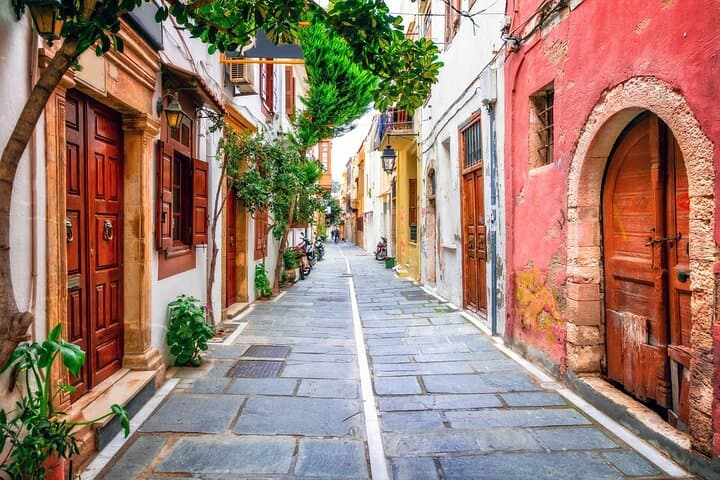

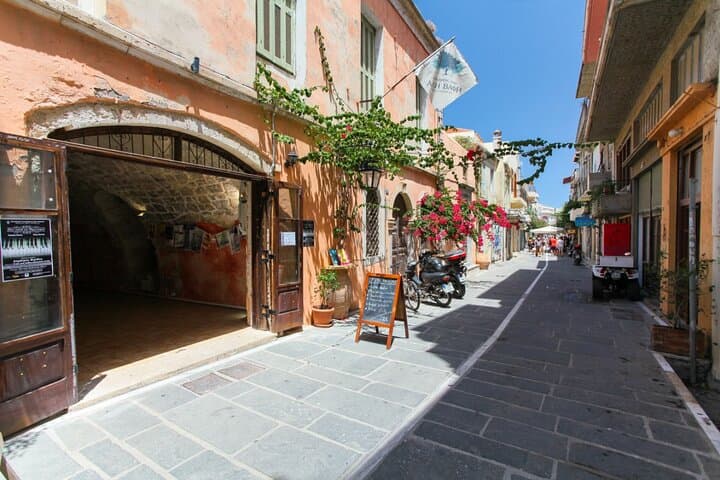

You meet your guide at the church of the Four Martyrs; cobbles gleam and a salt breeze tugs at loose scarves as the narrow streets begin to speak. The walk threads from pale stone churches into shadowed alleys, past carved lintels and wooden shutters that have watched Venetian galleys and Ottoman sails alike.
You meet your guide at the church of the Four Martyrs; cobbles gleam and a salt breeze tugs at loose scarves as the narrow streets begin to speak. The walk threads from pale stone churches into shadowed alleys, past carved lintels and wooden shutters that have watched Venetian galleys and Ottoman sails alike.
Rethymno’s Old Town is a living chapter of Crete’s layered past: Venetian loggias and fountains from the 16th century, Ottoman-era mosques that later became community spaces, and a compact citadel (the Fortezza) that looks over the coast. Geology matters here—limestone cliffs and sandstone beds shaped rooflines and the harbor’s shallow curves, while the Mediterranean climate colors plant life and market hours.
Culturally the town hums with pragmatic warmth: bakery ovens and phyllo demonstrations offer a tactile lesson in daily life, museums house pottery and bronze finds, and music schools still practice in repurposed religious buildings.
Practical guidance: the private tour lasts roughly two hours and covers uneven cobbles and short flights of stone steps—good gripping shoes make a difference. Museums often charge separate admission; bring small bills and ID. Travel early in spring or late afternoon in summer to avoid peak sun. Ask your guide about quieter courtyards and rooftop viewpoints for photos.
This is a low-impact, walkable way to read Rethymno’s history at street level—expect lively narration, hands-on pastry demos at local workshops, and time to pause at the fountain or harbor to watch gulls circle the wind.