THE ADVENTURE COLLECTIVE® · Independent discovery and booking for outdoor travel

Spend a day between stone and story on a private tour from Chania or Rethymno. Visit Arkadi Monastery’s historic courtyard, watch potters in Margarites, descend into Melidoni Cave, and finish with Rethymno Old Town’s Venetian lanes.
Spend a day between stone and story on a private tour from Chania or Rethymno. Visit Arkadi Monastery’s historic courtyard, watch potters in Margarites, descend into Melidoni Cave, and finish with Rethymno Old Town’s Venetian lanes.
A cool wind carries the scent of sage and olive as the minibus slips south from Chania, the White Mountains shrinking into serrated ridges. By midmorning the bell tower of Arkadi Monastery appears above cypress groves — a pale, baroque silhouette that has watched centuries of struggle and prayer.
Verified experiences and guided adventures in the surrounding area.
Operated by MOYSIDIS TRAVEL · Rethymno, Crete
A cool wind carries the scent of sage and olive as the minibus slips south from Chania, the White Mountains shrinking into serrated ridges. By midmorning the bell tower of Arkadi Monastery appears above cypress groves — a pale, baroque silhouette that has watched centuries of struggle and prayer.
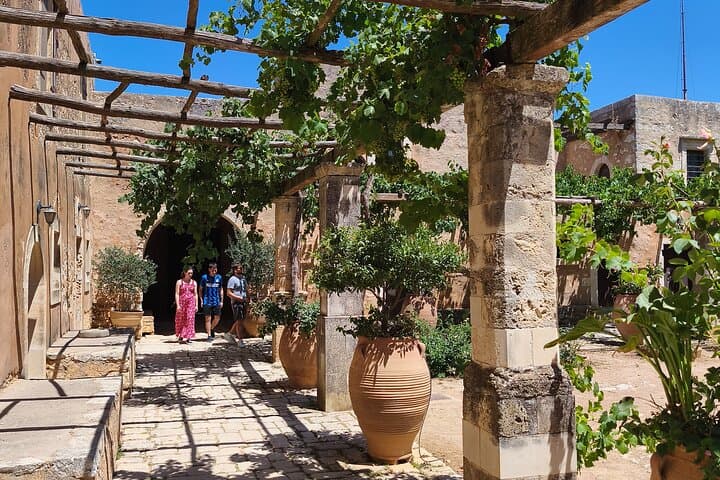
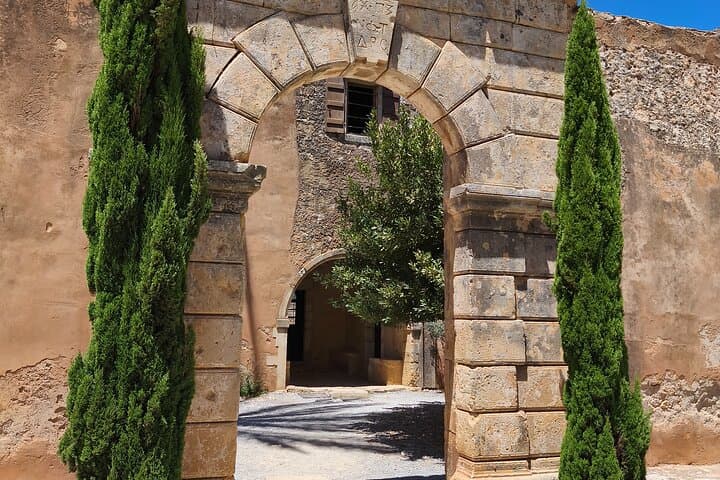
The tour threads history into landscape: Arkadi’s courtyard and refectory recall the 19th‑century uprising that turned this monastery into a symbol of Cretan resistance. The route crosses limestone foothills carved by karst processes; caves like Melidoni are hollowed by groundwater and hold both stalactites and stories of human tragedy during Ottoman rule. Margarites village is a change of pace — potters at low tables shape red clay the same way their grandparents did, narrow streets shaded by bougainvillea and stone arches.
Guides add local context with stops to explain Eleutherna’s archaeological finds and the Venetian imprint in Rethymno Old Town, where the Fortezza looms over a lagoon-fed harbor.
Practicalities are straightforward: expect a 7–8 hour day with several short walks, steps and uneven cave floors. Modest dress is required at Arkadi. Bring sun protection, a refillable water bottle, and comfortable shoes; cameras are welcome but show respect inside sacred sites. Timing mornings for cooler light and quieter streets gives better photos and more room in workshops. The pace is curated for exploration — history, geology and craft, paced so travelers leave informed and still wanting more.
easy.
7–8 hours.
Light fitness; able to walk short distances, climb stairs and navigate uneven surfaces
Yes — Arkadi Monastery entrance is included in the tour price; your guide will handle tickets during the visit.
Yes — the itinerary includes time inside Melidoni Cave; expect some steps and confined spaces within the cavern.
Private pickup and drop‑off from accommodations in the Chania and Rethymno regions are provided; pickup time is arranged at booking.
The tour note lists stroller accessibility for some sections, but caves and steep alleys are not stroller‑friendly—plan to carry infants through those areas.
Arkadi Monastery is famed for its role in Cretan resistance during Ottoman rule; Eleutherna was an important ancient city‑state whose archaeology reveals long regional continuity.
These sites are protected and visitor impact is managed—use marked paths, avoid touching cave formations, and favor refillable bottles to reduce waste.
MOYSIDIS TRAVEL operates guided outdoor trips and adventures with an emphasis on safety, stewardship, and memorable experiences.
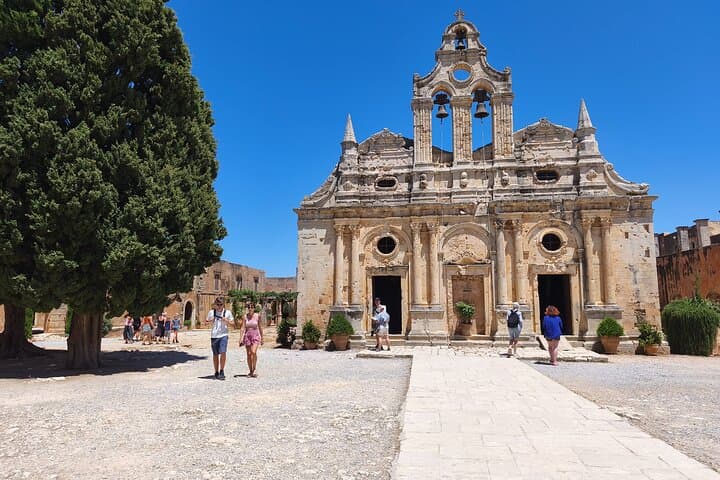
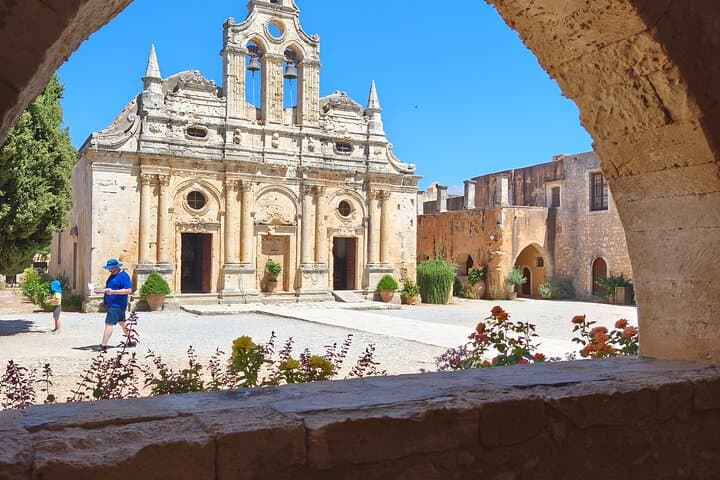
A cool wind carries the scent of sage and olive as the minibus slips south from Chania, the White Mountains shrinking into serrated ridges. By midmorning the bell tower of Arkadi Monastery appears above cypress groves — a pale, baroque silhouette that has watched centuries of struggle and prayer.
A cool wind carries the scent of sage and olive as the minibus slips south from Chania, the White Mountains shrinking into serrated ridges. By midmorning the bell tower of Arkadi Monastery appears above cypress groves — a pale, baroque silhouette that has watched centuries of struggle and prayer.
The tour threads history into landscape: Arkadi’s courtyard and refectory recall the 19th‑century uprising that turned this monastery into a symbol of Cretan resistance. The route crosses limestone foothills carved by karst processes; caves like Melidoni are hollowed by groundwater and hold both stalactites and stories of human tragedy during Ottoman rule. Margarites village is a change of pace — potters at low tables shape red clay the same way their grandparents did, narrow streets shaded by bougainvillea and stone arches.
Guides add local context with stops to explain Eleutherna’s archaeological finds and the Venetian imprint in Rethymno Old Town, where the Fortezza looms over a lagoon-fed harbor.
Practicalities are straightforward: expect a 7–8 hour day with several short walks, steps and uneven cave floors. Modest dress is required at Arkadi. Bring sun protection, a refillable water bottle, and comfortable shoes; cameras are welcome but show respect inside sacred sites. Timing mornings for cooler light and quieter streets gives better photos and more room in workshops. The pace is curated for exploration — history, geology and craft, paced so travelers leave informed and still wanting more.