THE ADVENTURE COLLECTIVE® · Independent discovery and booking for outdoor travel

Head out from Mirissa for a responsible, early-morning whale-watching trip that targets blue, sperm and fin whales in offshore feeding lanes. Expect a five-hour outing with long transit and patient searching—best between December and April when seas are calmer.
Head out from Mirissa for a responsible, early-morning whale-watching trip that targets blue, sperm and fin whales in offshore feeding lanes. Expect a five-hour outing with long transit and patient searching—best between December and April when seas are calmer.
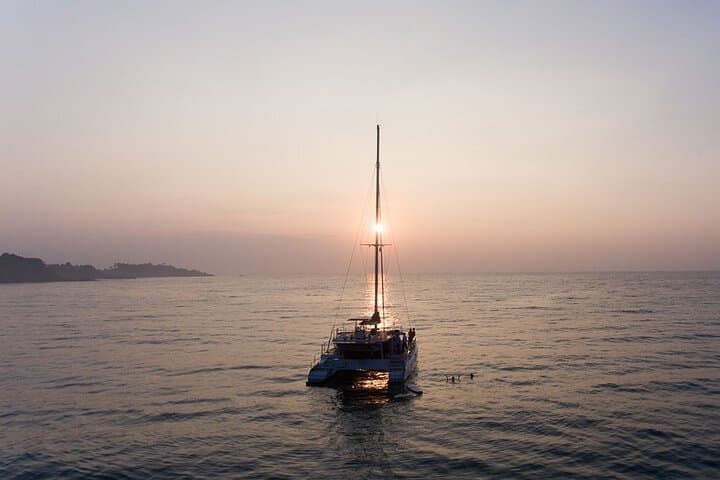
The sun is a low coin over the Indian Ocean as the Mirissa pier shrinks behind you and the boat slips into an open blue. Salt-slick air pushes at your jacket and the engine hums a steady promise: hours of scanning horizon, sudden spray, and the slow rise of a dark back.
Verified experiences and guided adventures in the surrounding area.
Operated by Lakpura LLC · Mirissa, Southern Province
The sun is a low coin over the Indian Ocean as the Mirissa pier shrinks behind you and the boat slips into an open blue. Salt-slick air pushes at your jacket and the engine hums a steady promise: hours of scanning horizon, sudden spray, and the slow rise of a dark back.
Mirissa sits on Sri Lanka’s southern shore where deep offshore currents attract some of the largest animals on the planet. The modern whale-watching scene here grew as tourists and researchers followed seasonal movements of blue, sperm and fin whales; local boat operators now run early morning trips when wind and swell are gentlest. Geologically, the shelf drops quickly south of Mirissa, creating feeding lanes where whales follow krill and squid.
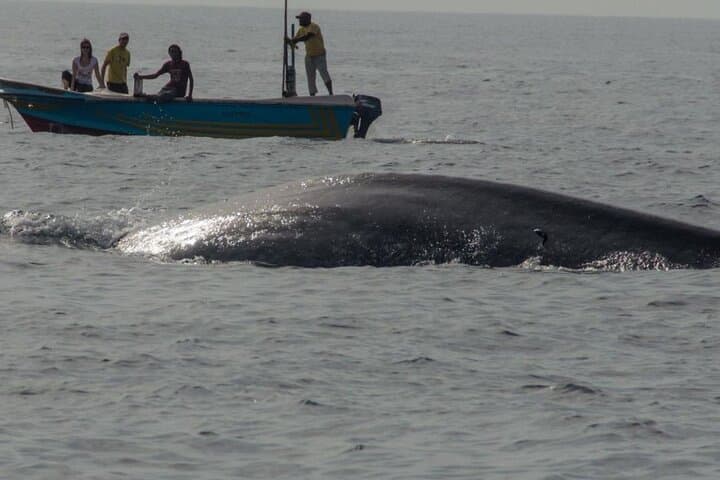
Culturally the town is small—fishing slipways, coconut palms and a handful of cafes opening before dawn. Guides on responsible tours combine visual ID with brief naturalist talks: look for the tall triangular dorsal of a fin whale, the spout height of a blue whale, or the blunt head of a sperm whale.
Practically, trips start pre-dawn and last about five hours including transit. Expect two hours each way to common sighting zones and extended periods of slow steaming while crews search. Operators approach at reduced speed and keep at least 100–300 feet depending on local rules; bring layered clothes, motion-sickness remedies, and a reusable water bottle. Binoculars and a camera with a telephoto lens are useful, but patience and quiet observation are the best tools—these animals set the pace, not you.
moderate.
5 hours.
Moderate fitness for boarding boats and standing on a moving deck for long periods; must manage short walk to pier.
December through April generally offers calmer seas and higher chances of blue and sperm whale sightings, though whales can appear year-round.
Responsible operators keep at least 100–300 feet (about 30–100 meters) depending on species and local regulations; crews reduce speed and noise when near animals.
This operator advises against travel for pregnant guests due to boat motion and safety considerations; check with your provider before booking.
Bring layered clothing, sunscreen, binoculars, motion-sickness aids, a hat, and a reusable water bottle; avoid single-use plastics and don’t litter.
Whale sighting activity in Mirissa developed as whale populations and tourism intersected; local fishers adapted boats for ecotourism in recent decades.
Operators follow distancing and slow-approach rules to limit disturbance; travelers should avoid feeding or attempting to touch wildlife and dispose of waste responsibly.
Lakpura LLC operates guided outdoor trips and adventures with an emphasis on safety, stewardship, and memorable experiences.
The sun is a low coin over the Indian Ocean as the Mirissa pier shrinks behind you and the boat slips into an open blue. Salt-slick air pushes at your jacket and the engine hums a steady promise: hours of scanning horizon, sudden spray, and the slow rise of a dark back.
The sun is a low coin over the Indian Ocean as the Mirissa pier shrinks behind you and the boat slips into an open blue. Salt-slick air pushes at your jacket and the engine hums a steady promise: hours of scanning horizon, sudden spray, and the slow rise of a dark back.
Mirissa sits on Sri Lanka’s southern shore where deep offshore currents attract some of the largest animals on the planet. The modern whale-watching scene here grew as tourists and researchers followed seasonal movements of blue, sperm and fin whales; local boat operators now run early morning trips when wind and swell are gentlest. Geologically, the shelf drops quickly south of Mirissa, creating feeding lanes where whales follow krill and squid.
Culturally the town is small—fishing slipways, coconut palms and a handful of cafes opening before dawn. Guides on responsible tours combine visual ID with brief naturalist talks: look for the tall triangular dorsal of a fin whale, the spout height of a blue whale, or the blunt head of a sperm whale.
Practically, trips start pre-dawn and last about five hours including transit. Expect two hours each way to common sighting zones and extended periods of slow steaming while crews search. Operators approach at reduced speed and keep at least 100–300 feet depending on local rules; bring layered clothes, motion-sickness remedies, and a reusable water bottle. Binoculars and a camera with a telephoto lens are useful, but patience and quiet observation are the best tools—these animals set the pace, not you.