THE ADVENTURE COLLECTIVE® · Independent discovery and booking for outdoor travel

Turn Cusco into your game board with an outdoor escape centered on the story of Tupac Amaru. Solve clues across Plaza de Armas, San Blas, Limacpampa and San Pedro Market during a 3–4 hour city adventure.
Turn Cusco into your game board with an outdoor escape centered on the story of Tupac Amaru. Solve clues across Plaza de Armas, San Blas, Limacpampa and San Pedro Market during a 3–4 hour city adventure.
The sun hits the stone facades of Cusco's Plaza de Armas as your team unfolds a map and a game kit — the city itself becomes a puzzle. Cobblestones click underfoot and narrow alleys of San Blas funnel your group toward a riddle hidden in plain sight; statues, door lintels and fountains push you onward like a living scavenger hunt.
Verified experiences and guided adventures in the surrounding area.
Operated by Escápate Slow Tourism · Cusco, Cusco
The sun hits the stone facades of Cusco's Plaza de Armas as your team unfolds a map and a game kit — the city itself becomes a puzzle. Cobblestones click underfoot and narrow alleys of San Blas funnel your group toward a riddle hidden in plain sight; statues, door lintels and fountains push you onward like a living scavenger hunt.
This outdoor escape game threads modern play through layers of Cusco's past. The mission borrows the story of Tupac Amaru — an emblem of indigenous resistance — and uses colonial-era architecture, Inca boundaries like Limacpampa, and the bustle of San Pedro Market as clue-rich backdrops. Geology is visible in the carved stone walls: pre-Columbian masonry and Spanish additions stacked and reworked over centuries.
Culturally, the route showcases craft shops, churches, and market stalls where local artisans still dye wool and carve wood. The game is also a chance to learn small-town logistics: narrow streets, pedestrians, and vendors shape the pace.
Practical guidance: plan for roughly 3–4 hours of walking at high altitude (Cusco sits above 3,300 m). Wear closed shoes with reliable tread, layer for sudden sun and breeze, and carry water for acclimatization. Bring a charged phone for the mobile ticket and photos, but stay aware of crowds around major attractions. Teams should leave space for locals and respect historic stonework — clues often require close observation but never climbing or touching fragile surfaces.
This is an active, city-based experience that blends local history with teamwork — ideal as an alternative to a traditional guided tour or a lively way to orient yourself on your first day in Cusco.
easy.
3–4 hours.
Suitable for most fitness levels; requires several hours of walking on uneven cobblestones and some uphill sections at high altitude.
The activity runs about 3–4 hours, covering multiple neighborhoods and paced for teams to solve clues together.
Yes; the game is family-friendly and physically easy, but parents should consider altitude effects on young children and supervise in busy areas.
No prior knowledge is required; the game provides context and clues that introduce historical details as you go.
Mobile tickets are accepted and the booking offers full refunds if canceled at least 24 hours before the scheduled start.
The game references Tupac Amaru and the broader indigenous resistance that shaped late colonial Cusco; many streets still show Inca foundations with Spanish overlays.
Respect for historic stonework is crucial—avoid climbing or touching masonry, support local artisans with conscious purchases, and carry out litter to protect urban heritage.
Escápate Slow Tourism operates guided outdoor trips and adventures with an emphasis on safety, stewardship, and memorable experiences.
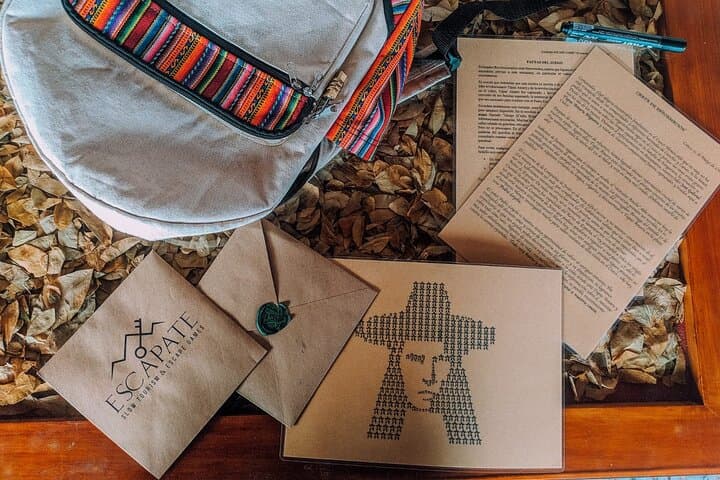
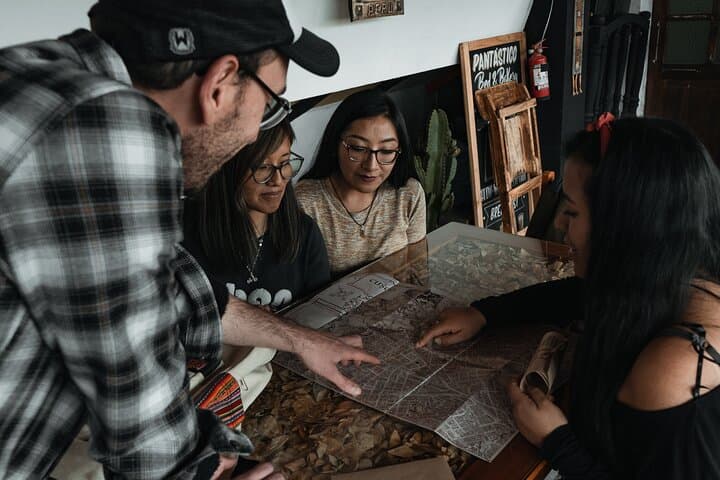
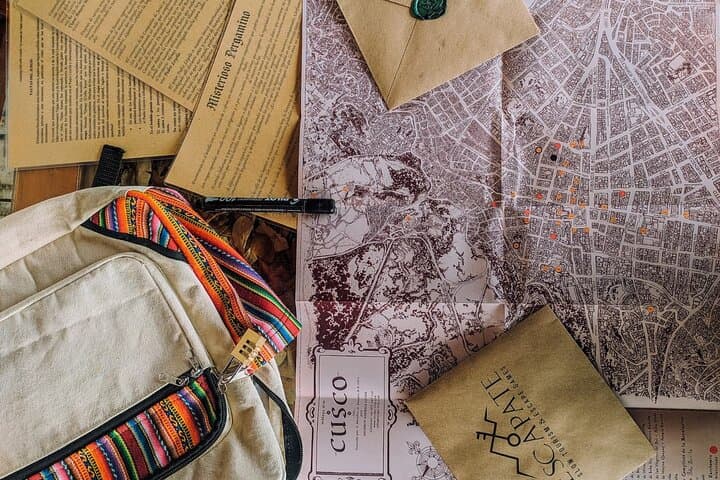
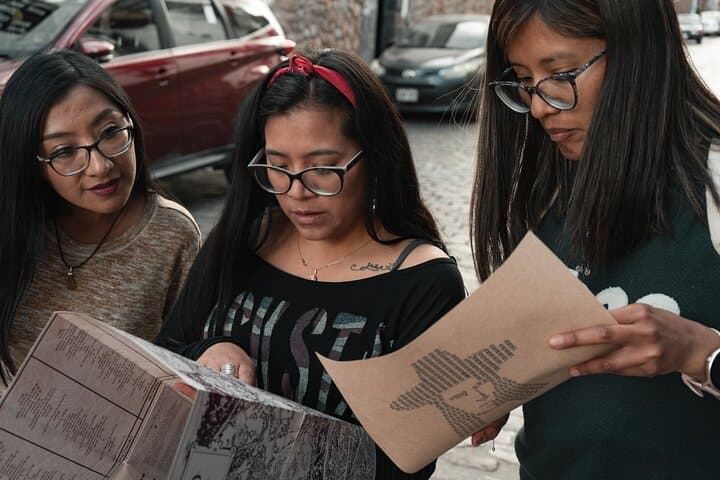
The sun hits the stone facades of Cusco's Plaza de Armas as your team unfolds a map and a game kit — the city itself becomes a puzzle. Cobblestones click underfoot and narrow alleys of San Blas funnel your group toward a riddle hidden in plain sight; statues, door lintels and fountains push you onward like a living scavenger hunt.
The sun hits the stone facades of Cusco's Plaza de Armas as your team unfolds a map and a game kit — the city itself becomes a puzzle. Cobblestones click underfoot and narrow alleys of San Blas funnel your group toward a riddle hidden in plain sight; statues, door lintels and fountains push you onward like a living scavenger hunt.
This outdoor escape game threads modern play through layers of Cusco's past. The mission borrows the story of Tupac Amaru — an emblem of indigenous resistance — and uses colonial-era architecture, Inca boundaries like Limacpampa, and the bustle of San Pedro Market as clue-rich backdrops. Geology is visible in the carved stone walls: pre-Columbian masonry and Spanish additions stacked and reworked over centuries.
Culturally, the route showcases craft shops, churches, and market stalls where local artisans still dye wool and carve wood. The game is also a chance to learn small-town logistics: narrow streets, pedestrians, and vendors shape the pace.
Practical guidance: plan for roughly 3–4 hours of walking at high altitude (Cusco sits above 3,300 m). Wear closed shoes with reliable tread, layer for sudden sun and breeze, and carry water for acclimatization. Bring a charged phone for the mobile ticket and photos, but stay aware of crowds around major attractions. Teams should leave space for locals and respect historic stonework — clues often require close observation but never climbing or touching fragile surfaces.
This is an active, city-based experience that blends local history with teamwork — ideal as an alternative to a traditional guided tour or a lively way to orient yourself on your first day in Cusco.