THE ADVENTURE COLLECTIVE® · Independent discovery and booking for outdoor travel

Leave Reno and climb into the Sierra’s winter high country by UTV, snowmobile or snowshoe. Rapid elevation, big views of Lake Tahoe, and expert guides make this a high‑adrenaline way to experience alpine snowfields.
Leave Reno and climb into the Sierra’s winter high country by UTV, snowmobile or snowshoe. Rapid elevation, big views of Lake Tahoe, and expert guides make this a high‑adrenaline way to experience alpine snowfields.
The engine coughs to life and the first ribbon of road out of Reno slips behind you; pines lean in as the highway climbs and the Sierra opens into wide white bowls. Wind cuts clean and bright, and the guide points to ridgelines where the snow sits in hard scallops. Whether strapped into an all‑terrain UTV, astride a snowmobile, or post‑holing out on snowshoes, the landscape directs your pace — fast over packed trails, measured where drifts gather.
Verified experiences and guided adventures in the surrounding area.
Operated by Sierra Adventures / Activities Reno Tahoe, LLC · Reno, Nevada
The engine coughs to life and the first ribbon of road out of Reno slips behind you; pines lean in as the highway climbs and the Sierra opens into wide white bowls. Wind cuts clean and bright, and the guide points to ridgelines where the snow sits in hard scallops. Whether strapped into an all‑terrain UTV, astride a snowmobile, or post‑holing out on snowshoes, the landscape directs your pace — fast over packed trails, measured where drifts gather.
This corridor of the Sierra Nevada has long been a travel route for Washoe people and later prospectors and winter recreationists; glaciers carved the valleys you cross and left granite shoulders that frame Lake Tahoe’s basin. The region’s volcanic and granitic geology creates abrupt elevation changes, so views turn suddenly from closed forest to broad lake and peak panoramas. Local culture still centers on mountain stewardship and a pragmatic love of winter sports; guides combine mechanized access with on‑the‑snow knowledge.
Practical side: tours pick up in Reno and run half‑day to full‑day shifts, covering variable terrain at 6,000–9,000 ft elevations. Expect cold, wind, and rapid weather changes; layers, goggles, and puncture‑resistant boots matter. Drivers will get a short safety briefing and orientation; passengers should know how to brace and communicate with the operator. Bring water, high‑calorie snacks, and a charged phone in a warm pocket. Timing matters — midmorning departures warm the day and give better visibility, while late afternoons offer softer light but colder temps. For adventurous travelers who like speed with scenic payoff, it’s a direct route into the Sierra’s winter heart.
challenging.
3–5 hours.
Participants should have good cardiovascular fitness and core stability for handling bumps and cold exposure.
No advanced experience is required, but operators must be comfortable with basic vehicle handling; guides provide an orientation and safety briefing before departing.
Minimum age is 18 to drive; children can ride as passengers when accompanied by an adult, per operator policy.
Temperatures commonly range from single digits to the mid‑30s°F (–10 to 2°C); wear thermal base layers, an insulating midlayer, windproof outer shell, gloves, and warm boots.
This operator notes the activity runs in most weather conditions; check with the provider about extreme storms or route changes for safety.
The Sierra’s winter routes follow land used seasonally by indigenous Washoe communities; later, miners and early recreationalists developed trails that evolved into modern winter corridors.
Mechanized access concentrates impact on established trails; stick to guide routes, avoid off‑trail travel, and pack out waste to reduce erosion and disturbance.
Sierra Adventures / Activities Reno Tahoe, LLC operates guided outdoor trips and adventures with an emphasis on safety, stewardship, and memorable experiences.
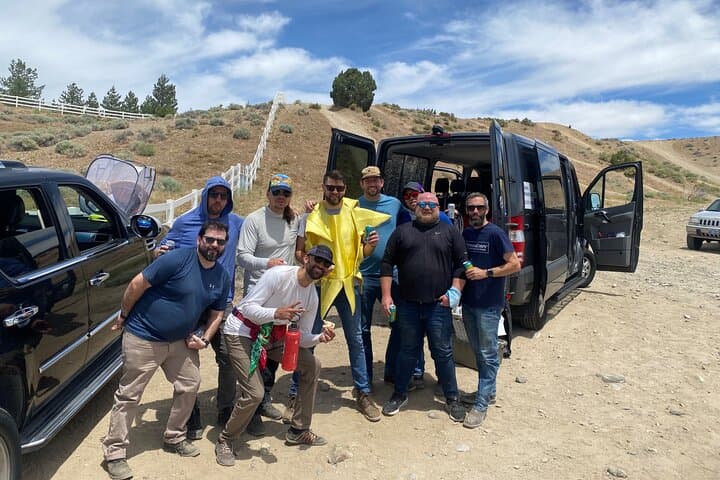


The engine coughs to life and the first ribbon of road out of Reno slips behind you; pines lean in as the highway climbs and the Sierra opens into wide white bowls. Wind cuts clean and bright, and the guide points to ridgelines where the snow sits in hard scallops. Whether strapped into an all‑terrain UTV, astride a snowmobile, or post‑holing out on snowshoes, the landscape directs your pace — fast over packed trails, measured where drifts gather.
The engine coughs to life and the first ribbon of road out of Reno slips behind you; pines lean in as the highway climbs and the Sierra opens into wide white bowls. Wind cuts clean and bright, and the guide points to ridgelines where the snow sits in hard scallops. Whether strapped into an all‑terrain UTV, astride a snowmobile, or post‑holing out on snowshoes, the landscape directs your pace — fast over packed trails, measured where drifts gather.
This corridor of the Sierra Nevada has long been a travel route for Washoe people and later prospectors and winter recreationists; glaciers carved the valleys you cross and left granite shoulders that frame Lake Tahoe’s basin. The region’s volcanic and granitic geology creates abrupt elevation changes, so views turn suddenly from closed forest to broad lake and peak panoramas. Local culture still centers on mountain stewardship and a pragmatic love of winter sports; guides combine mechanized access with on‑the‑snow knowledge.
Practical side: tours pick up in Reno and run half‑day to full‑day shifts, covering variable terrain at 6,000–9,000 ft elevations. Expect cold, wind, and rapid weather changes; layers, goggles, and puncture‑resistant boots matter. Drivers will get a short safety briefing and orientation; passengers should know how to brace and communicate with the operator. Bring water, high‑calorie snacks, and a charged phone in a warm pocket. Timing matters — midmorning departures warm the day and give better visibility, while late afternoons offer softer light but colder temps. For adventurous travelers who like speed with scenic payoff, it’s a direct route into the Sierra’s winter heart.