THE ADVENTURE COLLECTIVE® · Independent discovery and booking for outdoor travel

Step aboard replica 18th-century ships, join a narrated reenactment and see the only surviving Boston Tea Party chest. This timed, one-hour experience blends live actors, film, and hands-on moments for a memorable dive into Revolutionary Boston.
Step aboard replica 18th-century ships, join a narrated reenactment and see the only surviving Boston Tea Party chest. This timed, one-hour experience blends live actors, film, and hands-on moments for a memorable dive into Revolutionary Boston.
Fog drifts low over Fort Point Channel and the creak of a plank feels like an echo from 1773. At the Boston Tea Party Ships & Museum, visitors step from concrete quay onto full-scale replicas of the brig Beaver and the Eleanor, exchange the hum of modern Boston for shouted colonial resolve, and physically toss pounds of mock tea into the harbor.
Verified experiences and guided adventures in the surrounding area.
Operated by Boston Tea Party Ships and Museum · Boston, MA
Fog drifts low over Fort Point Channel and the creak of a plank feels like an echo from 1773. At the Boston Tea Party Ships & Museum, visitors step from concrete quay onto full-scale replicas of the brig Beaver and the Eleanor, exchange the hum of modern Boston for shouted colonial resolve, and physically toss pounds of mock tea into the harbor.
The site frames a turning point in American history—December 16, 1773—where taxation without representation tipped from grievance to revolution. The museum pairs living-history actors with multimedia storytelling: the Robinson Tea Chest, the only known survivor from the event, anchors an otherwise theatrical reconstruction. Geology is subtle here—the harbor’s reclaimed mudflats and granite wharves tell Boston’s transformation from a working port to an urban waterfront. Local culture mixes maritime labor and civic memory, visible in the surrounding brick warehouses and the Fort Point arts district.
Practical guidance: tours run about an hour and are timed; check in 15 minutes early. Expect some outdoor exposure when boarding the ships—sturdy footwear and a light jacket help in cool months. The experience is wheel- and stroller-accessible in major circulation areas; live actors may move between decks where steps exist. Parking validations are available at nearby garages; the museum closes on Thanksgiving and Christmas and may host private events.
This is a compact, participatory history stop best paired with a walk to nearby Faneuil Hall or a Harborwalk stretch—an accessible, tactile way to feel Boston’s revolutionary energy without committing to a full-day itinerary.
easy.
1–1.5 hours.
Suitable for all fitness levels; involves moderate walking and short stair use during ship boarding.
The standard guided experience runs about 60 minutes, including ship boarding, the multi-sensory film, and exhibit stops.
Main exhibition areas and many ship gangways are wheelchair accessible, but some historic-ship areas have steps; contact the museum for specific accessibility needs.
Yes — scripted reenactments invite guests to join the Sons and Daughters of Liberty in a ceremonial tea toss during the guided program.
The museum is typically open daily but is closed on Thanksgiving and Christmas; it may also close for private events or maintenance—check the website before visiting.
The museum recreates the December 1773 tea protest and displays the Robinson Tea Chest — the only known surviving chest from the event — to connect visitors directly to a catalyst of the American Revolution.
The harborfront has undergone significant cleanup and managed reclamation; visitors are encouraged to follow leave-no-trace principles and use designated trash and recycling bins to support urban coastal stewardship.
Boston Tea Party Ships and Museum operates guided outdoor trips and adventures with an emphasis on safety, stewardship, and memorable experiences.
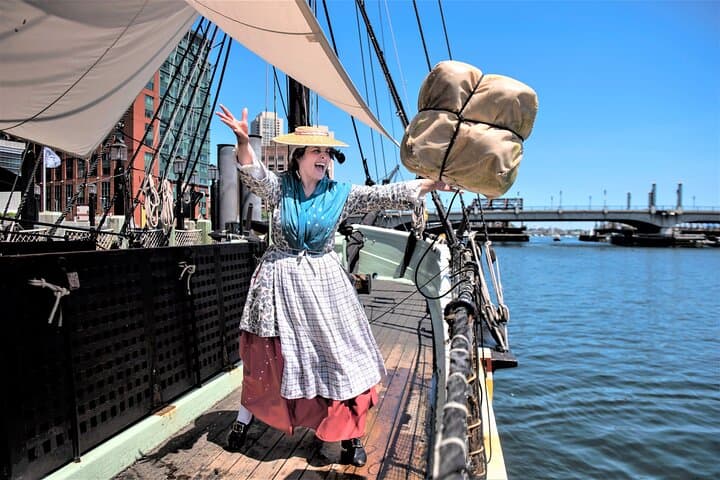
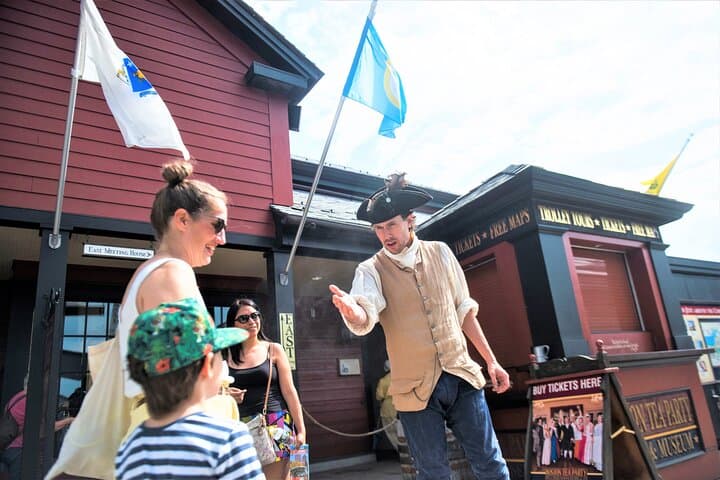
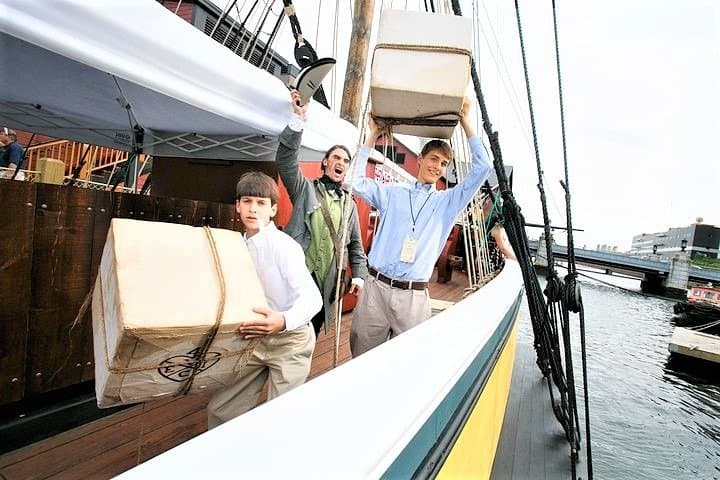
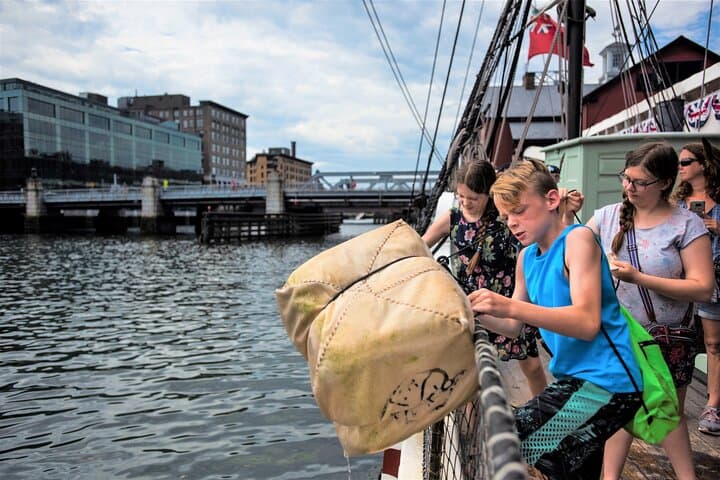
Fog drifts low over Fort Point Channel and the creak of a plank feels like an echo from 1773. At the Boston Tea Party Ships & Museum, visitors step from concrete quay onto full-scale replicas of the brig Beaver and the Eleanor, exchange the hum of modern Boston for shouted colonial resolve, and physically toss pounds of mock tea into the harbor.
Fog drifts low over Fort Point Channel and the creak of a plank feels like an echo from 1773. At the Boston Tea Party Ships & Museum, visitors step from concrete quay onto full-scale replicas of the brig Beaver and the Eleanor, exchange the hum of modern Boston for shouted colonial resolve, and physically toss pounds of mock tea into the harbor.
The site frames a turning point in American history—December 16, 1773—where taxation without representation tipped from grievance to revolution. The museum pairs living-history actors with multimedia storytelling: the Robinson Tea Chest, the only known survivor from the event, anchors an otherwise theatrical reconstruction. Geology is subtle here—the harbor’s reclaimed mudflats and granite wharves tell Boston’s transformation from a working port to an urban waterfront. Local culture mixes maritime labor and civic memory, visible in the surrounding brick warehouses and the Fort Point arts district.
Practical guidance: tours run about an hour and are timed; check in 15 minutes early. Expect some outdoor exposure when boarding the ships—sturdy footwear and a light jacket help in cool months. The experience is wheel- and stroller-accessible in major circulation areas; live actors may move between decks where steps exist. Parking validations are available at nearby garages; the museum closes on Thanksgiving and Christmas and may host private events.
This is a compact, participatory history stop best paired with a walk to nearby Faneuil Hall or a Harborwalk stretch—an accessible, tactile way to feel Boston’s revolutionary energy without committing to a full-day itinerary.