THE ADVENTURE COLLECTIVE® · Independent discovery and booking for outdoor travel

Drift down the Martha Brae on a private bamboo raft, guided by a local captain through shaded bends and limestone banks. This 1–2 hour float blends gentle scenery, local stories, and easy, family-friendly river access — ideal for travelers staying in Montego Bay.
Drift down the Martha Brae on a private bamboo raft, guided by a local captain through shaded bends and limestone banks. This 1–2 hour float blends gentle scenery, local stories, and easy, family-friendly river access — ideal for travelers staying in Montego Bay.
You step onto a bamboo raft and the river takes the lead — a slow, steady hand that nudges you through a corridor of palms and low limestone banks. The captain’s pole taps the riverbed with practiced rhythm; the current obliges, moving you past shaded bends where sunlight pools like coins.
Verified experiences and guided adventures in the surrounding area.
Operated by No worries tours Jamaica · Falmouth, Trelawny
You step onto a bamboo raft and the river takes the lead — a slow, steady hand that nudges you through a corridor of palms and low limestone banks. The captain’s pole taps the riverbed with practiced rhythm; the current obliges, moving you past shaded bends where sunlight pools like coins.
Martha Brae carries a human story as well as water: Arawak and Maroon histories thread through the valley, and Trelawny’s colonial past — sugar estates and trade routes — shaped the river’s course and nearby towns. Geologically, the stream runs over weathered limestone and alluvial silt, creating calm channels that make bamboo rafting an unhurried, scenic float.
Culturally, rafts are steered by local captains who share legends and point out medicinal plants and fruiting trees. Expect to hear the Martha Brae legend — a local Arawak tale — and learn about how the river supported communities for generations.
Practical guidance: tours run about 1–2 hours on the water; private transfers from Montego Bay take roughly 30–45 minutes depending on traffic. Wear quick-dry clothing and closed-toe water shoes; bring sunscreen and a waterproof phone case. The raft ride is gentle but uneven footing is possible when boarding.
Timing matters: mornings are cooler and quieter; late afternoon light is excellent for photos. The operation is low-impact but steer clear of littering and follow your captain’s instructions when approaching shallows or disembarking. On a calm float like this, you trade exertion for close observation — the river rewards patience.
easy.
1–2 hours.
Accessible to most fitness levels; requires basic mobility for stepping on/off the raft
The on-water rafting typically lasts about 60–90 minutes; total door-to-door time including transport can be longer depending on pickup location.
Yes — bamboo rafting here is gentle and suitable for most ages, though boarding requires steady footing; notify operators of mobility concerns when booking.
Many operators offer a natural coconut or cold beverage during the float — check your booking details to confirm specific inclusions.
Private transfers are common and take roughly 30–45 minutes; shared shuttles and taxis are also options but confirm pickup times in advance.
The river’s name and local lore reference an Arawak woman named Martha and generations of communities that used the river for transport and resources; nearby Trelawny grew around sugar estates during colonial times.
Operators increasingly emphasize low-impact practices — avoid single-use plastic, follow captain instructions, and support licensed local guides to help fund river stewardship.
No worries tours Jamaica operates guided outdoor trips and adventures with an emphasis on safety, stewardship, and memorable experiences.
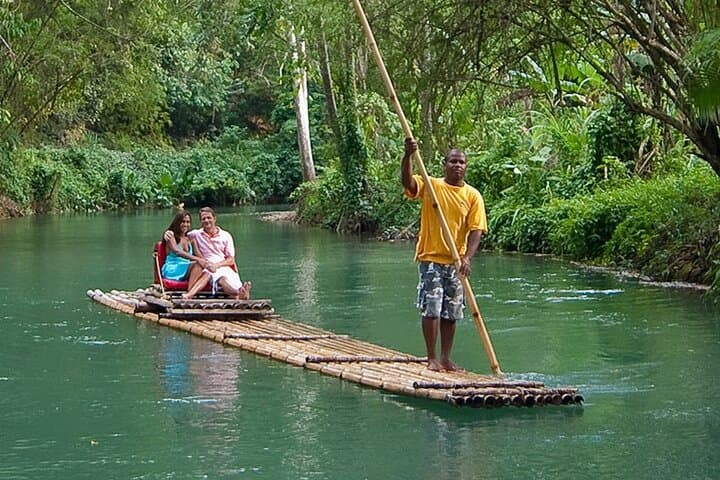
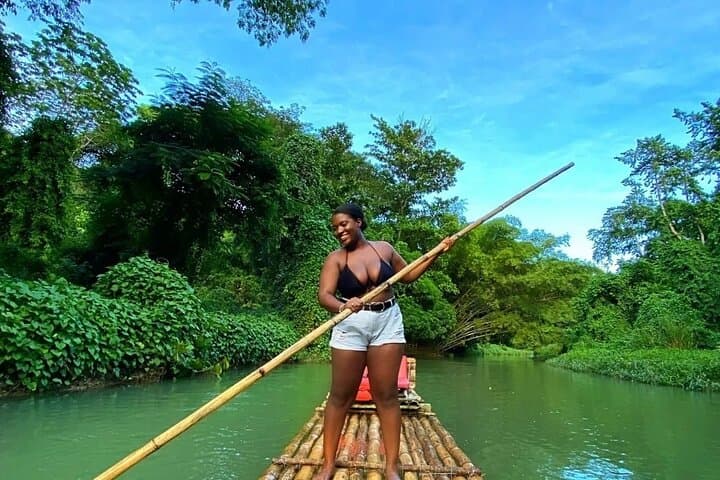
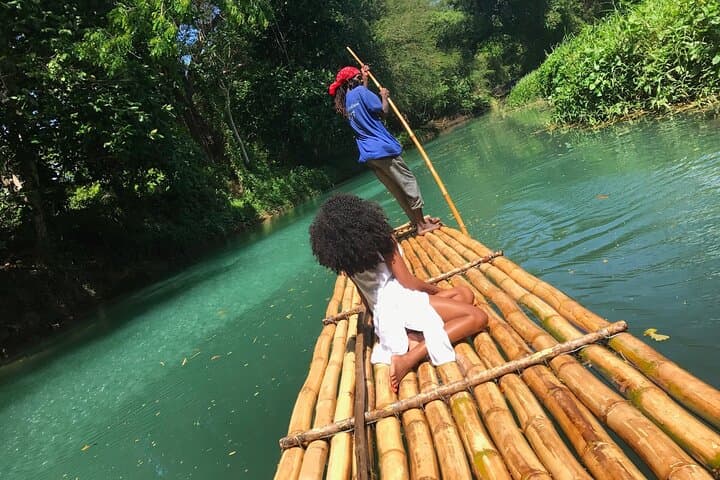
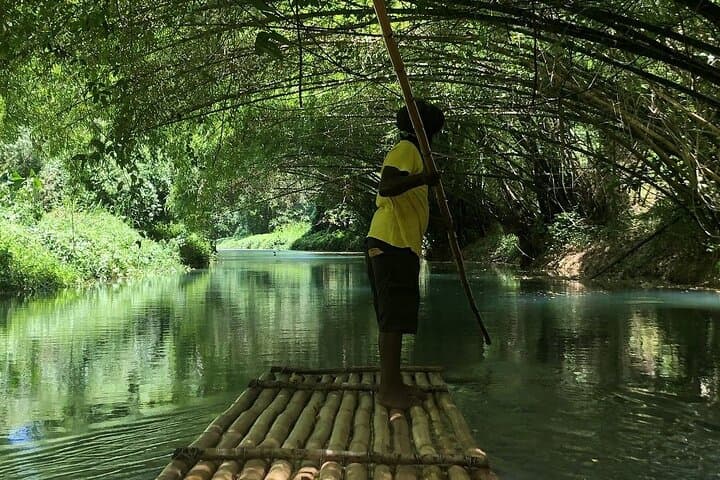
You step onto a bamboo raft and the river takes the lead — a slow, steady hand that nudges you through a corridor of palms and low limestone banks. The captain’s pole taps the riverbed with practiced rhythm; the current obliges, moving you past shaded bends where sunlight pools like coins.
You step onto a bamboo raft and the river takes the lead — a slow, steady hand that nudges you through a corridor of palms and low limestone banks. The captain’s pole taps the riverbed with practiced rhythm; the current obliges, moving you past shaded bends where sunlight pools like coins.
Martha Brae carries a human story as well as water: Arawak and Maroon histories thread through the valley, and Trelawny’s colonial past — sugar estates and trade routes — shaped the river’s course and nearby towns. Geologically, the stream runs over weathered limestone and alluvial silt, creating calm channels that make bamboo rafting an unhurried, scenic float.
Culturally, rafts are steered by local captains who share legends and point out medicinal plants and fruiting trees. Expect to hear the Martha Brae legend — a local Arawak tale — and learn about how the river supported communities for generations.
Practical guidance: tours run about 1–2 hours on the water; private transfers from Montego Bay take roughly 30–45 minutes depending on traffic. Wear quick-dry clothing and closed-toe water shoes; bring sunscreen and a waterproof phone case. The raft ride is gentle but uneven footing is possible when boarding.
Timing matters: mornings are cooler and quieter; late afternoon light is excellent for photos. The operation is low-impact but steer clear of littering and follow your captain’s instructions when approaching shallows or disembarking. On a calm float like this, you trade exertion for close observation — the river rewards patience.