THE ADVENTURE COLLECTIVE® · Independent discovery and booking for outdoor travel

Explore Cappadocia’s red tuff ridges and underground chambers on a full-day tour that combines easy hikes, panoramic viewpoints, pottery demonstrations, and a guided descent into Kaymaklı Underground City. Expect dramatic light, uneven terrain, and rich local history.
Explore Cappadocia’s red tuff ridges and underground chambers on a full-day tour that combines easy hikes, panoramic viewpoints, pottery demonstrations, and a guided descent into Kaymaklı Underground City. Expect dramatic light, uneven terrain, and rich local history.
A pale dawn cuts across the valleys of Cappadocia as you step onto the red-tinged slopes of Kızılçukur. The air smells faintly of dust and baking stone; low walls of tuff rise like unfinished sculptures, and the first light catches bands of ochre and rust. Walking here feels like moving through a landscape both fragile and stubborn—soft volcanic ash carved by wind and rain into chimneys, caves, and secret corridors.
Verified experiences and guided adventures in the surrounding area.
Operated by Tourmania · Göreme, Nevşehir
A pale dawn cuts across the valleys of Cappadocia as you step onto the red-tinged slopes of Kızılçukur. The air smells faintly of dust and baking stone; low walls of tuff rise like unfinished sculptures, and the first light catches bands of ochre and rust. Walking here feels like moving through a landscape both fragile and stubborn—soft volcanic ash carved by wind and rain into chimneys, caves, and secret corridors.
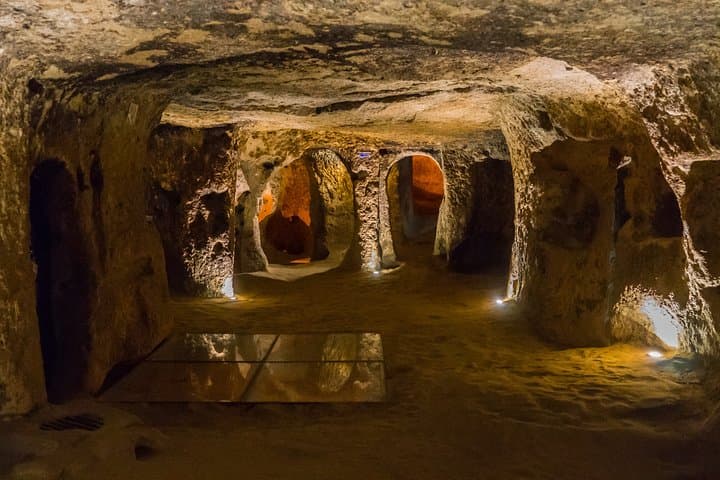
Geologically, Cappadocia is volcanic tuff shaped over millennia. Human history is equally deep: farmers, Byzantine monks, and medieval settlers carved pigeon houses, cliff churches, and entire subterranean towns into the weak rock. Kaymaklı Underground City demonstrates that ingenuity—narrow shafts, communal rooms and defensive passages once used as refuge against raiders.
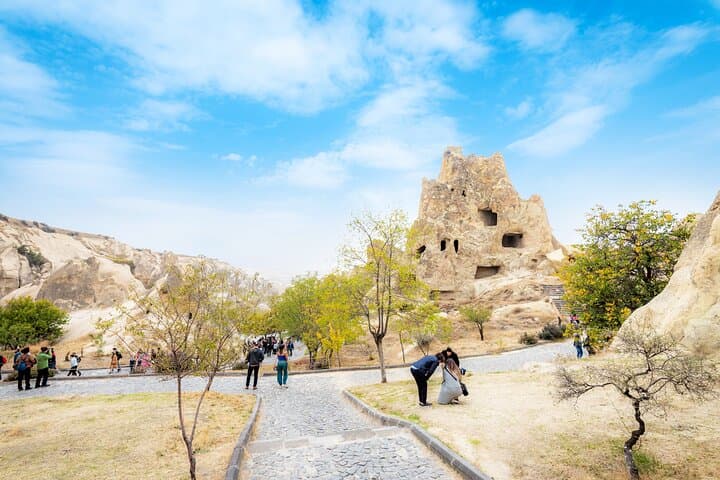
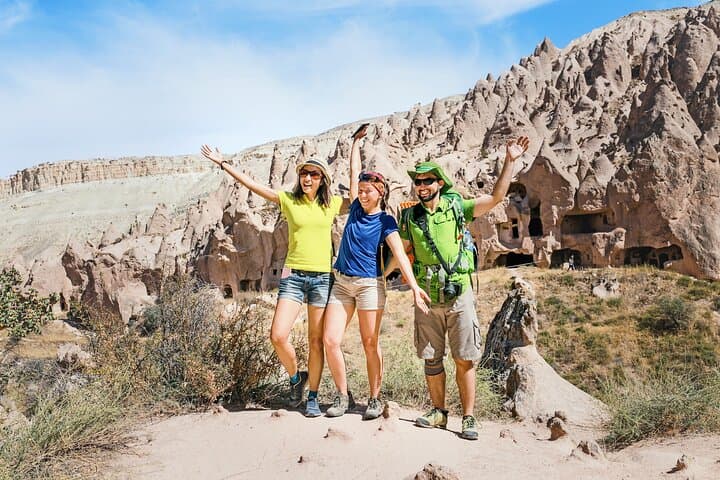
The tour threads easy hikes in Red Valley and Pigeon Valley with cultural stops: Uçhisar Castle’s high viewpoint, the pottery town of Avanos, and the rock-cut dwellings of Çavuşin. Expect short to moderate walking on uneven soil, loose gravel and stone steps; some staircases in the underground city are steep and low.
Practical edge: start early to catch cool morning light or aim for sunset for warmer tones, carry 1–2 liters of water, and wear stable shoes with grip. Bring a light jacket for cavern breezes and a headlamp for tight, dim passages. Hotel pickup and lunch are commonly included, but confirm entry fees for specific sites. Pace yourself—this is a full-day rhythm of open ridges and subterranean hush, a walk through geology and human adaptation that rewards curiosity and common sense.
moderate.
7–8 hours.
Suitable for travelers in average fitness—able to walk on uneven trails and climb stairs repeatedly.
The tour runs about 7–8 hours and includes several short hikes on uneven terrain—expect a mix of standing, walking up to moderate slopes, and climbing stairs in the underground city.
Children can enter but close supervision is advised; the underground city has narrow, low-ceiling passages and steep stairs, so it’s not suitable for those with limited mobility or severe claustrophobia.
Most shared tours include lunch and some entry fees; confirm with the operator when booking as certain ticket options may vary.
Bring a wide-angle lens for valley panoramas and a small tripod for low-light or sunset shots; protect gear from dust and sudden gusts.
Cappadocia’s rock-cut churches and underground cities were expanded by Byzantine communities as defensive refuges; the soft tuff allowed centuries of excavation and adaptation.
The tuff formations are vulnerable to erosion and visitor wear—stick to marked paths, avoid climbing fragile chimneys, and support local guides who practice low-impact tourism.
Tourmania operates guided outdoor trips and adventures with an emphasis on safety, stewardship, and memorable experiences.
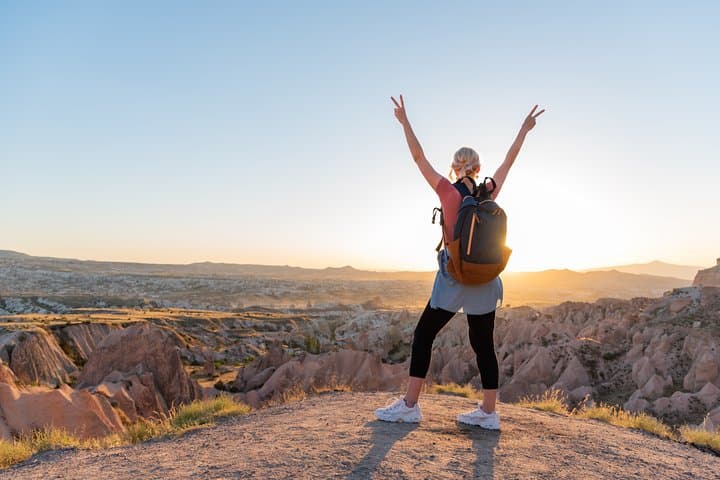
A pale dawn cuts across the valleys of Cappadocia as you step onto the red-tinged slopes of Kızılçukur. The air smells faintly of dust and baking stone; low walls of tuff rise like unfinished sculptures, and the first light catches bands of ochre and rust. Walking here feels like moving through a landscape both fragile and stubborn—soft volcanic ash carved by wind and rain into chimneys, caves, and secret corridors.
A pale dawn cuts across the valleys of Cappadocia as you step onto the red-tinged slopes of Kızılçukur. The air smells faintly of dust and baking stone; low walls of tuff rise like unfinished sculptures, and the first light catches bands of ochre and rust. Walking here feels like moving through a landscape both fragile and stubborn—soft volcanic ash carved by wind and rain into chimneys, caves, and secret corridors.
Geologically, Cappadocia is volcanic tuff shaped over millennia. Human history is equally deep: farmers, Byzantine monks, and medieval settlers carved pigeon houses, cliff churches, and entire subterranean towns into the weak rock. Kaymaklı Underground City demonstrates that ingenuity—narrow shafts, communal rooms and defensive passages once used as refuge against raiders.
The tour threads easy hikes in Red Valley and Pigeon Valley with cultural stops: Uçhisar Castle’s high viewpoint, the pottery town of Avanos, and the rock-cut dwellings of Çavuşin. Expect short to moderate walking on uneven soil, loose gravel and stone steps; some staircases in the underground city are steep and low.
Practical edge: start early to catch cool morning light or aim for sunset for warmer tones, carry 1–2 liters of water, and wear stable shoes with grip. Bring a light jacket for cavern breezes and a headlamp for tight, dim passages. Hotel pickup and lunch are commonly included, but confirm entry fees for specific sites. Pace yourself—this is a full-day rhythm of open ridges and subterranean hush, a walk through geology and human adaptation that rewards curiosity and common sense.