THE ADVENTURE COLLECTIVE® · Independent discovery and booking for outdoor travel

An eight-day exploration of Algeria’s Red Tadrart that combines dune hikes, 4x4 crossings and visits to millennia-old rock art guided by Tuareg teams. Expect long drives between dramatic sandstone canyons, starry bivouacs and practical desert navigation.
An eight-day exploration of Algeria’s Red Tadrart that combines dune hikes, 4x4 crossings and visits to millennia-old rock art guided by Tuareg teams. Expect long drives between dramatic sandstone canyons, starry bivouacs and practical desert navigation.
Travelers arrive in Djanet under a sky thick with stars and the hush of the desert. After a short transfer, the convoy of 4x4s rolls onto narrow tracks, and the Tadrart’s orange cliffs and rippled dunes open like a landscape dared into motion. Guides from the Tuareg community set the pace; tents are raised in gravelly basins and campfires mark the edges of the night.
Verified experiences and guided adventures in the surrounding area.
Operated by Znika Experience · Djanet, Illizi Province
Travelers arrive in Djanet under a sky thick with stars and the hush of the desert. After a short transfer, the convoy of 4x4s rolls onto narrow tracks, and the Tadrart’s orange cliffs and rippled dunes open like a landscape dared into motion. Guides from the Tuareg community set the pace; tents are raised in gravelly basins and campfires mark the edges of the night.
Geology here is blunt and ancient: sandstone plateaus carved into arches and pillars by wind that chisels and polishes over millennia. The region holds rock paintings and engravings — human voices preserved in stone that date back thousands of years — that trace migrations and changing climates. Tuareg guides explain local customs and the practical uses of limited water and shelter in a place where shade is an asset and silence has texture.
Expect a mix of slow walks to petroglyph sites and dune approaches punctuated by long 4x4 transfers. Days revolve around light hiking (sandy slopes, occasional loose scree) and photography stops at features like the “Cathedral” and Moul Naga dunes. Nights are cold; the desert cools quickly and the sky becomes an active element of the trip.
Practical guidance: carry layered clothing, a high-capacity water system, sun protection, and a headscarf for sand. Travel insurance and up-to-date passports are essential; mobile coverage is sparse and medical facilities are distant. Pace your walk across dunes—sand demands technique, not speed—and follow guides’ instructions in sensitive archaeological sites to help preserve fragile engravings.
moderate.
8 days.
Suitable for travelers in reasonable health who can manage walking on soft sand and short hikes; not technically demanding but endurance helps for long drives.
The expedition mixes 4x4 travel with short to moderate walks across dunes and rock sites; you don’t need technical climbing skills but should be able to walk on sand for up to a few hours.
Nights are spent in bivouac tents—shared or single depending on booking—and camps use basic facilities; expect simple bedding unless upgrades are offered by the operator.
Visitors need a valid passport and any required Algerian visa; operators typically handle local permits for park access as part of the tour, but confirm before travel.
The region is remote; travel is safest with licensed guides and a small group due to navigation challenges, limited services and changing conditions.
Tadrart hosts prehistoric rock art and carvings that record human presence and environmental change over millennia; local Tuareg communities maintain oral histories tied to these landscapes.
Sites are fragile: erosion and human contact damage petroglyphs, so follow leave-no-trace practices and support local guides who help manage visitor impact.
Znika Experience operates guided outdoor trips and adventures with an emphasis on safety, stewardship, and memorable experiences.
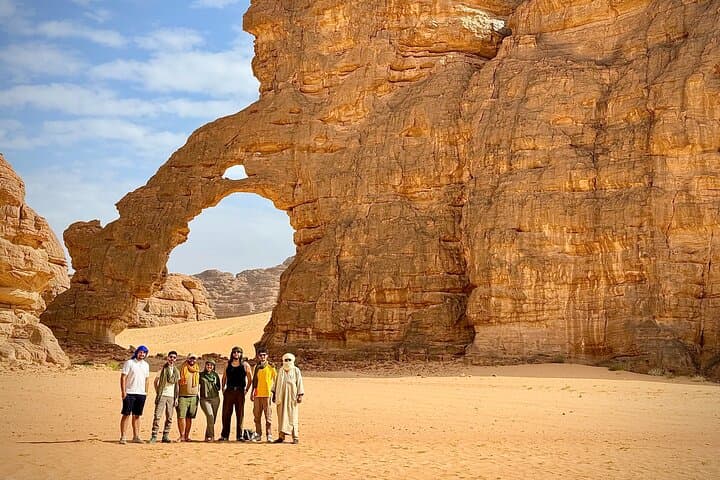
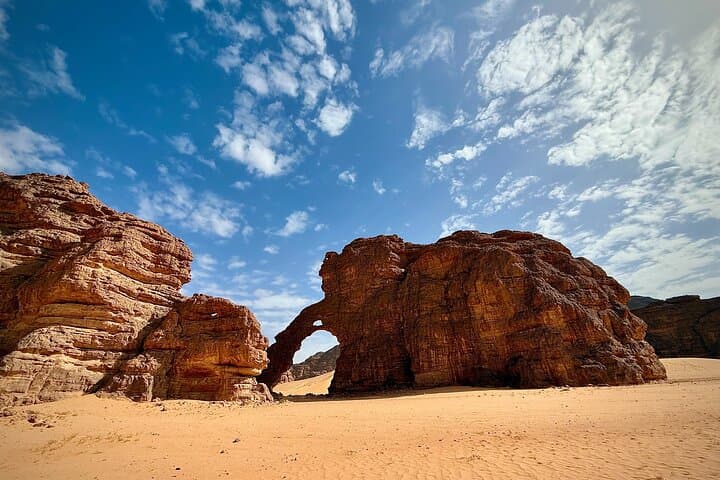


Travelers arrive in Djanet under a sky thick with stars and the hush of the desert. After a short transfer, the convoy of 4x4s rolls onto narrow tracks, and the Tadrart’s orange cliffs and rippled dunes open like a landscape dared into motion. Guides from the Tuareg community set the pace; tents are raised in gravelly basins and campfires mark the edges of the night.
Travelers arrive in Djanet under a sky thick with stars and the hush of the desert. After a short transfer, the convoy of 4x4s rolls onto narrow tracks, and the Tadrart’s orange cliffs and rippled dunes open like a landscape dared into motion. Guides from the Tuareg community set the pace; tents are raised in gravelly basins and campfires mark the edges of the night.
Geology here is blunt and ancient: sandstone plateaus carved into arches and pillars by wind that chisels and polishes over millennia. The region holds rock paintings and engravings — human voices preserved in stone that date back thousands of years — that trace migrations and changing climates. Tuareg guides explain local customs and the practical uses of limited water and shelter in a place where shade is an asset and silence has texture.
Expect a mix of slow walks to petroglyph sites and dune approaches punctuated by long 4x4 transfers. Days revolve around light hiking (sandy slopes, occasional loose scree) and photography stops at features like the “Cathedral” and Moul Naga dunes. Nights are cold; the desert cools quickly and the sky becomes an active element of the trip.
Practical guidance: carry layered clothing, a high-capacity water system, sun protection, and a headscarf for sand. Travel insurance and up-to-date passports are essential; mobile coverage is sparse and medical facilities are distant. Pace your walk across dunes—sand demands technique, not speed—and follow guides’ instructions in sensitive archaeological sites to help preserve fragile engravings.