THE ADVENTURE COLLECTIVE® · Independent discovery and booking for outdoor travel

Drive from Cairo into the Red Sea Mountains for a private full-day visit to the ancient Monasteries of St. Anthony and St. Paul. Explore cliffside cells, cave churches and desert springs before a local lunch in Zafarana.
Drive from Cairo into the Red Sea Mountains for a private full-day visit to the ancient Monasteries of St. Anthony and St. Paul. Explore cliffside cells, cave churches and desert springs before a local lunch in Zafarana.
A low-slung minivan leaves Cairo before dawn and the asphalt thins into a ribbon across the Eastern Desert. The Red Sea Mountains rise ahead like weathered stone ribs, sun-scoured and pocked with caves; the road threads between orange gullies until the monastery walls appear, ancient and squat against the slope.
Verified experiences and guided adventures in the surrounding area.
Operated by Kemet Travel Egypt · Zafarana, Suez Governorate
A low-slung minivan leaves Cairo before dawn and the asphalt thins into a ribbon across the Eastern Desert. The Red Sea Mountains rise ahead like weathered stone ribs, sun-scoured and pocked with caves; the road threads between orange gullies until the monastery walls appear, ancient and squat against the slope.
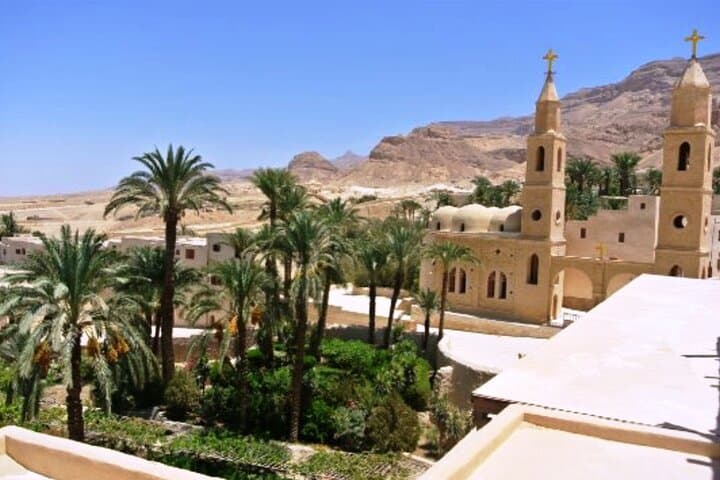
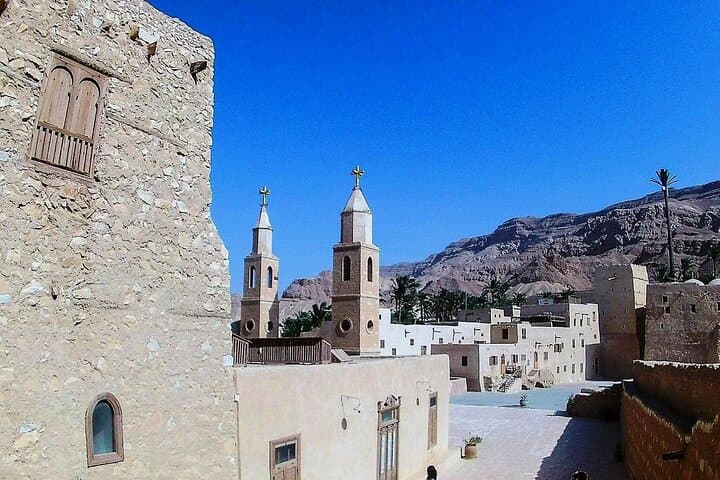
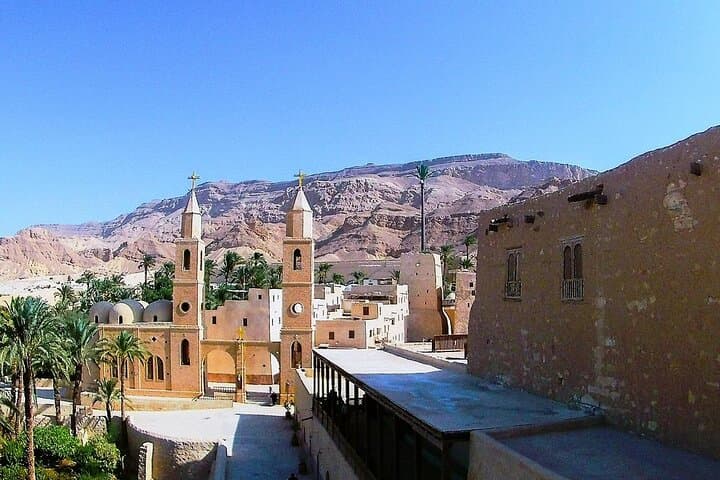
The Monastery of Saint Anthony claims its place as the world's oldest continuously inhabited Christian monastery, founded in the 4th century where hermits first retreated into desert silence. Nearby, the Monastery of Saint Paul grew around cells carved in cliff faces and a cave-church that holds ochre murals, ostrich eggs, and layers of lived devotion. Geologically, the mountains are part of the Precambrian Arabian-Nubian Shield—hard, fragmented rock that channels sparse springs and shelters narrow wadis.
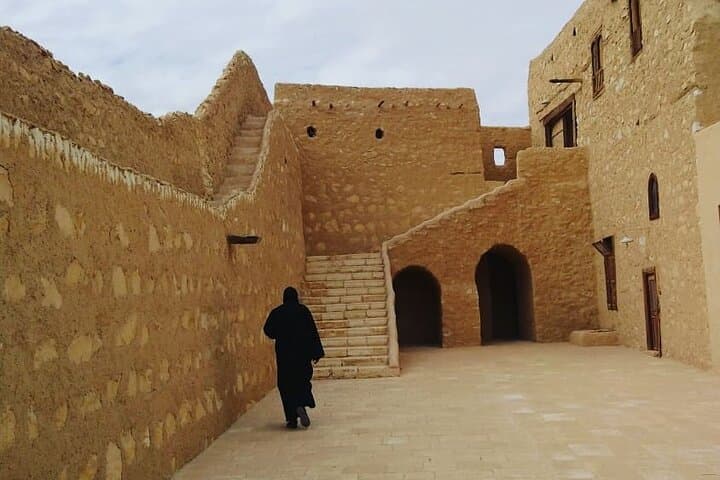
Culture here is austere and tactile: thick wooden doors, lamps, and hand-painted icons; Bedouin histories are visible in the fortress remnants where monks once sheltered from raids. A lunch in Zafarana provides a quieter, coastal contrast—sea salt air after desert dust.
For visitors, expect a long but accessible day: several flights of stone steps, uneven cave floors, and stretches of seated driving. Bring sun protection, at least 2 liters of water, and low-profile walking shoes; modest clothing is required in sacred spaces. Timing your visit for morning light keeps temperatures comfortable and frescoes well-lit. Respect photography rules inside churches and allow extra time for slow walking and quiet observation—the monasteries reward patience with unexpected, intimate corners of history.
easy.
10 hours.
Suitable for most fitness levels; expect walking on uneven stone, short stair climbs, and a long day in a vehicle.
This tour typically covers transport and guide services; any monastery donations or specific entrance fees should be confirmed with the operator before booking.
Yes—private pickup and drop-off from Cairo hotels is included; exact pickup time depends on location to ensure arrival mid-morning.
Access involves stone steps and uneven cave floors; parts of the sites are challenging for wheelchair users or those with significant mobility limitations.
A vegetarian option is available—inform the operator at booking to ensure the restaurant can accommodate dietary needs.
The Monastery of Saint Anthony traces monastic life back to the 4th century; St. Paul’s complex formed around hermit cells and cliff caves that predate the present churches.
The Eastern Desert’s fragile wadis and sparse springs can be damaged by off-trail traffic and litter—stick to paths and pack out waste. Cultural conservation is equally important: avoid touching frescoes and follow site photography rules.
Kemet Travel Egypt operates guided outdoor trips and adventures with an emphasis on safety, stewardship, and memorable experiences.
A low-slung minivan leaves Cairo before dawn and the asphalt thins into a ribbon across the Eastern Desert. The Red Sea Mountains rise ahead like weathered stone ribs, sun-scoured and pocked with caves; the road threads between orange gullies until the monastery walls appear, ancient and squat against the slope.
A low-slung minivan leaves Cairo before dawn and the asphalt thins into a ribbon across the Eastern Desert. The Red Sea Mountains rise ahead like weathered stone ribs, sun-scoured and pocked with caves; the road threads between orange gullies until the monastery walls appear, ancient and squat against the slope.
The Monastery of Saint Anthony claims its place as the world's oldest continuously inhabited Christian monastery, founded in the 4th century where hermits first retreated into desert silence. Nearby, the Monastery of Saint Paul grew around cells carved in cliff faces and a cave-church that holds ochre murals, ostrich eggs, and layers of lived devotion. Geologically, the mountains are part of the Precambrian Arabian-Nubian Shield—hard, fragmented rock that channels sparse springs and shelters narrow wadis.
Culture here is austere and tactile: thick wooden doors, lamps, and hand-painted icons; Bedouin histories are visible in the fortress remnants where monks once sheltered from raids. A lunch in Zafarana provides a quieter, coastal contrast—sea salt air after desert dust.
For visitors, expect a long but accessible day: several flights of stone steps, uneven cave floors, and stretches of seated driving. Bring sun protection, at least 2 liters of water, and low-profile walking shoes; modest clothing is required in sacred spaces. Timing your visit for morning light keeps temperatures comfortable and frescoes well-lit. Respect photography rules inside churches and allow extra time for slow walking and quiet observation—the monasteries reward patience with unexpected, intimate corners of history.