THE ADVENTURE COLLECTIVE® · Independent discovery and booking for outdoor travel

A short drive from the Strip and suddenly the city’s neon is behind you—Red Rock Canyon’s red fins, shady canyons and slickrock offer an immediate and physical desert experience. This guided hiking adventure mixes short scrambles, panoramic overlooks and cool slot canyons to suit a range of fitness levels.
A short drive from the Strip and suddenly the city’s neon is behind you—Red Rock Canyon’s red fins, shady canyons and slickrock offer an immediate and physical desert experience. This guided hiking adventure mixes short scrambles, panoramic overlooks and cool slot canyons to suit a range of fitness levels.
The morning air tastes like grit and sun as the van drops you at the Visitor Center and the highway noise thins to a distant hum. Red walls rise up, not quietly but with a stubborn, geological arrogance—the Navajo sandstone has weathered into ribs and fins that angle and glow as the sun climbs. Your guide hands out water, straps closed, and the group steps onto slickrock where centuries of wind and water have carved lines meant to be followed.
Verified experiences and guided adventures in the surrounding area.
Operated by Love Hikes · Las Vegas, Nevada
The morning air tastes like grit and sun as the van drops you at the Visitor Center and the highway noise thins to a distant hum. Red walls rise up, not quietly but with a stubborn, geological arrogance—the Navajo sandstone has weathered into ribs and fins that angle and glow as the sun climbs. Your guide hands out water, straps closed, and the group steps onto slickrock where centuries of wind and water have carved lines meant to be followed.
This is Red Rock National Conservation Area: 13 miles of scenic loop that reads like a cross-section of the Mojave. The landscape records 200–300 million years of deposition and uplift; tilted strata, iron-stained sandstone and pockets of limestone hint at an ancient shoreline and episodic seas. Indigenous peoples, including Southern Paiute bands, traveled these canyons long before the 20th-century mining boom and, later, barbed-wire ranching that reshaped access. Today the area carries both protection as a Conservation Area and the scars of expansion from nearby Las Vegas.
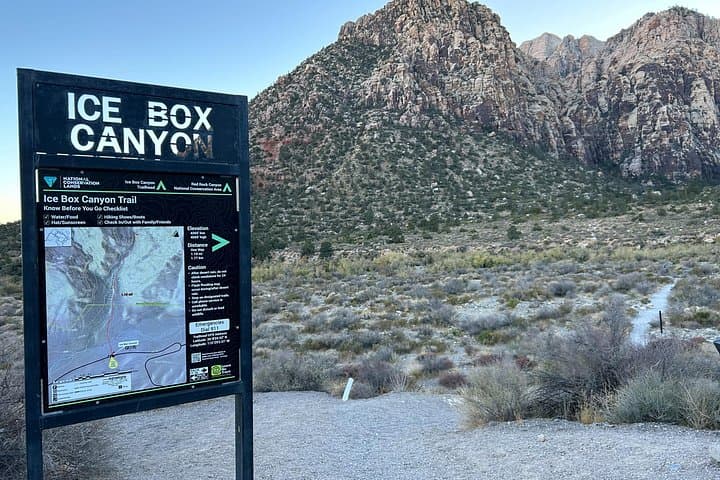
The hike routes you through contrasts—Calico Tanks’ short scramble to a natural water catchment and panoramic overlook (roughly 2.5 miles round-trip, ~400 ft elevation gain), then a shaded run through Ice Box Canyon where the slot narrows and cool air lingers, an honest relief in summer. For stronger legs there’s the option to point toward Turtlehead Peak (a sustained climb, steep and loose underfoot) or loop the Kraft Mountain ridgeline for longer mileage.
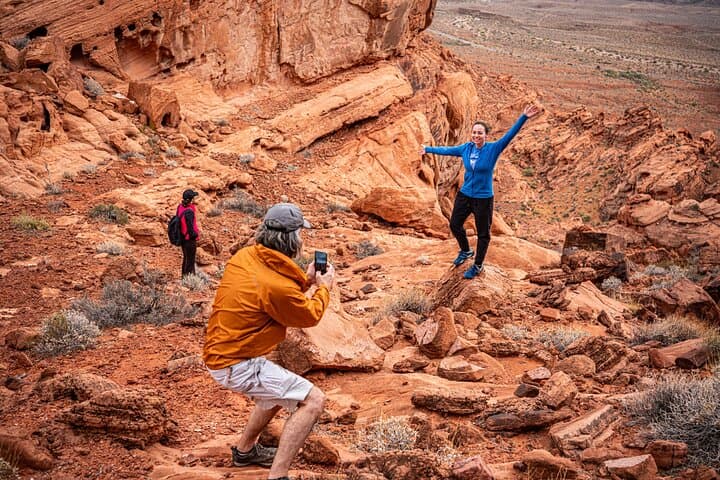
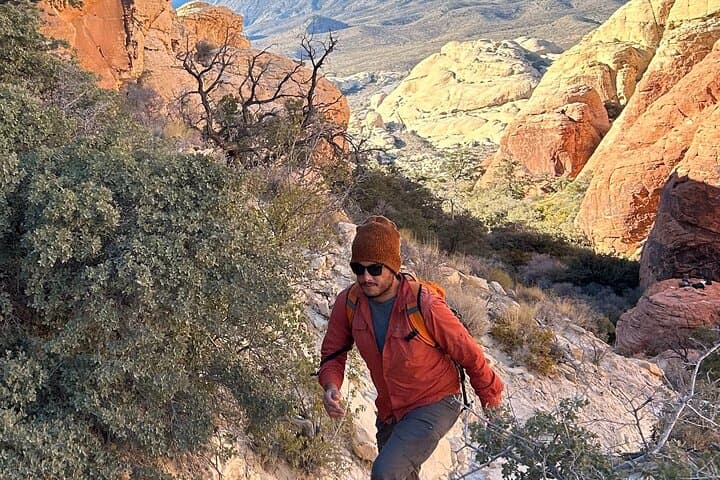
Terrain is varied: packed dirt, loose scree, polished slickrock and narrow washes. Sun is a relentless companion on exposed ridgelines; the scrub—creosote, Joshua trees, brittle grasses—hunches and resists. Wildlife is wary but present: lizards sun themselves on stones, and raptors wheel over the flats like sentries.
Practical guidance: aim to start early—trails heat fast and shade is limited. Bring at least 2 liters of water for shorter hikes and 3–4 liters for longer pushes; a hydration bladder keeps hands free for scrambling. Wear sturdy shoes with good traction; expect short, steep sections where trekking poles help. The Visitor Center is a sensible first stop for maps and condition updates; the 13-mile scenic drive is useful to scout trailheads before committing on foot.
Guided hikes here balance exploration with safety—guides read the rock as easily as the weather and keep groups on routes that match fitness and daylight. Pack layered sun protection, trail snacks, and a small first-aid kit. If you leave a little later, plan for a shaded canyon like Ice Box to finish; the cool slot will feel like the landscape exhaling.
Red Rock is a bright, tactile showcase of desert geology and history—hands-on, sometimes sharp, always honest. It invites a careful pace and attentive eyes: the reward is not just a view, but the knowledge of how deeply the place was made.
moderate.
3–5 hours.
Moderate — comfortable with sustained uphill sections and uneven terrain; good balance and ankle stability recommended
Tours run about 3–5 hours depending on trail choices; shorter options like Calico Tanks are around 2–3 hours.
Older, active children comfortable with uneven terrain can join; check with the operator about minimum ages.
Yes—there is an entry fee for Red Rock NCA for private vehicles; guided tours typically include park admission details during booking.
A moderate fitness level is recommended: you should be able to handle steady climbs and short scrambles up to several hundred feet of elevation.
The Visitor Center and some trailhead areas have restrooms; facilities are limited once you’re on remote trails.
Pets are restricted on many trails in Red Rock; check park rules and tour policies before bringing animals.
The area preserves rock records from ancient deserts and seas; Southern Paiute peoples historically hunted and traveled these canyons long before twentieth-century settlement altered access.
Stay on trails to prevent damage to cryptobiotic soil and rare desert plants; guided groups help minimize impact through Leave No Trace practices.
Love Hikes operates guided outdoor trips and adventures with an emphasis on safety, stewardship, and memorable experiences.
The morning air tastes like grit and sun as the van drops you at the Visitor Center and the highway noise thins to a distant hum. Red walls rise up, not quietly but with a stubborn, geological arrogance—the Navajo sandstone has weathered into ribs and fins that angle and glow as the sun climbs. Your guide hands out water, straps closed, and the group steps onto slickrock where centuries of wind and water have carved lines meant to be followed.
The morning air tastes like grit and sun as the van drops you at the Visitor Center and the highway noise thins to a distant hum. Red walls rise up, not quietly but with a stubborn, geological arrogance—the Navajo sandstone has weathered into ribs and fins that angle and glow as the sun climbs. Your guide hands out water, straps closed, and the group steps onto slickrock where centuries of wind and water have carved lines meant to be followed.
This is Red Rock National Conservation Area: 13 miles of scenic loop that reads like a cross-section of the Mojave. The landscape records 200–300 million years of deposition and uplift; tilted strata, iron-stained sandstone and pockets of limestone hint at an ancient shoreline and episodic seas. Indigenous peoples, including Southern Paiute bands, traveled these canyons long before the 20th-century mining boom and, later, barbed-wire ranching that reshaped access. Today the area carries both protection as a Conservation Area and the scars of expansion from nearby Las Vegas.
The hike routes you through contrasts—Calico Tanks’ short scramble to a natural water catchment and panoramic overlook (roughly 2.5 miles round-trip, ~400 ft elevation gain), then a shaded run through Ice Box Canyon where the slot narrows and cool air lingers, an honest relief in summer. For stronger legs there’s the option to point toward Turtlehead Peak (a sustained climb, steep and loose underfoot) or loop the Kraft Mountain ridgeline for longer mileage.
Terrain is varied: packed dirt, loose scree, polished slickrock and narrow washes. Sun is a relentless companion on exposed ridgelines; the scrub—creosote, Joshua trees, brittle grasses—hunches and resists. Wildlife is wary but present: lizards sun themselves on stones, and raptors wheel over the flats like sentries.
Practical guidance: aim to start early—trails heat fast and shade is limited. Bring at least 2 liters of water for shorter hikes and 3–4 liters for longer pushes; a hydration bladder keeps hands free for scrambling. Wear sturdy shoes with good traction; expect short, steep sections where trekking poles help. The Visitor Center is a sensible first stop for maps and condition updates; the 13-mile scenic drive is useful to scout trailheads before committing on foot.
Guided hikes here balance exploration with safety—guides read the rock as easily as the weather and keep groups on routes that match fitness and daylight. Pack layered sun protection, trail snacks, and a small first-aid kit. If you leave a little later, plan for a shaded canyon like Ice Box to finish; the cool slot will feel like the landscape exhaling.
Red Rock is a bright, tactile showcase of desert geology and history—hands-on, sometimes sharp, always honest. It invites a careful pace and attentive eyes: the reward is not just a view, but the knowledge of how deeply the place was made.