THE ADVENTURE COLLECTIVE® · Independent discovery and booking for outdoor travel

Feel the rush of dune bashing and the calm of a camel ride across Dubai’s red dunes. This four-hour safari mixes sandboarding, cultural stops at a Bedouin-style camp, and sunset-friendly photo opportunities.
Feel the rush of dune bashing and the calm of a camel ride across Dubai’s red dunes. This four-hour safari mixes sandboarding, cultural stops at a Bedouin-style camp, and sunset-friendly photo opportunities.
The vehicle peels off Sheikh Zayed Road and the skyline shrinks until the city is a distant geometry of glass. Ahead, the red dunes rise like waves frozen mid-break — wind-swept faces, sharp crests and soft basins that swallow sound. Drivers cut across the slopes; sand sprays like powdered sunlight. You feel the desert’s scale here: a rhythm of climb, slide, and calm.
Verified experiences and guided adventures in the surrounding area.
Operated by Tribal Trails Tours · Dubai, Dubai
The vehicle peels off Sheikh Zayed Road and the skyline shrinks until the city is a distant geometry of glass. Ahead, the red dunes rise like waves frozen mid-break — wind-swept faces, sharp crests and soft basins that swallow sound. Drivers cut across the slopes; sand sprays like powdered sunlight. You feel the desert’s scale here: a rhythm of climb, slide, and calm.
This stretch of Dubai’s desert carries a simple history. Centuries of Bedouin travel gave way to motorized safaris, yet camel routes and small nomadic camps still mark the landscape. Geologically the red hue comes from iron-oxide coating quartz grains, and the dunes are ever-shifting, re-sculpted by northerly winds.
Culturally, a stop at a Bedouin-style camp offers a quick lesson in hospitality — Arabic coffee, dates and traditional seating — and a brief window into how people adapted to scarcity and heat. Wildlife is spare but present: foxes, sand gazelles and desert birds appear in low light.
Practical guidance: a typical tour runs about four hours, combining dune bashing (seatbelt essential), guided sandboarding on gentler slopes and short camel rides. Mornings and late afternoons are best for temperature and light; mid-day can be punishing in summer. Wear closed-toe shoes, sun protection, and bring water in ample supply. Keep camera gear secure — sand is the real abrasive here — and follow the driver’s safety briefings during off-road sections.
Expect an experience that alternates adrenaline and quiet: a place where speed and silence trade places as the sun moves across the dunes.
moderate.
4 hours.
Light to moderate fitness — able to climb dunes and handle short bursts of activity during sandboarding and walking between viewpoints.
Yes; most operators accommodate children but check vehicle seat policies and consider age limits for dune bashing and camel rides.
Typical inclusions are hotel pickup/drop-off, dune bashing, sandboarding equipment, a short camel ride, bottled water, and a visit to a Bedouin-style camp for refreshments.
You can bring cameras; secure them against sand. Operators provide sandboards, but bringing personal equipment is usually allowed if you can carry it safely.
Not recommended for people with serious back, heart conditions, or for pregnant travelers due to the jostling during dune bashing; confirm with the operator before booking.
The area was traditionally traversed by Bedouin camel caravans; modern safaris evolved after Dubai’s development as a way to share desert culture with visitors.
Operators are increasingly following leave-no-trace practices and designated driving corridors to reduce erosion and protect sparse desert flora.
Tribal Trails Tours operates guided outdoor trips and adventures with an emphasis on safety, stewardship, and memorable experiences.

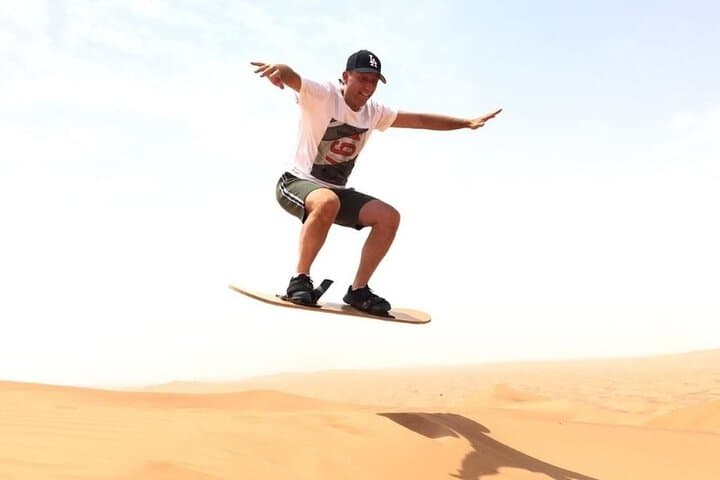


The vehicle peels off Sheikh Zayed Road and the skyline shrinks until the city is a distant geometry of glass. Ahead, the red dunes rise like waves frozen mid-break — wind-swept faces, sharp crests and soft basins that swallow sound. Drivers cut across the slopes; sand sprays like powdered sunlight. You feel the desert’s scale here: a rhythm of climb, slide, and calm.
The vehicle peels off Sheikh Zayed Road and the skyline shrinks until the city is a distant geometry of glass. Ahead, the red dunes rise like waves frozen mid-break — wind-swept faces, sharp crests and soft basins that swallow sound. Drivers cut across the slopes; sand sprays like powdered sunlight. You feel the desert’s scale here: a rhythm of climb, slide, and calm.
This stretch of Dubai’s desert carries a simple history. Centuries of Bedouin travel gave way to motorized safaris, yet camel routes and small nomadic camps still mark the landscape. Geologically the red hue comes from iron-oxide coating quartz grains, and the dunes are ever-shifting, re-sculpted by northerly winds.
Culturally, a stop at a Bedouin-style camp offers a quick lesson in hospitality — Arabic coffee, dates and traditional seating — and a brief window into how people adapted to scarcity and heat. Wildlife is spare but present: foxes, sand gazelles and desert birds appear in low light.
Practical guidance: a typical tour runs about four hours, combining dune bashing (seatbelt essential), guided sandboarding on gentler slopes and short camel rides. Mornings and late afternoons are best for temperature and light; mid-day can be punishing in summer. Wear closed-toe shoes, sun protection, and bring water in ample supply. Keep camera gear secure — sand is the real abrasive here — and follow the driver’s safety briefings during off-road sections.
Expect an experience that alternates adrenaline and quiet: a place where speed and silence trade places as the sun moves across the dunes.