THE ADVENTURE COLLECTIVE® · Independent discovery and booking for outdoor travel

Walk Prague’s medieval streets with a satirical guide: David Černý’s public sculptures flip history and demand a second look. This self-guided route maps kinetic, provocative works across Old and New Town in a flexible 2–2.5 hour experience.
Walk Prague’s medieval streets with a satirical guide: David Černý’s public sculptures flip history and demand a second look. This self-guided route maps kinetic, provocative works across Old and New Town in a flexible 2–2.5 hour experience.
You step out onto cobblestones that have carried traders and revolutionaries, and the city’s usual walls of stone and baroque façades start to play along. A gleaming, rotating head reflects the sky; a suspended figure hangs above a lane like a slow joke; a painted tank interrupts a leafy square. This is Prague reimagined through David Černý’s confrontational wit—public sculpture that nudges you to look twice.
Verified experiences and guided adventures in the surrounding area.
Operated by VoiceMap Audio Tours · Prague, Prague
You step out onto cobblestones that have carried traders and revolutionaries, and the city’s usual walls of stone and baroque façades start to play along. A gleaming, rotating head reflects the sky; a suspended figure hangs above a lane like a slow joke; a painted tank interrupts a leafy square. This is Prague reimagined through David Černý’s confrontational wit—public sculpture that nudges you to look twice.
Černý emerged in the 1990s as Prague shed Communist iconography and tested the limits of public space. His works—often kinetic, satirical, and installed in historically protected streets—force a conversation between old and new. The installations sit on centuries-old geology: sandstone and volcanic intrusions shaped Central Europe’s river corridors, while the Vltava keeps the city’s rhythm steady beneath the bridges.
Culturally, Černý’s pieces sparked debates about ownership of shared spaces and how contemporary art can interrupt official narratives. Local insight: visit early mornings or late afternoons for softer light and fewer crowds; some works rotate or are best viewed from specific angles inside courtyards.
Practical guidance: plan 2–2.5 hours on foot; the route covers Old Town and New Town with cobbles and occasional stairs. Use offline maps—the tour provides GPS waypoints—and carry a small rain layer; Prague weather shifts fast. Respect private entrances and observe signage; many installations sit on or above commercial buildings.
This self-guided format gives flexibility: linger where a piece intrigues you, then move on. Bring a charged phone for GPS, wear sturdy shoes for uneven pavement, and let the sculptures prod your curiosity as you thread through a city that keeps rewriting its past.
moderate.
2–2.5 hours.
Suitable for casual walkers who can handle 2+ hours on mixed pavement and a few stairs
No—this is a self-guided tour with lifetime access to GPS waypoints; individual pieces are public and can usually be viewed any time.
Parts of the route include cobbles and stairs; many installations are viewable from street level but some vantage points require steps—plan accordingly.
Yes—the tour’s app provides audio, directions, and geodata for offline use so you can read or listen while you walk.
A few pieces (like the upside-down rider in Lucerna Palace) are inside or best seen from specific courtyards; entry may require separate access or be viewable only from outside.
Černý rose to prominence after the Velvet Revolution, most famously repainting a Soviet tank pink and installing provocative public works that challenged national symbols.
Many installations are integrated into historic streets—respect signage, avoid touching fragile pieces, and support local museums that conserve public art.
VoiceMap Audio Tours operates guided outdoor trips and adventures with an emphasis on safety, stewardship, and memorable experiences.
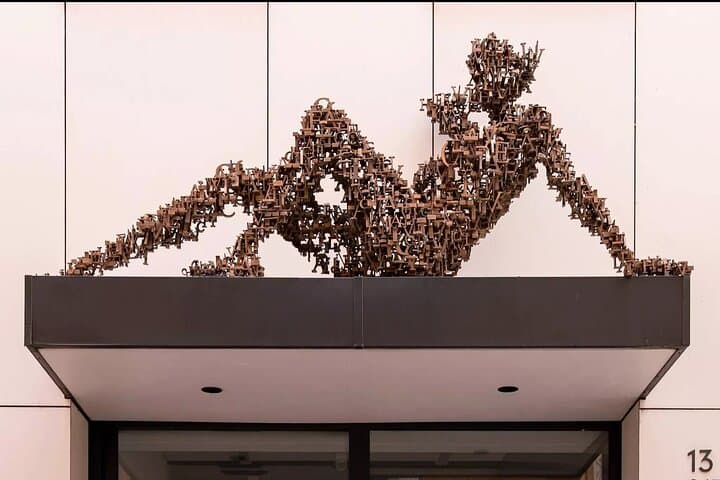
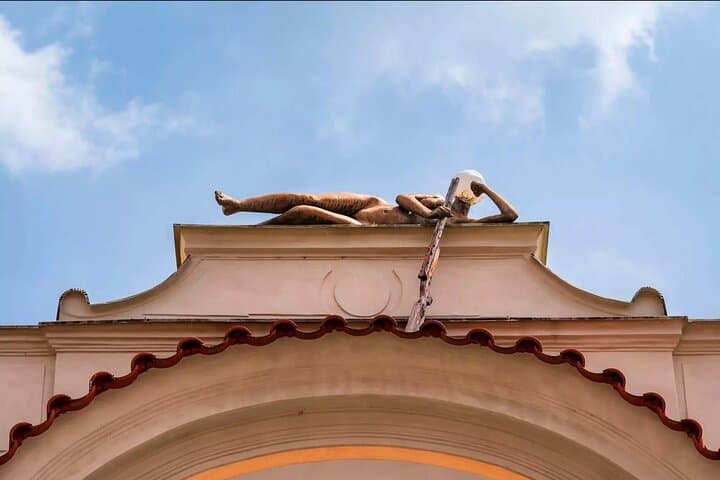
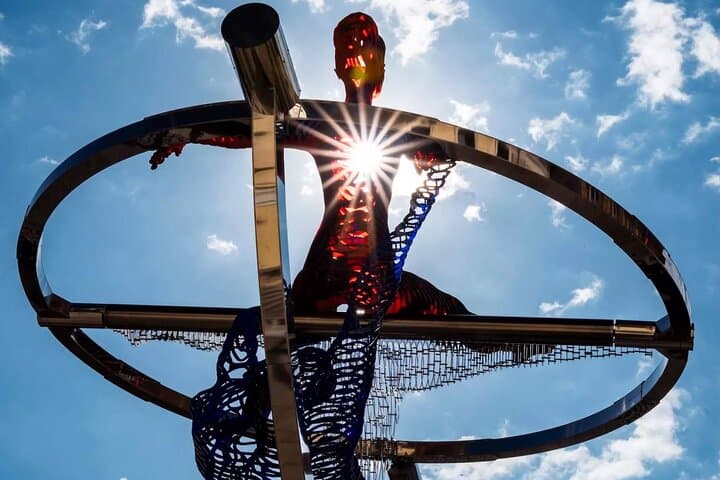
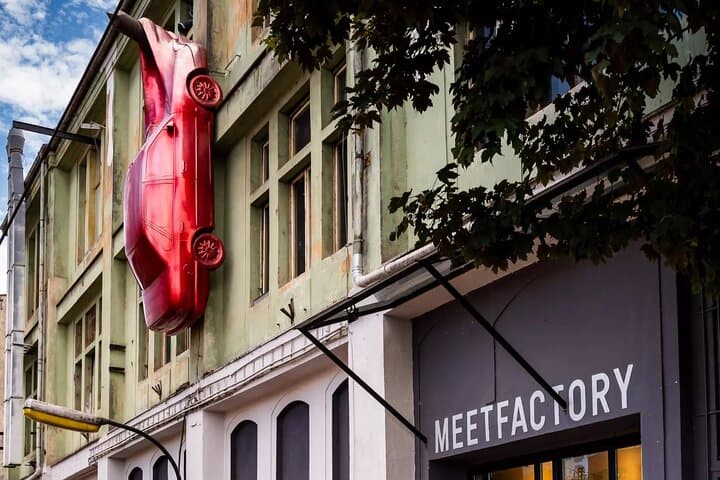
You step out onto cobblestones that have carried traders and revolutionaries, and the city’s usual walls of stone and baroque façades start to play along. A gleaming, rotating head reflects the sky; a suspended figure hangs above a lane like a slow joke; a painted tank interrupts a leafy square. This is Prague reimagined through David Černý’s confrontational wit—public sculpture that nudges you to look twice.
You step out onto cobblestones that have carried traders and revolutionaries, and the city’s usual walls of stone and baroque façades start to play along. A gleaming, rotating head reflects the sky; a suspended figure hangs above a lane like a slow joke; a painted tank interrupts a leafy square. This is Prague reimagined through David Černý’s confrontational wit—public sculpture that nudges you to look twice.
Černý emerged in the 1990s as Prague shed Communist iconography and tested the limits of public space. His works—often kinetic, satirical, and installed in historically protected streets—force a conversation between old and new. The installations sit on centuries-old geology: sandstone and volcanic intrusions shaped Central Europe’s river corridors, while the Vltava keeps the city’s rhythm steady beneath the bridges.
Culturally, Černý’s pieces sparked debates about ownership of shared spaces and how contemporary art can interrupt official narratives. Local insight: visit early mornings or late afternoons for softer light and fewer crowds; some works rotate or are best viewed from specific angles inside courtyards.
Practical guidance: plan 2–2.5 hours on foot; the route covers Old Town and New Town with cobbles and occasional stairs. Use offline maps—the tour provides GPS waypoints—and carry a small rain layer; Prague weather shifts fast. Respect private entrances and observe signage; many installations sit on or above commercial buildings.
This self-guided format gives flexibility: linger where a piece intrigues you, then move on. Bring a charged phone for GPS, wear sturdy shoes for uneven pavement, and let the sculptures prod your curiosity as you thread through a city that keeps rewriting its past.