THE ADVENTURE COLLECTIVE® · Independent discovery and booking for outdoor travel

Explore Oimachi and Kamata after dark on a small-group walk between standing bars (tachinomi). Taste local pub grub, learn nightlife customs and ride a short train between neighborhoods—three drinks and food included.
Explore Oimachi and Kamata after dark on a small-group walk between standing bars (tachinomi). Taste local pub grub, learn nightlife customs and ride a short train between neighborhoods—three drinks and food included.
The evening begins at a narrow alley off Oimachi Station where neon signs flicker and the air is threaded with soy, grilling fat and hot broth. Guides lead a small group down compact lanes to the first tachinomi—one of Tokyo’s standing bars—where strangers shoulder up to a counter and conversations rise with the steam from small plates.
Verified experiences and guided adventures in the surrounding area.
Operated by Pinpoint Traveler, Inc · Tokyo, Tokyo
The evening begins at a narrow alley off Oimachi Station where neon signs flicker and the air is threaded with soy, grilling fat and hot broth. Guides lead a small group down compact lanes to the first tachinomi—one of Tokyo’s standing bars—where strangers shoulder up to a counter and conversations rise with the steam from small plates.
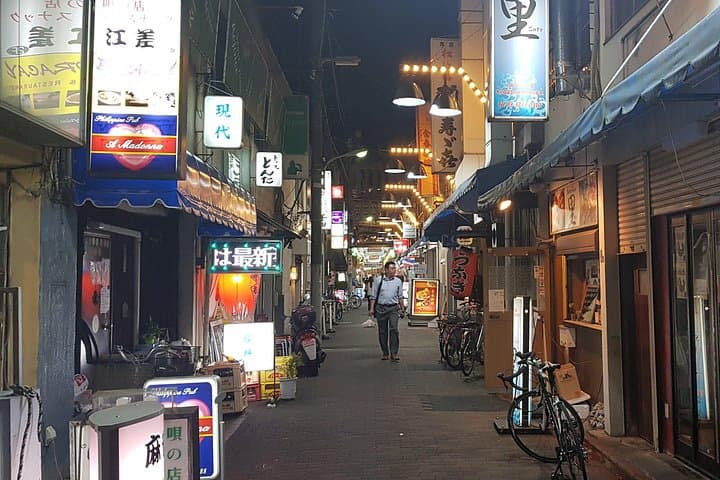
This tour threads two working-class neighborhoods with distinct personalities. Oimachi’s backstreets grew up around rail lines and small industry; Kamata preserves bubble-era arcades and a classic shotengai shopping street. The geology of Tokyo—alluvial plains reclaimed and stitched by trains—created the dense urban pockets where these taverns established themselves after World War II to serve nearby factories and commuters.
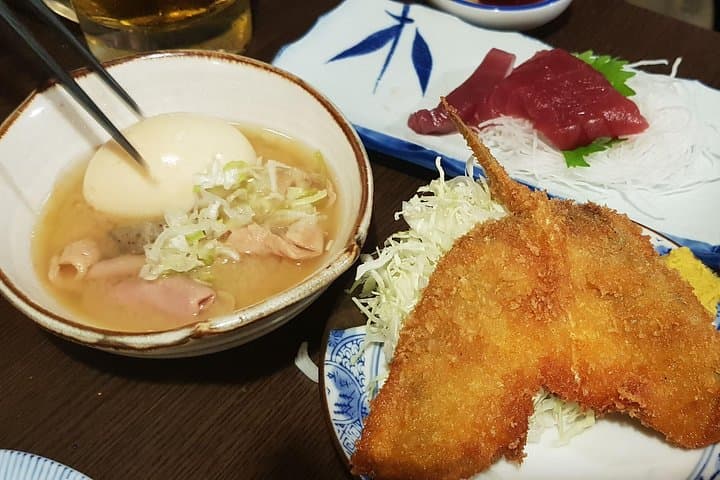
Culturally, tachinomi are functional social spaces: quick drinks, casual food, and local rhythms. Expect yakitori, fried fish, small simmered dishes and friendly banter; guides translate customs like proper toasting and how to call the server. The tour includes three beverages, food at each stop and the short train fare between neighborhoods.
Practical guidance: wear comfortable shoes for 20–40 minutes of walking, carry small bills or an IC card for extras, and remember Japan’s drinking age rules—participants must be 18+, but only those 20+ can be served alcohol. Bookings are small (under seven people) and last about three hours, so arrive with an appetite and an openness to try savory, sometimes unfamiliar flavors. This is an urban walking experience that rewards curiosity and good pacing.
moderate.
3 hours.
Light-to-moderate fitness for short urban walks and standing at bars; able to walk 1–2 miles and stand intermittently.
The tour lasts about three hours with roughly 20–40 minutes of walking between and around venues; expect short stretches on sidewalks and station platforms.
Yes—three beverages (alcoholic or non-alcoholic), multiple small dishes across tachinomi stops, and the short train fare between neighborhoods are included.
All participants must be 18 or older to join; however, Japan’s legal drinking age is 20—only guests 20+ can be served alcoholic beverages.
Vegetarian options are available if advised at booking; notify the operator in advance for other restrictions or allergies.
Oimachi and Kamata developed around rail and small-industry growth in the 20th century; Kamata shows visible bubble-era (1980s–90s) architecture and shotengai culture.
Respect small local businesses by minimizing waste, using public transit between stops, and avoiding single-use plastics when possible.
Pinpoint Traveler, Inc operates guided outdoor trips and adventures with an emphasis on safety, stewardship, and memorable experiences.
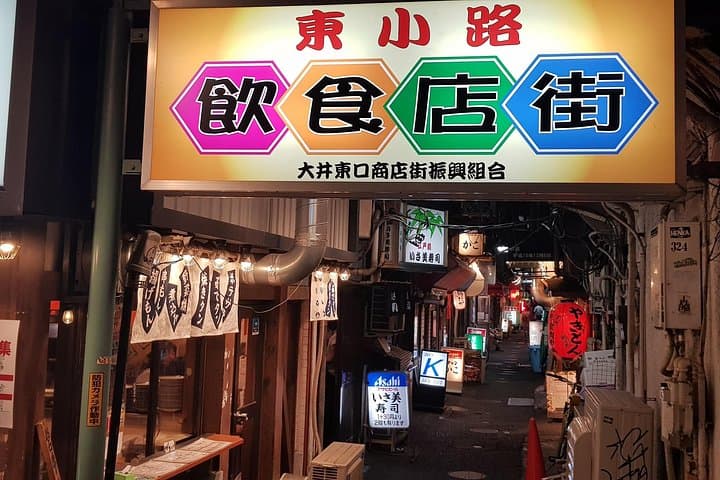
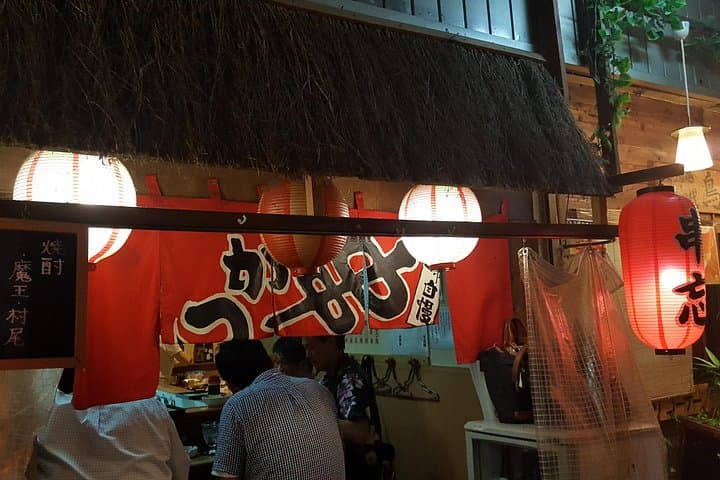
The evening begins at a narrow alley off Oimachi Station where neon signs flicker and the air is threaded with soy, grilling fat and hot broth. Guides lead a small group down compact lanes to the first tachinomi—one of Tokyo’s standing bars—where strangers shoulder up to a counter and conversations rise with the steam from small plates.
The evening begins at a narrow alley off Oimachi Station where neon signs flicker and the air is threaded with soy, grilling fat and hot broth. Guides lead a small group down compact lanes to the first tachinomi—one of Tokyo’s standing bars—where strangers shoulder up to a counter and conversations rise with the steam from small plates.
This tour threads two working-class neighborhoods with distinct personalities. Oimachi’s backstreets grew up around rail lines and small industry; Kamata preserves bubble-era arcades and a classic shotengai shopping street. The geology of Tokyo—alluvial plains reclaimed and stitched by trains—created the dense urban pockets where these taverns established themselves after World War II to serve nearby factories and commuters.
Culturally, tachinomi are functional social spaces: quick drinks, casual food, and local rhythms. Expect yakitori, fried fish, small simmered dishes and friendly banter; guides translate customs like proper toasting and how to call the server. The tour includes three beverages, food at each stop and the short train fare between neighborhoods.
Practical guidance: wear comfortable shoes for 20–40 minutes of walking, carry small bills or an IC card for extras, and remember Japan’s drinking age rules—participants must be 18+, but only those 20+ can be served alcohol. Bookings are small (under seven people) and last about three hours, so arrive with an appetite and an openness to try savory, sometimes unfamiliar flavors. This is an urban walking experience that rewards curiosity and good pacing.