THE ADVENTURE COLLECTIVE® · Independent discovery and booking for outdoor travel

Ride the overnight train into the Hoang Lien Range and spend five days hiking between ethnic villages, homestays and a little-known waterfall called Lavie. This multi-day trek offers cultural immersion, daily moderate hiking and local meals in the highlands above Sapa.
Ride the overnight train into the Hoang Lien Range and spend five days hiking between ethnic villages, homestays and a little-known waterfall called Lavie. This multi-day trek offers cultural immersion, daily moderate hiking and local meals in the highlands above Sapa.
Night train rumbles away from Hanoi and by sunrise the mountains press close, rice terraces folding like pages under low clouds. On day two the trail opens into Y Linh Ho; villagers move through fields with practiced, steady hands and the scent of wet earth follows you up the path. The program pairs daily treks of 3–12 km with homestays among H’mong, Dzay, Red Dzao and Tay families, and a short swim at the colonial-era ‘Lavie’ waterfall on the fourth day.
Verified experiences and guided adventures in the surrounding area.
Operated by Asia Master Tours · Sapa, Lao Cai
Night train rumbles away from Hanoi and by sunrise the mountains press close, rice terraces folding like pages under low clouds. On day two the trail opens into Y Linh Ho; villagers move through fields with practiced, steady hands and the scent of wet earth follows you up the path. The program pairs daily treks of 3–12 km with homestays among H’mong, Dzay, Red Dzao and Tay families, and a short swim at the colonial-era ‘Lavie’ waterfall on the fourth day.
This corner of northern Vietnam sits on the southeastern edge of the Hoang Lien Range, carved by glacial streams and human agriculture over centuries. Ethnic minorities maintain distinctive embroidery, stilt-house architecture and seasonal upland farming—cultural patterns shaped by steep slopes and a short growing season. Guides explain clan customs as readily as trail choices; geology shows in terraced rice benches and sudden limestone outcrops.
Practical guidance: expect muddy routes and steep switchbacks; average daily hiking is moderate with one long 12 km segment. Homestays provide simple rooms and home-cooked meals—bring a small gift or local currency for purchases. Rain is frequent outside of autumn; pack a breathable rain shell, quick-dry layers and sturdy ankle-support boots. Water is provided during the tour but carry a lightweight bottle and electrolyte tabs for long days.
The experience is best for travelers who want immersive cultural contact, reliable local guiding, and multi-day walking that balances effort and reward.
moderate.
5 days (daily hikes 3–8 hours).
Suitable for reasonably fit travelers who can handle multiple consecutive hiking days with some steep climbs; basic stamina required.
Most days are moderate with one longer day of about 12 km; trails feature uneven surfaces and short steep sections but do not require technical climbing.
Homestays offer simple, clean rooms and local food; expect shared facilities and basic bedding—bring a liner for comfort.
Guides are typically bilingual in Vietnamese and English; local villagers may speak minority languages with translation provided by the guide.
Swimming is commonly done at the waterfall when conditions are calm; check with your guide about current flow and pool depth before entering.
The Hoang Lien Range and Sapa valley have been shaped by upland agriculture and colonial-era routes; the ‘Lavie’ name reflects French-era exploration in the region.
Tourism pressures are managed locally through guided routes and homestay networks; visitors should avoid single-use plastics and respect trails to limit erosion.
Asia Master Tours operates guided outdoor trips and adventures with an emphasis on safety, stewardship, and memorable experiences.


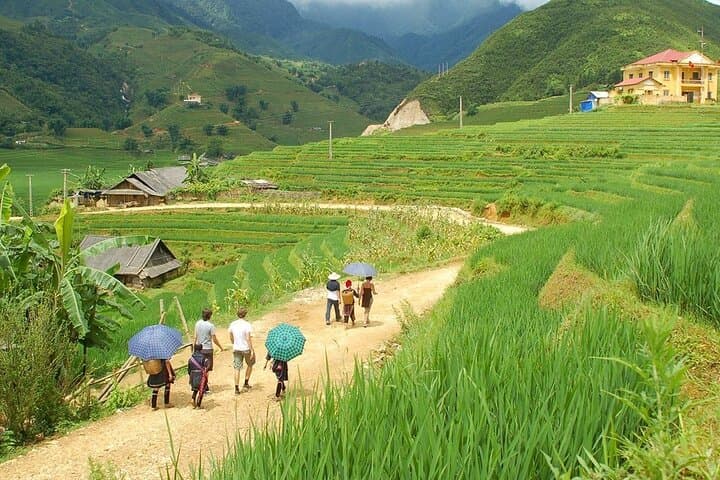
Night train rumbles away from Hanoi and by sunrise the mountains press close, rice terraces folding like pages under low clouds. On day two the trail opens into Y Linh Ho; villagers move through fields with practiced, steady hands and the scent of wet earth follows you up the path. The program pairs daily treks of 3–12 km with homestays among H’mong, Dzay, Red Dzao and Tay families, and a short swim at the colonial-era ‘Lavie’ waterfall on the fourth day.
Night train rumbles away from Hanoi and by sunrise the mountains press close, rice terraces folding like pages under low clouds. On day two the trail opens into Y Linh Ho; villagers move through fields with practiced, steady hands and the scent of wet earth follows you up the path. The program pairs daily treks of 3–12 km with homestays among H’mong, Dzay, Red Dzao and Tay families, and a short swim at the colonial-era ‘Lavie’ waterfall on the fourth day.
This corner of northern Vietnam sits on the southeastern edge of the Hoang Lien Range, carved by glacial streams and human agriculture over centuries. Ethnic minorities maintain distinctive embroidery, stilt-house architecture and seasonal upland farming—cultural patterns shaped by steep slopes and a short growing season. Guides explain clan customs as readily as trail choices; geology shows in terraced rice benches and sudden limestone outcrops.
Practical guidance: expect muddy routes and steep switchbacks; average daily hiking is moderate with one long 12 km segment. Homestays provide simple rooms and home-cooked meals—bring a small gift or local currency for purchases. Rain is frequent outside of autumn; pack a breathable rain shell, quick-dry layers and sturdy ankle-support boots. Water is provided during the tour but carry a lightweight bottle and electrolyte tabs for long days.
The experience is best for travelers who want immersive cultural contact, reliable local guiding, and multi-day walking that balances effort and reward.